
Researchers have engineered a small-molecule gel that forms on contact with sodium ions in the abdominal cavity, controlling the release of therapeutic Salmonella to reduce organ toxicity by up to 82 percent while maintaining anti-tumour immune responses.
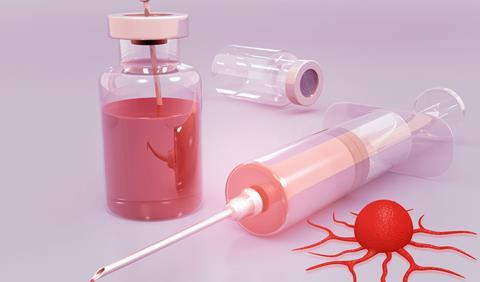
Researchers have developed a gel-based delivery system that could help overcome one of the main challenges facing bacterial cancer therapies: toxicity.
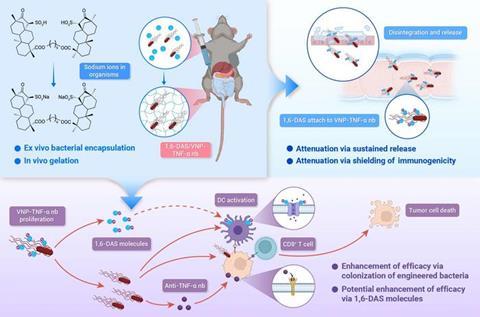
Reported in The Innovation, the approach uses a small molecule called isosteviol-1,6-diester sodium sulfonate (1,6-DAS), which remains liquid in a syringe before forming a gel when it encounters sodium ions in the abdominal cavity.
The gel is designed to encapsulate VNP20009, an attenuated strain of Salmonella investigated for its ability to target and destroy tumours. In mouse models of melanoma, the encapsulated bacteria retained their tumour-shrinking activity while substantially reducing the toxicity associated with treatment.
Compared with free bacteria, the delivery system reduced bacteria-induced weight loss by 82 percent and reversed the enlargement and tissue damage normally observed in the liver and spleen.
These findings could address a longstanding limitation of bacterial cancer therapy. Although VNP20009 was shown to be safe in a 1999 clinical trial, its anti-tumour activity was limited. Subsequent attempts to improve its potency by engineering the bacteria to produce therapeutic nanobodies, including those targeting PD-1 and TNF-α, also increased toxicity.
This is partly because the bacteria can accumulate in healthy organs such as the liver and spleen, triggering inflammatory responses that damage the tissues responsible for filtering infections.
Sodium-triggered gel controls bacterial release
The researchers developed 1,6-DAS from isosteviol, a diterpenoid derived from the sweetener stevioside. Its acid precursor remains liquid when cooled, but exposure to sodium ions triggers the formation of ribbon-like fibres that trap water and create a gel.
Gelation occurred in less than 60 seconds at half the salt concentration found in physiological saline. The researchers also demonstrated that 100 μL of the gel could accommodate one billion colony-forming units of bacteria, equivalent to 1,000 times the therapeutic dose.
The system controls bacterial release through mechanical movement. When left undisturbed, the gel released almost no bacteria over 72 hours. However, gentle agitation designed to mimic movement within an animal released approximately 80 percent of the bacteria.
Although bacterial levels in tumours were initially lower than those achieved with free bacteria, they reached comparable levels after 72 hours. Meanwhile, bacterial accumulation in the spleen decreased, reducing enlargement of the organ.
The researchers also found that residual 1,6-DAS on the released bacteria altered their surface properties. Simulations suggested that the molecule binds to flagellin, a bacterial protein recognised by the immune system, potentially helping bacteria evade inflammatory responses.
Consistent with this, levels of the inflammatory markers TNF-α and IL-6 in the liver and spleen fell to control levels.
Engineered bacteria retain anti-tumour activity
The team subsequently tested the delivery system using VNP-TNF-α nb, an engineered strain carrying a nanobody targeting TNF-α.
Although this strain demonstrated improved tumour-shrinking activity, it also caused more severe spleen damage when administered without encapsulation.
Encapsulation reduced treatment-associated weight loss by 78.8 percent, from 5.47 g to 1.16 g, while restoring spleen pathology to control levels without compromising anti-tumour efficacy.
The treatment also increased dendritic cell and CD8+ T cell levels in tumours and blood, suggesting that anti-tumour immune responses were maintained.
In a two-tumour mouse model, four of five animals receiving the encapsulated bacteria cleared their untreated tumour, compared with one of five animals given the free bacterial strain.
Further studies needed to establish clinical potential
The findings suggest that improving bacterial delivery could help address toxicity limitations that have hindered the development of bacterial cancer therapies.
However, the researchers acknowledge several limitations. The experiments were conducted in mice using intraperitoneal administration and the team did not use a tracer to directly visualise gel distribution. The proposed delivery of 1,6-DAS to dendritic cells within tumours is therefore supported by simulations rather than direct imaging evidence.
Further research will now be needed to establish whether the approach can be translated into clinical settings.
Nevertheless, the findings highlight how controlling where and when therapeutic bacteria are released could improve the balance between anti-tumour activity and treatment-related toxicity.





No comments yet