



A team at the University of Birmingham has developed the first multi-responsive gel constructed from foldamers – synthetic molecules that fold into defined shapes – capable of switching between gel and liquid-like states in response to UV light, heat and acid.

Scientists at the University of Birmingham have developed a responsive material that could offer a new approach to controlled drug delivery due to its ability to switch between gel and liquid-like states in response to different chemical and physical triggers.
The material, described in the Journal of the American Chemical Society, is the first multi-responsive gel reported to be built from ‘foldamers’ – synthetic molecules that fold into defined shapes and can be assembled, disassembled and reassembled on demand.
The researchers say the platform could eventually help inform the development of drug delivery systems capable of releasing therapeutic molecules in response to specific conditions.
Multiple triggers for drug release
The material can be switched from a solid-like gel into a flowing, liquid-like state using ultraviolet (UV) light. Heating reverses the process and reforms the gel, while acid provides a separate mechanism for breaking down the molecular network.
This combination of responses could be relevant to pharmaceutical applications where control over when and where a therapeutic molecule is released is important.
The material can be switched from a solid-like gel into a flowing, liquid-like state using ultraviolet (UV) light
Dr Maria Chiara Arno, Associate Professor in Polymeric Biomaterials in the School of Chemistry at the University of Birmingham, said: “Supramolecular materials are assembled using reversible interactions rather than permanent chemical bonds. That gives us an opportunity to create materials that are robust under normal conditions but can be reorganised or dismantled when we apply the right signal.
“We converted the material from an organic solvent-based gel into a hydrogel containing water, without disrupting its underlying structure. Hydrogels are widely used in biotechnology and medicine because they can hold large amounts of water while maintaining structural integrity.
“This represents a significant advance in building materials that behave more like biological systems by responding intelligently to their surroundings - for example, releasing drugs only when exposed to a specific trigger, such as changes in acidity within diseased tissue.”
Molecular design controls material behaviour
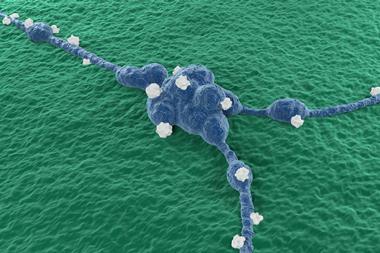
The gel consists of helical foldamer molecules connected by palladium ions, which act as four-way molecular connectors to create an extended network that traps liquid.
UV light changes the shape of light-sensitive components within the foldamers. Although the change occurs at the molecular level, it is amplified throughout the network, causing the gel to lose its solid-like structure.
Heating allows the network to reform, while acid acts through a different mechanism by disrupting the interactions between the foldamers and palladium ions.
The gel consists of helical foldamer molecules connected by palladium ions, which act as four-way molecular connectors to create an extended network that traps liquid
Dr Sarah Pike, Associate Professor of Organic Chemistry at the University of Birmingham, said: “A very small change in molecular shape translates into a visible change in the whole material – demonstrating how carefully designed molecular components can give us control over the behaviour of a bulk gel.
“The research is at a fundamental stage, but the ability to programme more than one response into the same material could ultimately inform the design of smart sensors, switchable catalysts, and materials that capture and release selected molecules on demand.”
For drug discovery and development, the ability to engineer materials that respond predictably to their environment could be particularly relevant to controlled release and delivery technologies. However, the researchers stress that the work remains at a fundamental stage.
Revealing the structure
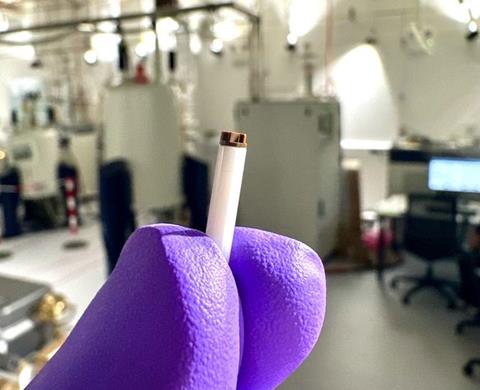
Understanding how the material behaves at the molecular level was critical to the study. The team used dynamic nuclear polarisation-enhanced solid-state nuclear magnetic resonance spectroscopy (DNP NMR) to characterise the gel’s structure.
The technique substantially reduced the time required for the experiments. An experiment estimated to take around seven years using conventional NMR was completed in just 12 hours with DNP NMR.
Understanding how the material behaves at the molecular level was critical to the study
Dr Dominik Kubicki, Associate Professor in Materials Characterisation at the University of Birmingham said: “Seeing a material change is only half the story. If we want to design better responsive gels, we need to know precisely how their molecular building blocks are connected. DNP NMR gave us that atomic-level picture in a material that is otherwise exceptionally difficult to study – allowing us to solve a major challenge in gel science.”
The researchers suggest that future applications could include targeted drug delivery, controlled release of therapeutic molecules and biomedical materials, alongside smart sensing and catalysis.














No comments yet