


Researchers at KAIST have repurposed a zinc finger protein to inhibit amyloid-beta aggregation, break down existing fibrils and reduce neuroinflammation in a preclinical Alzheimer’s model.
A protein best known for its role in gene regulation has been found to suppress the harmful aggregation of amyloid-beta, a peptide associated with Alzheimer’s disease, in a new preclinical study.
Researchers from the Korea Advanced Institute of Science and Technology (KAIST), working with collaborators from several South Korean research institutions, found that the protein could both prevent the formation of toxic amyloid-beta aggregates and reduce the toxicity of aggregates that had already formed.
In their experiments using a transgenic mouse model of Alzheimer’s disease, a modified version of the protein reduced amyloid-beta deposits in the brain and improved recognition memory, giving the scientists a potential starting point for developing protein-based therapeutics.
Repurposing a gene-regulating protein
The abnormal aggregation and accumulation of amyloid-beta in the brain is central to Alzheimer’s disease development. As the peptide aggregates, it can form toxic structures that damage nerve cells, contributing to disease progression.
To address this, a research team led by Professor Mi Hee Lim from KAIST’s Department of Chemistry investigated whether a zinc finger protein could interfere with amyloid-beta aggregation.
Zinc finger proteins are best known for their involvement in gene regulation, with zinc ions helping stabilise their structures so they can recognise DNA or RNA. However, their surfaces can also interact with other biomolecules, including proteins.
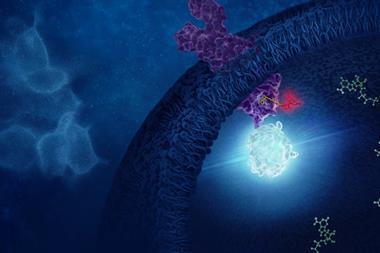
Using computer simulations and experimental analysis, the researchers identified a specific region of the zinc finger protein, called ZF2–4, that binds directly to amyloid-beta regions involved in aggregation.
This interaction suppressed the formation of long, entangled amyloid-beta fibrils, instead encouraging the formation of aggregates that were less toxic to cells. The researchers also found that applying ZF2–4 to existing amyloid-beta fibrils caused them to break down into shorter, thinner fragments, reducing their toxicity.
Modified protein reaches the brain
A major challenge in developing treatments for Alzheimer’s disease is delivering therapeutic molecules across the blood–brain barrier, which restricts the passage of substances into the brain.
To overcome this, the researchers attached a short peptide called P9 to ZF2–4, creating a modified protein named ZF2–4–P9 that could cross the barrier.
When administered to a transgenic mouse model of Alzheimer’s disease, the treatment reduced amyloid-beta deposits by approximately 53 percent in both the cerebral cortex and hippocampus compared with the control group.
The treatment also reduced excessive microglial activation. Microglia are immune cells that help protect the brain but can contribute to inflammation when overactivated. Following treatment, microglial activation decreased by approximately 29 percent in the cerebral cortex and 50 percent in the hippocampus.
Recognition memory improved in mice
Behavioural testing revealed that mice receiving ZF2–4–P9 showed improvements in recognition memory, which allows animals to distinguish familiar objects from new ones.
However, the researchers did not observe statistically significant improvements in other tests assessing memory and learning.
The findings suggest that modifying zinc finger proteins could offer a way to target disease-associated protein aggregation while also reducing the toxicity of existing aggregates.
“This study shows that zinc finger proteins, which are well known as tools for gene regulation, can bind directly to disease-causing proteins and suppress their pathological aggregation,” said Professor Lim.
She added that the principle could help researchers design new protein-based therapeutics targeting specific diseases.
Despite the promising results, further research will be needed to establish its therapeutic efficacy and long-term safety before it can be considered for human applications.











No comments yet