


Preclinical data from the rNLS8 ALS mouse model show that AC Immune’s intrabody candidate ACI-6758 selectively reduces pathological TDP-43 whilst preserving the protein’s normal cellular functions.

AC Immune has selected ACI-6758 as its lead development candidate in a programme targeting pathological TDP-43 proteins, following preclinical results demonstrating reduced disease-associated pathology and improved motor function in models of amyotrophic lateral sclerosis (ALS).
The clinical-stage biopharmaceutical company is developing the intracellular antibody (intrabody) as a potential treatment for the disease, designed to selectively target pathological forms of TDP-43 while preserving the protein’s normal cellular functions.
Selective targeting reduces TDP-43 pathology
The selection of ACI-6758 was supported by promising findings across both in vitro and in vivo models, demonstrating its ability to reduce pathological TDP-43 while preserving the protein’s normal cellular function.
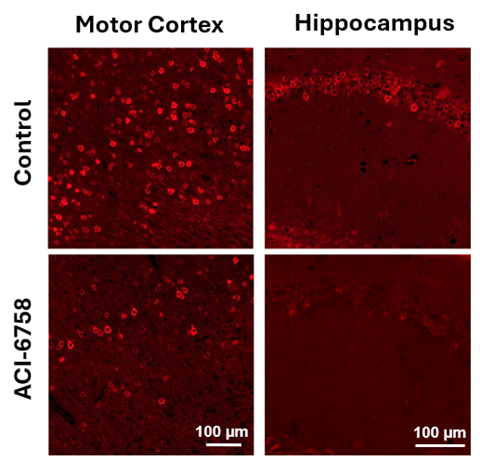
In the rNLS8 mouse model of ALS, delivery of ACI-6758 using an adeno-associated virus (AAV) vector significantly reduced phosphorylated TDP-43 (pTDP-43) pathology across several brain regions, with reductions of up to 75 percent. Total human TDP-43 levels remained comparable between treatment groups, suggesting that the candidate selectively targets disease-associated forms of the protein rather than reducing its overall expression.
These findings were accompanied by improvements in motor function and reduced neurofilament light chain (NfL) levels in cerebrospinal fluid (CSF), providing further evidence of its potential therapeutic activity.
The results were consistent with findings from in vitro neuronal models, where ACI-6758 reduced pathological pTDP-43 inclusions by up to 98 percent. Crucially, the candidate did not interfere with TDP-43’s physiological role in regulating the splicing of several known targets, including STMN2, POLDIP3 and UNC13A.
Preserving this normal function is an important consideration when developing TDP-43-targeting therapies, as the protein has essential roles in RNA processing. The ability to distinguish between pathological and physiological TDP-43 therefore informed AC Immune’s decision to select ACI-6758 over other candidates that did not demonstrate the same degree of selectivity.
“The progress in this TDP-43 program has again demonstrated the real strength of the science and innovation being conducted at AC Immune,” said Martin Zügel, interim CEO of AC Immune. ”The development of ACI-6758 complements our other TDP-43 targeting efforts including our TDP-43 PET tracer (ACI-19626) which has produced impressive results in a Phase I clinical study. Together they form a focused portfolio for the company with important opportunities for potential business development.”
Intrabody technology addresses delivery challenges
While the preclinical findings highlight ACI-6758’s potential to selectively target pathological TDP-43, delivering antibody fragments to a protein located inside cells presents a separate challenge.
Damien Nevoltris, Group Leader, Antibody Engineering, and Project Leader, Research at AC Immune, explained: “The pathological forms of TDP-43 are intracellular, creating major challenges for antibody-fragment delivery and stability inside cells.”
To address this, AC Immune has developed a proprietary plug-and-play technology designed to stabilise intrabodies, improve their expression and enhance intracellular target engagement following gene therapy delivery.
The fully humanised ACI-6758 has shown the characteristics the company was seeking, including selective recognition of an epitope associated with pathological TDP-43, preservation of the protein’s normal function and no predicted immunogenicity in silico. Its activity has also been demonstrated across both in vitro and in vivo models.
Francesca Capotosti, Senior Vice President Research at AC Immune, described the candidate’s selection as a significant milestone for the programme and an important step forward for the company’s intracellular targeting approach.
“The declaration of ACI-6758 as our TDP-43 intrabody lead candidate represents a significant milestone for the program and an important step forward for our intracellular targeting approach to treating neurodegenerative diseases,” she said. ”ALS remains a devastating disease with a huge unmet medical need. ACI-6758 combines selective targeting of pathological TDP-43 with preservation of its physiological function and clear in vivo activity and we are confident that advancing the program into development is an important step toward helping patients affected by ALS.”
Further studies to support development
With ACI-6758 now selected as its lead development candidate, AC Immune is turning its attention to the studies needed to inform the programme’s progression. The company is exploring translational studies to establish the exposure levels required to achieve therapeutic efficacy and guide further development.
Its existing TDP-43 imaging programme could also play an important role in this process. AC Immune’s first-in-class TDP-43 positron emission tomography (PET) tracer, ACI-19626, is currently in Phase I clinical development and is expected to support future human studies of ACI-6758.
Together, the two programmes provide complementary approaches to understanding and targeting TDP-43 pathology, which is implicated in several neurodegenerative conditions beyond ALS, including Alzheimer’s and Parkinson’s disease and frontotemporal dementia.
For AC Immune, advancing ACI-6758 will provide an opportunity to build on its preclinical findings and further investigate whether selectively targeting pathological TDP-43 could offer a therapeutic approach for people living with ALS.







No comments yet