


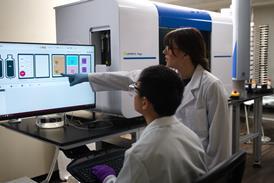
A gold-silver nanoparticle platform engineered to release microRNA-20a-5p only upon near-infrared light exposure offers precise, localised tumour targeting.

Penn State researchers have developed a light-activated nanoparticle system designed to deliver cancer-targeting microRNA directly to tumours, with the aim of reducing damage to healthy tissue and preserving patients’ quality of life.
Treatments for head and neck cancer can have a significant impact on patients’ quality of life, sometimes affecting their ability to speak, swallow and breathe. Now, researchers at Penn State have developed a light-activated nanoparticle system that could eventually help shrink tumours while limiting damage to surrounding healthy tissue.
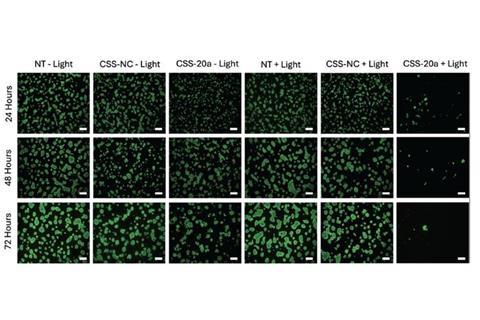
In a study published in the Journal of Biomedical Materials Research, the team demonstrated that the technology reduced the volume of illuminated tumours by approximately 95 percent within 48 hours in mice carrying tumours derived from human hypopharyngeal cancer cells.
The system uses nanoparticles made from layers of gold and silver to deliver microRNA-20a-5p, a small regulatory RNA molecule involved in controlling protein production and cellular processes such as growth and cell death.
Designed to release their microRNA cargo only when exposed to near-infrared light, the nanoparticles offer researchers control over where and when the treatment is delivered.
Cancers in the head and neck affect our ability to speak, affect our ability to breathe, affect our ability to swallow, taste and communicate with society. You might be able to lessen the portion of the tongue, jaw, or other portions of the face to cure a cancer, and that would make their reconstruction easier, and likely lend to quality-of-life improvement with less side effects from treatment.”
Neerav Goyal, a professor at Penn State College of Medicine and head and neck surgical oncologist at Penn State Health.
Light controls microRNA release
The technology could ensure therapeutic molecules reach the intended location without accumulating in healthy organs, a key challenge associated with delivering genetic materials for cancer treatment.
“We really set out to solve a very specific problem,” said Daniel Hayes, Professor of Biomedical Engineering at Penn State and corresponding author of the study. “Our approach gives you precise control over the delivery of these therapeutics, which would otherwise be difficult to use safely when delivered systemically,”
To activate the system, the researchers exposed the nanoparticles to a specific wavelength of near-infrared light, which the particles then converted into localised heat, triggering the release of their microRNA cargo at the illuminated site.
Following promising laboratory experiments using human cancer cells, the team tested the approach in mice, where tumours exposed to light after receiving the nanoparticles shrank substantially, while those that were not illuminated continued to grow.
“We had seen similar results in vitro but seeing that translate to the in vivo environment is really surprising to me,” Hayes said.
Further testing needed before clinical development
Despite the encouraging findings, the researchers emphasised that the technology is still at an extremely early stage and requires further investigation.
To advance its preclinical development, Penn State has licensed the technology to Illuminate Therapeutics through its Light Activated Drug Delivery and Release (LADDR) platform.
Beyond head and neck cancer, the researchers believe the nanoparticle system could potentially be adapted to deliver different therapeutic molecules for other diseases.
However, extensive safety testing and further preclinical research will be needed before its potential as a treatment for patients can be established.








No comments yet