


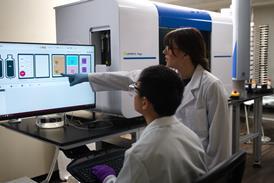
A new collaboration between PacBio and TychoBio will use HiFi long-read sequencing technology to build large-scale transcriptomic datasets linking antisense oligonucleotide design with whole-transcriptome effects.

PacBio and AI drug discovery company TychoBio have announced a collaboration to generate large-scale full-length RNA datasets to support the development of new RNA therapies for rare diseases.
The companies plan to use PacBio HiFi sequencing and Kinnex long-read RNA sequencing to generate data from more than 10,000 samples. The resulting datasets will link the design of steric blocking antisense oligonucleotides (SBOs) with their effects across the transcriptome.
The partners also plan to expand the approach to other RNA-targeting compounds including small interfering RNA (siRNA).
Building data for AI drug discovery
TychoBio will test candidate RNA therapies before using PacBio sequencing to measure how each treatment changes the transcriptome across multiple cell types.
The results will be used as training data for AI models designed to predict which compounds are most likely to work, how long their effects could last and where unintended effects may occur.
“AI models are only as good as the data they are trained on. To effectively identify new rare disease treatments, we needed the highest quality biological data, which can only be generated using PacBio HiFi sequencing technology,” said Felix Raimundo, Founder and CEO of TychoBio.
The collaboration is intended to provide a more detailed understanding of how SBOs interact with the transcriptome and how their effects vary across different cell lineages.
By capturing changes across full-length transcripts, including alterations in isoforms and splicing, the companies aim to generate insights that could help improve the efficacy and duration of RNA therapies while identifying potential unintended effects.
Supporting rare disease research
PacBio has previously worked with organisations across the rare disease community on research into disease characterisation, diagnosis and therapeutic development.
Its collaborations include the global HiFiSolves Consortium, the n-Lorem Foundation, EspeRare, the GREGoR Consortium, Care4Rare Canada Consortium, the Genetic Alliance and Genomics England, alongside academic partnerships.
The company said its Kinnex products combined with HiFi sequencing can enable researchers to screen thousands of sequences across multiple cell lineages and develop models examining both efficacy and toxicity.
The approach could help researchers identify promising therapies before they progress from laboratory research into clinical trials.
Linking sequencing and AI
Mark Van Oene, President and Chief Executive Officer of PacBio, said the collaboration demonstrated the importance of high-quality sequencing data in building biological AI models.
“Our work with TychoBio, like our collaboration with Basecamp Research, highlights the critical value that high-quality sequencing data plays in generating the foundational data that will power biological modeling in the AI ecosystem,” he said. “We believe that this critical work will enable the development of transformative therapies that ultimately improve the lives of patients with rare diseases and their families.”







No comments yet