
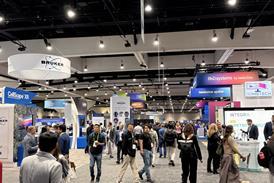

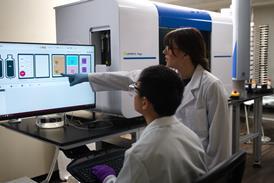

From self-driving laboratories to advanced cellular models, ELRIG Drug Discovery 2026 showcases technologies helping researchers generate better data, evaluate drug candidates and improve early discovery.
Laboratory automation, advanced cellular models and computational analysis are among the technologies on display at ELRIG Drug Discovery 2026, taking place at ExCeL London on 14–15 October.
For researchers working in early drug discovery, the challenge is not simply to screen more compounds, but to generate experimental evidence that helps identify which candidates are worth pursuing. Technologies showcased at this year’s event address different parts of that process, from connecting automated laboratory workflows to improving cellular models and measuring whether compounds engage their intended targets.
Connecting laboratory automation with reliable experimental data
Automation is well established in drug discovery, but connecting individual instruments into workflows that require less human intervention remains a challenge. Research showcased at ELRIG demonstrates how scientists are working to make laboratory processes more connected and adaptable.
One example comes from Peak Analysis & Automation (PAA), which is examining the infrastructure needed to support self-driving laboratories. Its work considers how modular equipment, mobile robotics and laboratory software could operate together, allowing results from one experiment to guide the next.
For discovery teams, this could reduce the manual work involved in transferring samples and data between instruments, while supporting more consistent experimental workflows. However, achieving this depends on reliable integration between systems and the quality of the data used to guide subsequent experiments.
The importance of reliable experimental data is also evident in work from the Alzheimer’s Research UK Drug Discovery Institute at University College London. Its screening capabilities combine automated compound screening, high-content imaging and further testing of promising compounds to support research into treatments for neurodegenerative disorders.
Researchers from Revvity and Alithea Genomics are also demonstrating how different experimental methods can be combined to provide a more detailed picture of compound activity.
Their work brings together MERCURIUS DRUG-seq, which measures changes in gene expression, with Cell Painting, an imaging technique used to examine changes in cellular appearance. The researchers investigated compounds affecting KRAS-associated signalling, including compounds with different selectivity profiles.
The displayed results included experiments in DLD1 cells carrying a KRAS G13D mutation. By combining gene expression and imaging data, researchers can investigate both the molecular and cellular effects of treatment, potentially helping to distinguish compounds that produce similar visible responses through different biological mechanisms.
For teams investigating compound mechanisms, this combination could provide additional evidence when selecting candidates for further testing.
Developing more informative cellular models
Reliable data also depends on using cellular models that accurately represent the biological processes being studied.
This is a central consideration in research from Ncardia, which is investigating the use of human induced pluripotent stem cell (iPSC)-derived tissue models to assess the potential safety of antibody–drug conjugates (ADCs).
The study evaluated cetuximab-MMAE across seven tissue models, measuring its effects on cell health. The researchers observed moderate toxicity in lung and liver models at concentrations above those considered clinically relevant. At 1 µg/mL, toxicity was substantially reduced, although some sensitivity remained in melanocytes.
For researchers developing ADCs, testing compounds across different human cell-derived tissues could help identify potential safety concerns earlier in development. However, further validation is needed to establish how reliably these findings predict clinical outcomes.
Other technologies at ELRIG focus on improving how cellular models are maintained and studied.
Dynamic42 is showcasing its DynamicOrgan TEER-Sensor Kit, which allows researchers to monitor the integrity of cellular barriers in perfused organ-on-chip models without disrupting the experiment. By measuring changes in electrical resistance over time, the technology can help researchers investigate how barriers respond under different experimental conditions.
This could be useful when studying epithelial and endothelial tissues, where changes in barrier integrity may influence how compounds interact with cells.
Maintaining and expanding cellular models presents a different challenge. Green Elephant Biotech is presenting its CellScrew system, which provides a large growth surface for adherent cell culture, with applications including stem cell expansion and differentiation.
Using imaging and AI to investigate cellular responses
For cancer research, observing how cells interact over time can provide information that is difficult to obtain from conventional endpoint assays.
Sartorius is demonstrating this through research using live-cell imaging to investigate immune-mediated tumour killing in three-dimensional spheroid models. The work includes experiments involving trastuzumab and HER2-expressing tumour cells, alongside CAR-T-mediated tumour killing.
By monitoring changes in tumour spheroids throughout an experiment, researchers can investigate how cancer cells respond to immune-mediated attack over time, rather than relying solely on measurements taken at the end. This can provide additional information about the timing and extent of treatment responses.
Computational analysis is also helping researchers extract more information from cellular images.
Scripta Therapeutics is presenting research using self-supervised artificial intelligence to analyse images of iPSC-derived neurons exposed to amyloid-beta-associated stress. Using a DINOv3-based workflow, the researchers investigated changes in neuronal appearance associated with this stress response.
They reported that treatment with the experimental compound SCX-7664 shifted the measured neuronal characteristics towards a reference state.
Although this does not establish therapeutic efficacy, the work illustrates how computational imaging could help researchers detect subtle cellular responses that may be difficult to capture using conventional measurements. This could be particularly useful in phenotypic screening, where compounds may produce several biological effects rather than a single measurable response.
Improving experimental validation of drug candidates
As computational methods generate more potential drug candidates, experimental screening remains essential for identifying those worth pursuing.
At ELRIG, Semarion and Revvity are showcasing a multiplexed imaging workflow for assessing antibody binding and specificity. Using optically encoded SemaCyte microcarriers, the researchers compared cetuximab binding in cells with and without EGFR, its intended target, within the same assay.
The sequential washed format produced comparable IC50 values across three imaging platforms, supporting the feasibility of screening different cell populations together. For researchers, this could provide a way to assess antibody responses across multiple cellular conditions within a shared experimental workflow.
Nuclera is also showcasing a workflow that could support the screening of AI-generated antibody candidates. Its technology combines 96-plex cell-free expression of full-length IgG antibodies with initial binding screening and subsequent surface plasmon resonance (SPR) analysis of confirmed binders.
The company reports turnaround times starting from 14 business days. For antibody discovery teams, earlier information about expression and binding characteristics could help prioritise candidates before committing resources to more extensive characterisation.
From experimental throughput to better discovery decisions
The research presented at ELRIG Drug Discovery 2026 shows how new technologies are helping scientists investigate compounds in greater detail, from their effects on cellular models to their ability to engage specific targets.
For drug discovery teams, these developments could help identify promising candidates earlier and reduce the time spent pursuing compounds that are unlikely to progress.





No comments yet