


Researchers have discovered a new family of bacterial natural products that bind the cancer-associated enzyme AKR1C3, revealing potential starting points for drug discovery.
Scientists at the Helmholtz Centre for Infection Research (HZI) and the Helmholtz Institute for Pharmaceutical Research Saarland (HIPS) have identified a previously unknown family of bacterial compounds that interact with a protein implicated in several cancers.
The compounds, known as myxoglucamides, were discovered by activating a normally silent biosynthetic pathway in soil-dwelling myxobacteria. In two studies published in Angewandte Chemie International Edition, the researchers investigated how these molecules are produced, developed a method to synthesise them and identified their molecular target in human cells.
The findings highlight how previously inaccessible microbial natural products could provide new chemical starting points for drug discovery, even when they show little obvious biological activity.
Genome mining reveals a new family of natural products
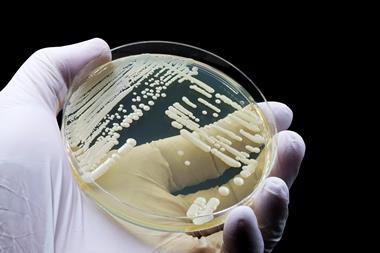
Myxobacteria are known to produce structurally diverse natural products, but many of their biosynthetic gene clusters remain inactive under standard laboratory conditions. As a result, potentially useful compounds can remain undetected.
In the first study, researchers used genetic methods to activate a previously silent pathway responsible for producing myxoglucamides.
Structural analysis revealed an unusual combination of building blocks derived from sugars, lipids and amino acids. Further investigation of the biosynthetic gene cluster uncovered a previously undescribed pathway involving several enzymes working together to assemble these complex molecules.
“The discovery of myxoglucamides highlights how much chemical potential remains hidden in previously silent biosynthetic gene clusters of microorganisms,” said Dr Chengzhang Fu, who leads the Genome Mining for Secondary Metabolites research group at HIPS.
Identifying a cancer-associated target
In the second study, researchers achieved the first total synthesis of myxoglucamide A, overcoming the limited quantities produced naturally by the bacteria.
This enabled them to investigate the compound’s biological interactions and produce modified derivatives. Some of these derivatives showed substantially stronger binding to a target protein than the original natural product.
Using protein profiling techniques, the researchers identified aldo-keto reductase 1C3 (AKR1C3) as a principal molecular target of myxoglucamides.
AKR1C3 is involved in the metabolism of hormones and inflammatory signalling molecules. Elevated expression of the enzyme has been associated with several cancers, where it can contribute to tumour growth.
However, despite demonstrating target engagement, the researchers did not observe a strong effect of myxoglucamides on cancer cell growth.
“Although we were unable to demonstrate a strong effect of myxoglucamides on cancer cell growth, the study nevertheless shows that natural products without an immediately obvious biological effect can still engage highly relevant targets in the human body,” said Prof Mark Brönstrup, head of Chemical Biology at HZI.
The findings suggest that myxoglucamides could provide a starting point for further chemical optimisation and investigation of AKR1C3-targeting compounds. Additional research will be needed to determine whether their binding activity can be translated into meaningful therapeutic effects.
References
Wang T, et al. Atypical condensation domains guide discovery and illuminate biosynthesis of myxoglucamides featuring vinyl-substituted, α-oxidized γ-amino acids. Angew Chem Int Ed. 2026. doi: 10.1002/anie.6995139.
Siemon T, et al. Synthesis and activity-based protein profiling identifies aldo-keto reductase 1C3 as target protein of myxoglucamides. Angew Chem Int Ed. 2026. doi: 10.1002/anie.6489568.






No comments yet