

Automation can accelerate experiments, but can it deliver results scientists can trust? Six experts share how laboratories are improving data quality, overcoming practical challenges and preparing for greater autonomy.
Laboratories can now screen thousands of compounds, automate complex synthesis workflows and use machine learning to select their next experiments. Yet speed and scale alone cannot guarantee reliable results.
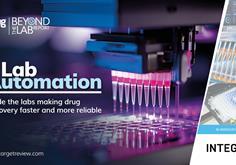
In Lab Automation 2026, scientists and industry experts share practical lessons from automated drug discovery, examining the technical challenges they have encountered and where automation can make the greatest difference.
“The quality of the experimental methods and data must receive as much attention as the algorithms themselves.”
Professor Christine Allen, University of Toronto | Co-founder and CEO, Intrepid Labs
What’s inside
-
High-throughput screening – Distinguish genuine hits from experimental noise through better assay design, quality controls and hit validation
-
Automated synthesis – Connect virtual screening, chemical synthesis and biological testing to improve compound evaluation, including research into targeted protein degradation
-
Complex cell models – Improve reproducibility when automating experiments with human iPSC-derived cells
-
Self-driving laboratories – Use artificial intelligence and robotics to guide experimental decisions and support the optimisation of chemical reactions and drug formulations
-
Accessible automation – Standardise liquid handling with flexible systems that accommodate changing protocols and laboratory requirements
With contributions from
-
Professor Milad Abolhasani – Professor of Chemical and Biomolecular Engineering, NC State University
-
Professor Christine Allen – Professor, University of Toronto | Co-founder and CEO, Intrepid Labs
-
Dr Sara Blick-Nitko – Technical Director, High-Throughput Screening Shared Resource, University of Rochester Medical Center
-
Dr Fiona Jeganathan – Head of Screening and Pharmacology, Alzheimer’s Research UK Drug Discovery Institute at UCL
-
Sean McKenna – Postdoctoral Fellow, Leiden University
-
Carl Bauert – Product Manager, INTEGRA Biosciences
Download Lab Automation 2026 for practical lessons on improving screening reliability, achieving reproducible results and integrating automation into drug discovery workflows >>
This report is published in association with INTEGRA Biosciences.
Download Now

No comments yet