



Researchers can now analyse individual cells in extraordinary detail, yet understanding disease often requires more than studying cells in isolation. This report explores how spatial biology is revealing aspects of disease biology that cannot be captured through individual cells alone, and what that could mean for biomarker discovery, immunotherapy and drug development.
What are researchers missing by studying cells in isolation?
Drug discovery has long relied on studying individual cells to understand disease. While this approach has delivered significant advances, analysing cells in isolation can overlook the biological context that shapes how diseases develop, progress and respond to treatment. As a result, important cellular interactions and tissue organisation may remain hidden, limiting our understanding of disease biology and the discovery of new therapeutic targets.
This report explores how spatial biology is helping researchers address these limitations by preserving tissue context, providing deeper insights into disease biology, biomarker discovery, immunotherapy response and the future of precision medicine.
Access the free report by registering for a membership or logging into your account.
Available through free Drug Target Review membership
Learn from leaders in spatial biology
Featuring exclusive insights from internationally recognised researchers and industry experts, including:
- Dr John Hickey, Duke University
- Professor Smita Krishaswamy, Yale University
- Dr Andreas Bosio, Miltenyi Biotech
- Associate Professional Arutha Kulasinghe, University of Queensland
- Liza Allonsius, Vrije Universiteit Brussel & VIB Center for Inflammation Research
Together, they explore how spatial biology is improving our understanding of disease biology through preserved tissue context, advancing biomarker discovery, AI-enabled analysis and precision medicine.
Access the free report
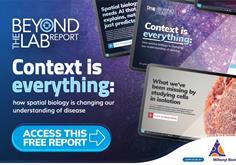
Download our report, Context is everything: How spatial biology is changing our understanding of disease, and discover how preserving tissue context is helping researchers deepen their understanding of disease biology, advance target and biomarker discovery, and reveal new insights into treatment response.
Access the free report by registering for a membership or logging into your account.
Available through free Drug Target Review membership.
This report is sponsored by:
Download Now






No comments yet