



A comprehensive new review assesses the emerging landscape of nanoparticle-based delivery systems and maps the translational challenges that must be resolved before nanomedicine can become a routine component of clinical care.
Glioblastoma is currently one of the hardest cancers to treat, with patients typically surviving only 14-15 months after diagnosis despite surgery, radiotherapy and chemotherapy. One of the main problems in treating the disease is the difficulty in getting drugs into the brain itself. Now, a new review is highlighting how using nanomedicine could help scientists accomplish this.
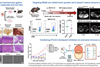
Published in Chinese Neurosurgical Journal, the review examines emerging nanoparticles and other nanoscale delivery systems designed to cross the blood-brain barrier (BBB) and the related blood-brain tumour barrier (BBTB).
The review brings together evidence from a field that ranges from laboratory and animal studies through to technologies already being investigated in patients.
What is the blood-brain barrier?
The BBB is a specialised network of cells lining the brain’s blood vessels. Tight connections between these endothelial cells restrict which substances can pass from the bloodstream into brain tissue. It also contains transport proteins that can actively remove some drugs. The blood-brain tumour barrier is a related but more variable structure around brain tumours. Its uneven permeability means drug delivery can differ substantially between different parts of the same tumour.
Why does this matter for early drug discovery?
The BBB is designed to protect the brain from potentially harmful substances in the bloodstream. That makes it an important defence mechanism but also a major obstacle for drug developers. The review notes that around 98 percent of small-molecule drugs and nearly all biologics do not cross an intact BBB at therapeutic levels.
Glioblastoma makes the problem more complicated. Parts of a tumour can have a disrupted barrier, while infiltrative regions may retain a relatively intact BBB. This means a drug may reach the tumour core while failing to reach cancer cells at its margins – some of the cells that may contribute to recurrence.
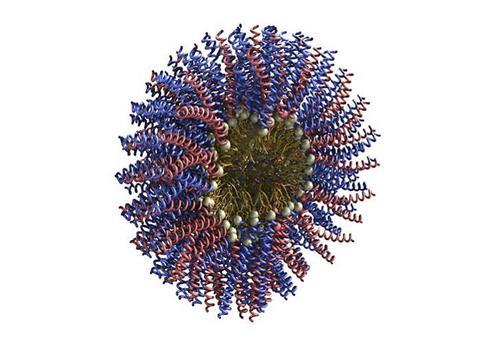
Nanomedicines offer a potential workaround, with researchers now being able to engineer nanoparticles to protect their drug cargo, improve circulation and interact with specific receptors involved in transport across the BBB.
From passive delivery to ‘smart’ nanoparticles
The review also describes several approaches for improving delivery. Some nanoparticles rely on passive targeting, while others carry molecules designed to bind receptors such as transferrin receptors or LRP1 that can help transport material across the BBB.
Researchers are also developing stimuli-responsive nanoparticles that release their payload in response to conditions inside a tumour, such as acidity or oxidative stress. External triggers including near-infrared light, magnetic fields and ultrasound could also be used to control drug release or generate localised therapeutic effects.
Some platforms combine several functions. Nanoparticles can deliver conventional drugs or nucleic acids while also generating heat or reactive oxygen species through approaches such as magnetic hyperthermia, photothermal therapy, photodynamic therapy and sonodynamic therapy.
Key takeaways
- Most approaches discussed remain preclinical, although some have reached early clinical testing.
- Nanoparticles could help drugs cross the BBB and reach hard-to-treat tumour regions.
- Stimuli-responsive systems aim to release treatments selectively within or around tumours.
- Clinical translation will depend on safety, manufacturing, regulatory approval and better prediction of how these systems behave in patients.
How does this fit with what’s already happening?
Nanoparticles are no longer just acting as microscopic drug carriers, researchers are now designing systems that recognise their surroundings, cross biological barriers and release treatments at specific locations.
There are also signs of early clinical translation. The review highlights NanoTherm, an iron oxide-based magnetic hyperthermia system, and NU-0129, a gold nanoparticle-based RNA interference therapy, as examples of nanomedicine approaches that have entered clinical testing.
That does not mean nanomedicine has yet been established as an effective treatment for glioblastoma. Much of the technology remains at the preclinical stage and the review identifies several barriers to clinical translation:
- Long-term safety – nanomedicines need to demonstrate that they are safe over the longer term.
- Scalable manufacturing – promising nanomaterials need to be manufactured consistently at a scale suitable for clinical use.
- Regulatory approval – these technologies still need to overcome the regulatory requirements necessary for clinical adoption.
- Consistent performance across patients – nanomedicine approaches need to work reliably despite differences between patients.
What happens next?
For researchers, the challenge is now about making these systems predictable, reproducible and safe rather than simply making them more sophisticated.
“Long-term safety, scalable manufacturing, regulatory approval and consistent performance across patients must all be addressed before nanomedicine becomes a routine component of glioblastoma treatment,” explained Dr Hao Wang from Capital Medical University, who was one of the reviews leaders.
The authors point to biomimetic nanoparticles, multifunctional systems and artificial intelligence-assisted design as areas to watch. They also argue that better preclinical models that reproduce the human BBB and the complexity of glioblastoma will be essential for determining which approaches are most likely to succeed in patients.









No comments yet