



A study published in Communications Biology reveals that hyperactivation of YAP and TAZ, two oncoproteins regulated by the Hippo signalling pathway, is associated with both increased genomic instability and elevated PD-L2 expression.
Cancer cells can accumulate genetic changes that make them easier for the immune system to recognise. However, being recognised does not necessarily mean they will be destroyed.
Researchers at Hiroshima University, working with international collaborators, have identified a mechanism that may explain why some cancer cells remain protected from immune attack despite displaying features that should make them easier to detect.
The study found that hyperactivity of two cancer-promoting proteins, YAP and TAZ, was associated with increased genomic instability and higher expression of PD-L2, an immune checkpoint protein that helps cancer cells suppress T-cell activity.
The findings could have implications for understanding why some tumours respond better to immune checkpoint inhibitors (ICIs) than others, while highlighting potential new targets for combination therapies.
Understanding the double role of YAP/TAZ
YAP and TAZ are proteins regulated by the Hippo signalling pathway, which normally helps control cell growth and tissue development. Under normal conditions, regulators including LATS1 and LATS2 keep YAP/TAZ activity in check.When LATS1/2 are lost or disrupted, YAP/TAZ can become overactive, driving cancer cell growth.
However, while their role in tumour development is well established, their contribution to immune evasion is less understood. To investigate this, the researchers identified two ways in which increased YAP/TAZ activity could help cancer cells interact with and evade the immune system.
First, it increased genomic instability, resulting in greater DNA damage and more mutations. This can increase the number of abnormal proteins produced by cancer cells, potentially creating signals known as neoantigens that CD8+ T cells can recognise.
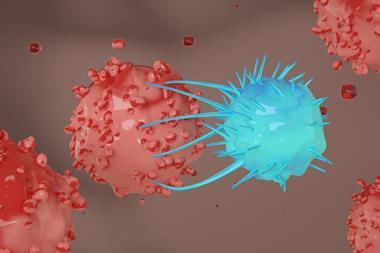
Second, YAP/TAZ activity increased expression of PD-L2, which binds to PD-1 receptors on T cells and acts as a brake on their activity.
This means that while genomic instability may make cancer cells more recognisable to the immune system, increased PD-L2 expression can help them avoid destruction.

Connecting the findings to immunotherapy
To attempt to understand this relationship, the team used head and neck squamous cell carcinoma (HNSCC) cells and engineered T cells designed to recognise EGFR, a protein expressed on the cancer cells.
Cells lacking LATS1/2 resisted attack from the engineered T cells. However, removing PD-L2 made these cancer cells more vulnerable, indicating that the protein contributed to their ability to evade immune destruction.
The researchers also investigated how YAP/TAZ regulate PD-L2 production. Their experiments implicated TEAD and BRD4, which help control gene expression, as well as a super-enhancer involved in regulating PD-L2.
Disrupting these components reduced YAP/TAZ-driven PD-L2 expression in laboratory models, highlighting a potential route for therapeutic intervention.
Why does this matter for drug discovery?
ICIs work by blocking inhibitory signals that prevent T cells from attacking cancer cells. Anti-PD-1 treatments, for example, prevent PD-1 from interacting with its ligands, including PD-L2, helping restore T-cell activity.
However, not all patients respond to these treatments. Identifying the molecular characteristics associated with treatment sensitivity is therefore an important area of cancer drug discovery.
The team examined clinical and genomic data from 1,662 patients with advanced cancers who had received ICI treatment. Patients whose tumours carried alterations in selected Hippo pathway genes, including FAT1, NF2, LATS1, LATS2 and YAP1, had better overall survival than those without these alterations.
These tumours also had higher tumour mutational burden (TMB), a measure of the number of mutations within cancer cells that is already used to help assess the likelihood of response to certain immunotherapies.
The findings suggest that Hippo pathway alterations could provide another way to identify patients more likely to benefit from ICIs.
Importantly, the clinical analysis did not establish that YAP/TAZ activation and increased PD-L2 directly caused the improved outcomes. The researchers also did not test anti-PD-1 treatment in their laboratory experiments.
What happens next?
For researchers developing cancer therapies, the findings raise two main opportunities: using Hippo pathway alterations to improve patient selection for immunotherapy and investigating whether targeting YAP/TAZ could make tumours more susceptible to immune attack.
Targeting the YAP/TAZ-TEAD signalling axis could potentially address both cancer growth and immune evasion. However, translating this into a viable treatment will require further investigation, particularly to establish whether disrupting this pathway improves responses to existing ICIs in relevant tumour models.
The findings may be particularly important for HNSCC, where response rates to ICI monotherapy remain below 20 percent, highlighting the need for strategies to improve treatment effectiveness.
Further studies using independent patient cohorts, with matched information on YAP/TAZ activity, PD-L2 expression and immune-cell infiltration, will be needed to establish whether these molecular features can reliably predict treatment response.
Cancer patients harboring mutations regulating the Hippo pathway and YAP/TAZ hyperactivation may be sensitised to immune checkpoint inhibitor therapy owing to genome instability and PD-L2 expression.”
Toshinori Ando, Professor, Hiroshima University’s Graduate School of Biomedical and Health Sciences
Ultimately, the research highlights how understanding the relationship between cancer-promoting pathways and immune evasion could help researchers identify new therapeutic vulnerabilities. It also reinforces the importance of looking beyond individual molecular targets to understand how multiple biological mechanisms interact to influence treatment response.




No comments yet