



Researchers have catalogued 1,067 uncharacterised microproteins and identified a candidate implicated in the mitochondrial impairment of microglia associated with Alzheimer’s disease.

Scientists at the Salk Institute have developed a new atlas of microproteins found in the human brain, potentially giving researchers a new way to investigate Alzheimer’s disease and other neurodegenerative conditions.
The atlas was created using 480 human frontal cortex samples from people with and without Alzheimer’s disease. Researchers identified 1,067 previously uncharacterised microproteins and found evidence linking one of them to dysfunction in microglia, the immune cells that reside in the brain.
“We still do not fully understand the molecular mechanisms of healthy ageing and that is especially true for microproteins, which have been inadvertently overlooked for decades,” says senior and co-corresponding author Dr Alan Saghatelian and Dr Frederik Paulsen. “Our atlas allows scientists to systemically investigate microproteins in ageing and neurodegeneration, which should bring us closer to understanding and tackling diseases like Alzheimer’s or Parkinson’s.”
A previously overlooked class of proteins
Microproteins are a small class of proteins that are more difficult to detect and study than larger proteins. Even though they are small, they can play important roles in health and disease.
Scientists already have extensive information about the proteins produced by different types of brain cells. However, microproteins have often been missed by conventional approaches, leaving a gap in researchers’ understanding of how cells function and become dysfunctional.
To address this, the Salk team used existing transcriptomic and mass spectrometry data from human brain samples. They also used ShortStop, an AI-powered tool developed in Saghatelian’s laboratory, to search the data for previously unidentified microproteins.
“We were able to take all these technologies and tools and reapply them to existing data from nearly 500 brains to find new microproteins. We were able to create an entirely new database that researchers can download and use to better interpret functions of genes.”
Dr Brendan Miller, Postdoctoral Researcher at Salk Institute
Links to Alzheimer’s-related brain changes
The researchers identified 1,067 uncharacterised microproteins, with many not previously detected. Mass spectrometry provided physical evidence of the microproteins by detecting their peptide building blocks, supporting the team’s predictions.
Hundreds of the newly identified microproteins were present at different levels in Alzheimer’s disease samples compared with healthy brain tissue. Overall, Alzheimer’s samples tended to show higher levels of microprotein expression.
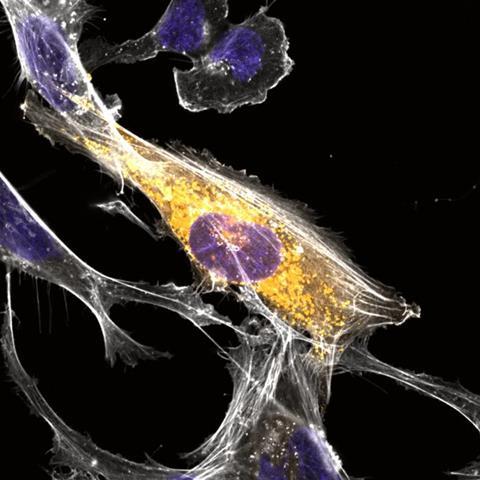
The team then focused on microglia, which help protect and monitor the brain and are known to become dysfunctional during ageing and neurodegenerative disease.
Their experiments identified a microprotein that was produced by microglia instead of another protein encoded within the same region of genetic code. When researchers removed the gene responsible for producing the microprotein, the mitochondria responsible for generating cellular energy became impaired.
The finding suggests the microprotein could play a role in microglial dysfunction associated with Alzheimer’s disease, although further research will be needed to establish its precise function.
Expanding the atlas
The researchers say the atlas could eventually be expanded using samples from other regions of the brain. The work was made possible through the Religious Orders Study/Memory and Aging Project cohort, which provided access to human brain tissue and associated clinical data.
“Every coach has a playbook and you want as many plays as possible to win the game,” says Miller. “For scientists, the game is trying to understand the disease, and the plays are the proteins and microproteins that may or may not be involved in that disease.”
Key facts
- Study – Salk researchers created an atlas of microproteins in the human brain.
- Samples – The study analysed 480 frontal cortex samples from people with and without Alzheimer’s disease.
- Discovery – Researchers identified 1,067 previously uncharacterised microproteins.
- Alzheimer’s link – Hundreds showed different levels of expression in Alzheimer’s disease brain samples.
- Microglia – One microprotein was linked to dysfunction in microglia, the brain’s resident immune cells.
- Potential – The findings could reveal new molecular targets for future Alzheimer’s treatments.
- Stage – The research is early-stage preclinical target discovery and no drug was tested.
- Publication – The study was published in Nature Aging on 14 September 2026.











No comments yet