



Researchers have used a sophisticated mathematical model to characterise the mechanisms underlying HE-S2, an experimental immunomodulatory antibody-drug conjugate, finding that falling interstitial fluid pressure within shrinking tumours may create a self-reinforcing cycle of improved drug delivery.
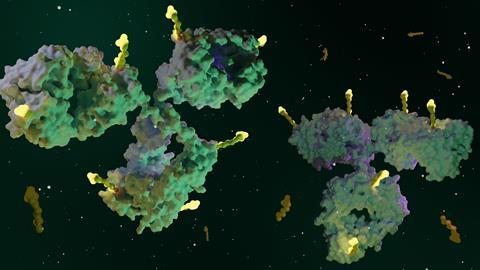
An experimental cancer therapy called HE-S2 could become increasingly effective as tumours shrink, according to a new mathematical model developed by researchers from Mass General Brigham and the University of Cyprus.
The model suggests that HE-S2 not only produces a stronger treatment effect than either of its individual components alone but may also benefit from a positive feedback loop within the tumour. As the therapy reduces tumour size, pressure within the tumour can fall, potentially allowing more of the drug to reach its target and further improving treatment effectiveness.
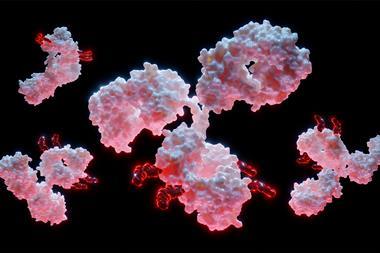
HE-S2 is an immunomodulatory antibody-drug conjugate (IM-ADC) that combines an anti-PD-L1 antibody with an immune-stimulating payload called D18.
Modelling HE-S2’s effects
The team fitted the model to results from previously published mouse studies involving HE-S2. The model was able to reproduce the tumour responses observed in those experiments while also allowing the researchers to investigate biological processes that are difficult to measure directly.
The results indicated that HE-S2 was more effective than either the anti-PD-L1 antibody or the D18 payload when used individually.
The modelling also revealed a potential mechanism that could contribute to the therapy’s effectiveness.
As HE-S2 reduces the size of a tumour, the interstitial fluid pressure within the tumour can decrease. Lower pressure may allow the therapy to move more effectively through the tumour, potentially creating a cycle in which improved drug delivery leads to further tumour reduction and an additional improvement in drug delivery.
Too much normalisation could hinder treatment
The model also highlights a potential limitation to strategies designed to improve the tumour microenvironment.
Tumours often contain abnormal blood vessels that can interfere with the delivery of drugs. Improving blood vessel function could therefore help therapies reach tumour cells more effectively. However, completely normalising these vessels could have the opposite effect for ADCs.
Because ADCs are large molecules, they need sufficiently large pores in blood vessels to enter tumour tissue. The model indicates that pores of at least 40 nanometres are required for ADCs to reach their targets.
This means that reducing vascular permeability too far could prevent HE-S2 and other large antibody-based therapies from entering the tumour effectively.
Finding the right treatment environment
The findings support a more targeted approach to modifying the tumour microenvironment before ADC treatment. Rather than simply normalising abnormal blood vessels, treatment strategies may need to improve their function while preserving enough permeability for large antibody-based therapies to penetrate tumours.
The researchers say the mathematical model provides a way to explore these complex interactions and identify biological processes that may otherwise be difficult to study experimentally.
The work could ultimately help researchers determine how best to prepare tumours for IM-ADC treatment and optimise the conditions that allow these therapies to reach their targets.






No comments yet