



GPCRs account for a significant proportion of approved drug targets, yet selectively controlling their activity remains a major challenge. Researchers have now used AI-assisted protein design to create miniproteins capable of activating or inhibiting these receptors, providing an alternative strategy for targeting this important class of membrane proteins.
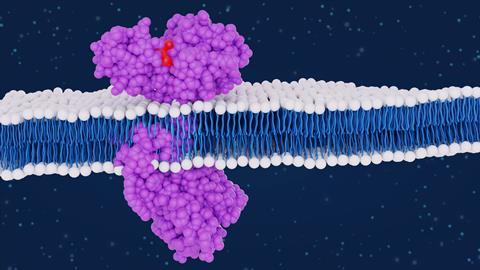
G protein-coupled receptors (GPCRs) are among the most widely targeted proteins in modern medicine, yet their structural complexity has made them difficult to modulate selectively. Researchers from the University of Washington School of Medicine’s Institute for Protein Design and Skape Bio have now reported the design of AI-assisted miniproteins capable of activating or inhibiting selected GPCRs.
Published in Nature, the study describes a computational approach for designing proteins that can recognise specific GPCR conformations and control receptor activity.
Targeting a major class of membrane proteins
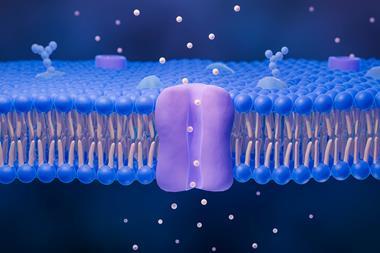
GPCRs are embedded within the cell membrane and regulate a wide range of biological processes, including vision, olfaction, metabolism and hormone signalling. As a result, they represent one of the most important classes of drug targets.
However, their structural flexibility and ability to adopt multiple active and inactive states continue to present challenges for drug developers seeking to selectively modulate receptor activity. To address this, the researchers sought to design proteins capable of recognising specific receptor conformations.
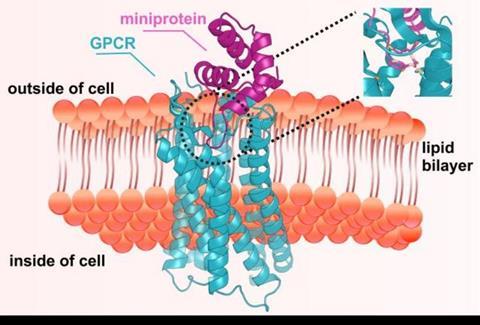
Using computational design methods, the researchers created miniproteins containing fewer than 100 amino acids that could access deep receptor pockets often beyond the reach of conventional drug discovery techniques.
By targeting specific active and inactive receptor states, the proteins could either activate signalling pathways or prevent signalling from occurring.
Explaining the rationale behind the approach, David Baker, director of the UW Medicine Institute for Protein Design, said: “Protein design takes our understanding of how proteins fold and reverses it – asking if we can envision, with the aid of AI computing, a new protein that sticks to a target in a purpose-built way.”
He added: “This paper showcases how we can do this repeatedly for different GPCRs in ways that capitalise on their dynamic motion to either activate or inactivate them. The result is a generalised approach to targeting biologically critical receptors.”
Structural studies confirmed that several of the designed proteins closely matched their intended models. In a mouse study, one designed miniprotein performed comparably to a clinically used drug while producing fewer side effects.
Screening receptors in their native membrane environment
In addition to designing the miniproteins, the researchers developed a screening platform capable of testing tens of thousands of candidate proteins directly in living human cells.
Traditional GPCR screening approaches often require receptors to be purified, stabilised or otherwise modified before analysis, processes that can alter receptor behaviour and affect signalling activity. The new platform allows designed proteins to be screened while receptors remain embedded within the cell membrane, providing a more biologically relevant testing environment.
Expanding opportunities for GPCR therapeutics
The researchers suggest the platform could have applications across a range of therapeutic areas, including metabolic, inflammatory and neurological diseases.
“Seeing computationally designed miniproteins not only bind but actually control GPCR signalling in living cells was a defining moment for me,” said Edin Muratspahić, a postdoctoral researcher at the UW Medicine Institute for Protein Design and first author of the study.
The team also sees broader potential for applying computational protein design across the GPCR family.
“The methods we are sharing in this new study form the roadmap for achieving all-computational design of protein ligands for any GPCR,” said Christoffer Norn, corresponding author and co-founder of Skape Bio.
The researchers believe the combination of computational protein design and native-cell screening could support the development and evaluation of future GPCR-targeting therapies. The findings may also aid efforts to develop more selective modulators for GPCRs, which remain a major focus of drug discovery research.
Researchers interested in membrane protein analysis can learn more in the webinar From expert task to lab routine – membrane protein purification and analysis simplified, which explores automated workflows and technologies designed to simplify membrane protein purification and stability analysis while preserving native protein structure.









No comments yet