



All Protein Expression articles
-
 News
NewsSpeakers announced for Protein Sciences in Drug Discovery 2026 in Stevenage
Three leading scientists in protein science, structural biology and AI will headline the Protein Sciences in Drug Discovery conference at GSK Stevenage in November 2026, exploring advances in AI-driven drug design, native mass spectrometry and membrane protein folding.
-
 Article
Fast-tracking AI-designed binders with cell-free expression and SPR
AI can rapidly generate new protein binders, but wet-lab validation remains a major bottleneck. Combining cell-free protein synthesis with surface plasmon resonance (SPR) enables AI-designed antibody binders to be screened directly from crude extracts, bypassing lengthy cell culture and purification steps.
-
 Article
Why more ribosomes can mean less protein in mRNA therapeutics
What happens when the cellular machinery making therapeutic proteins slows down? New research in Nature shows why translation speed could matter for the design of mRNA medicines.
-
 Article
Inside one of the most comprehensive human proteome atlases to date
Understanding where proteins are expressed throughout the body is critical for selecting better drug targets. Here’s how a new human proteome atlas could improve target selection, predict toxicity and support drug repurposing.
-
 News
NewsAI uncovers antimicrobial peptides hidden within prion proteins
Researchers at the University of Pennsylvania have used artificial intelligence to identify a new class of antimicrobial peptides within prion proteins, traditionally associated with neurodegenerative disease. The discovery reveals 1,179 potential antibiotic candidates, with laboratory and animal studies confirming activity against drug-resistant bacterial strains.
-
 News
NewsMembrane lipid composition directly regulates EGFR activity in cells
MIT researchers have demonstrated that cell membrane composition directly influences EGFR activity, with elevated negatively charged lipids locking the receptor into a growth-promoting state.
-
 News
NewsAI-designed miniproteins target GPCRs in drug discovery
GPCRs account for a significant proportion of approved drug targets, yet selectively controlling their activity remains a major challenge. Researchers have now used AI-assisted protein design to create miniproteins capable of activating or inhibiting these receptors, providing an alternative strategy for targeting this important class of membrane proteins.
-
 News
NewsAAX Biotech and evitria partner on antibody development
AAX Biotech has partnered with evitria AG to expand access to its Opti-mAb® platform, enabling earlier integration of stability-enhancing technology into antibody candidate design and multispecific format development.
-
 Article
Beyond serendipity: rational design and AI’s expansion of the undruggable target landscape
For decades, drugging the ‘undruggable’ was thought to require luck rather than logic. Today, AI is transforming serendipity into strategy by enabling rational, data-driven approaches to previously inaccessible targets.
-
 News
NewsWater interaction key to smarter nanomedicine design
Scientists at Arizona State University have discovered that the way nanoparticles interact with water determines how they behave inside the human body, providing a new thermodynamic framework that could lead to more effective nanomedicines.
-
 News
NewsNew precision GLP-1 agonist could reduce side effects in patients
Researchers have developed a novel GLP-1 receptor agonist that preserves blood sugar control while reducing nausea and vomiting, offering a potential safer approach to treating diabetes and obesity.
-
 News
NewsARK1 identified as target for future malaria drugs
Scientists have identified Aurora-related kinase 1 (ARK1) as a vital protein in malaria parasite development, a breakthrough that could enable future drugs designed to block transmission.
-
 News
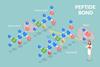
NewsNew method boosts production of non-natural amino acids for peptide assembly
A team of researchers has developed a faster, simpler method for creating non-natural amino acids and assemble them into peptides, a breakthrough that could accelerate peptide research and provide new tools for designing drugs.
-
 News
NewsDrug Target Review’s women in STEM
For International Day of Women and Girls in Science, Drug Target Review highlights articles published over the past year that were authored by women, celebrating their contributions to research.
-
 News
NewsHDAC11 protein identified as potential target for Duchenne muscular dystrophy
A new preclinical study has shown that reducing the protein HDAC11 could slow muscle degeneration in Duchenne muscular dystrophy, providing a potential target for future therapies.
-
 News
NewsBrain discovery could improve drugs targeting amyloid diseases
New research shows the brain can intentionally form amyloids to store memories, challenging decades of thinking about neurodegenerative disease and pointing towards new strategies for drug discovery.
-
 News
NewsNew Alco5 platform could advance cancer antibody therapies
Biotech company, Tubulis, has published preclinical data on its Alco5 antibody-drug conjugate platform, demonstrating the ability to link antibodies with previously inaccessible hydroxy-containing drugs.
-
 News
NewsRare sugars point to future therapies for alcohol dependence
Researchers have identified a biological pathway linking sugar and appetite for alcohol, suggesting that rare sugars could one day form the basis of new therapies and approaches for reducing alcohol consumption and treating dependence.
-
 News
NewsOTULIN enzyme found to drive tau and brain ageing
Researchers have discovered that the enzyme OTULIN, known for regulating the immune system, also drives the formation of tau – a protein linked to Alzheimer’s and other neurodegenerative diseases.
-
 Article
Why tau still lacks treatments and how funders are responding
Tau drives PSP, CBD and other neurodegenerative diseases, yet there are still no disease-modifying treatments. Here, Dr Glenn Harris from the Rainwater Charitable Foundation shares how a coordinated funding effort is supporting basic research to understand tau mechanisms, improve detection and progress therapeutic development.