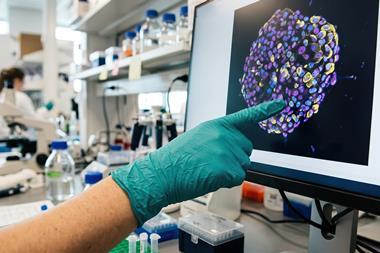
For International Day of Women and Girls in Science, Drug Target Review highlights articles published over the past year that were authored by women, celebrating their contributions to research.

For International Day of Women and Girls in Science, Drug Target Review is spotlighting a selection of articles that have been authored by women and published over the past year. Showcasing a cross-section of the expertise and insight these contributors have brought to the drug discovery and development landscape – from rethinking the role of non-human primates in preclinical research and advancing cutting-edge, human-relevant alternatives, to navigating the operational complexity of cell and gene therapy trials – these pieces reflect the breadth of innovation across the sector. They also explore the policy and access barriers shaping oncology combination therapies in the UK and EU, the transformation of central laboratories through automation and AI and a pioneering approach to targeting previously ‘undruggable’ proteins by interfering with protein folding. Together, these articles highlight the scientific leadership, strategic thinking and innovation driving change across drug discovery.
Time for change: non-human primates in drug research
By Dr Mariana Argenziano (Associate Director of Manufacturing Technologies at Ncardia)
In this article, Dr Mariana Argenziano discusses how non-human primates (NHPs) have previously been a gold standard in preclinical drug development – but that reliance is now under intense pressure. From mounting ethical concerns and spiralling costs to supply shortages and the FDA’s push towards non-animal testing, the industry is approaching a turning point. This article explores why NHP use is being re-examined and how cutting-edge alternatives, from iPSC-derived models to organ-on-chip technologies, could lead to safer, more human-relevant drug discovery.
Click here to read the article
Managing CGT trials: the role of IRT from discovery to clinical development
By Cara Woodruff (Director of Product Management, IQVIA IRT)
Here, Cara Woodruff talks about how cell and gene therapy (CGT) trials are among the most complex studies in modern drug development, where a single misstep in manufacturing, logistics or data management can directly impact patients. This article explores how interactive response technology (IRT) is becoming a critical enabler for CGT trials, bringing real-time visibility, control and compliance to highly personalised therapies. From managing intricate supply chains to supporting patient recruitment and regulatory demands, it reveals why smart IRT platforms are fast becoming a pillar of successful CGT clinical programmes.
Click here to read the article
Overcoming barriers to oncology combination therapies in the UK and EU
By Anastasia Stamoulou (Health Economics & HTA Analysis at IQVIA), Dr Jennifer Gaultney (Senior Principal & Function Lead for Health Economics & Health Technology Assessment at IQVIA) and Saskia van Dijk (Product Manager Market Access Insights at IQVIA)
In this article, the authors try to reconcile the enormous potential of oncology combination therapies to improve patient outcomes with the persistent barriers to accessing them across the UK and EU. Despite rapid innovation in cancer drug development, outdated HTA frameworks, evidence gaps and fragmented reimbursement systems continue to slow decision-making for combinations compared with monotherapies. This article unpacks the real-world challenges shaping access today – and explores how policy reform, smarter evidence generation and cross-stakeholder collaboration could accelerate approval and ensure these therapies reach patients sooner.
Click here to read the article
Transforming central labs with automation and AI: setting new standards for modern trials
By Michelle Lynskey (Vice President of Client Services, ICON Central Laboratories)
As clinical trials grow more complex, central laboratories are under mounting pressure to deliver faster results, manage frequent protocol amendments and navigate shifting regulatory demands – without compromising scientific integrity. In this article, Michelle Lynskey reveals how ICON Central Laboratories is changing the central lab model through intelligent resourcing, automation and AI-driven protocol digitalisation. With measurable gains in startup speed, amendment turnaround and client satisfaction, ICON’s strategy offers a comprehensive blueprint for the future of clinical trial support. Discover how innovation is redefining what central labs can achieve – and why this evolution matters for sponsors worldwide.
Click here to read the article
Protein folding interference: a new path to hard-to-drug targets
By Lidia Pieri (Co-founder & CEO of Sibylla Biotech)
What if the key to targeting ‘undruggable’ proteins lies not in their final form – but in the fleeting moments before they fully fold? In this article, Lidia Pieri shares a new approach to targeted protein degradation, using small molecules to interfere with protein folding intermediates and trigger natural cellular disposal pathways. Powered by a physics-based, AI-enhanced platform, its PPI-FIT technology enables access to thousands of previously unreachable targets, including oncology drivers such as Cyclin D1. Explore how folding interference could redefine the druggable proteome and usher in a new era of precision therapeutics.



Topics
- 3D Cell Cultures
- Cancer
- Cara Woodruff (Director of Product Management at IQVIA IRT)
- Cell & Gene Therapy
- Companies
- Drug Development
- Drug Discovery Processes
- Hit-to-Lead
- ICON Central Laboratories
- Industry Experts
- IQVIA
- Lab Tools & Automation
- Legal & Compliance
- Lidia Pieri (co-founder & CEO of Sibylla Biotech)
- Molecular Biology
- Ncardia
- Oncology
- Organ-on-a-Chip
- Protein Expression
- Sibylla Biotech
- Small Molecules
- Translational Science