A new study has revealed that many kinase inhibitors – key drugs used in cancer and other diseases – also trigger the accelerated degradation of their target proteins, which could inform future therapies.
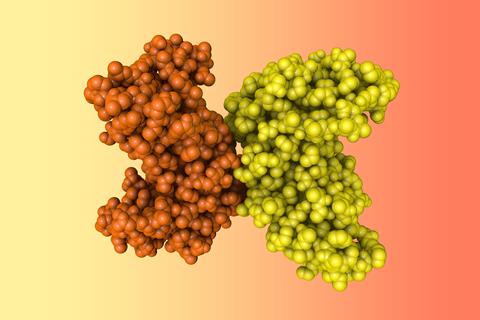
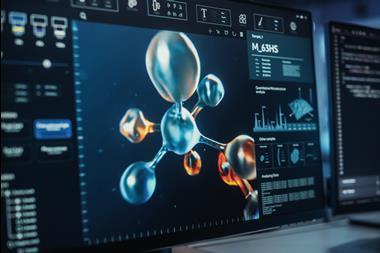
A large international research study has discovered a new behaviour in one of medicine’s key classes of drugs. Kinase inhibitors – widely used to treat cancer and other diseases – do not just block the activity of their target proteins, they also accelerate the destruction of those same proteins within cells.
The study was a combined effort by the Research Center for Molecular Medicine of the Austrian Academy of Sciences in Vienna (CeMM), the AITHYRA Institute for Artificial Intelligence in Biomedicine (Vienna) and the Institute for Research in Biomedicine (Barcelona).
A new view on trusted medicines
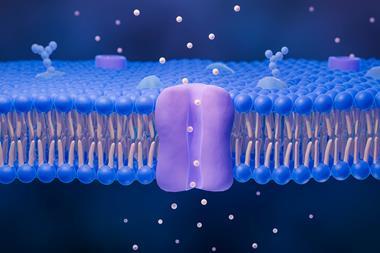
Protein kinases function as molecular switches, controlling how cells grow, divide, communicate and survive. Because faulty kinase activity can drive cancer and other illnesses, these enzymes have become major drug targets. More than 80 kinase inhibitors are currently approved by the US Food and Drug Administration (FDA), with almost double that number still in development.
Protein kinases function as molecular switches, controlling how cells grow, divide, communicate and survive.
Traditionally, these drugs were designed to block the enzymatic activity of kinases. However, the new study shows that their effects can be far more far-reaching. Rather than solely inhibiting kinase function, many compounds also increase the rate at which cells degrade these proteins.
“Inhibitor-induced degradation turns out to be surprisingly widespread,” says Natalie Scholes, senior postdoctoral researcher at CeMM and first author of the study. “Our data show that small molecules don’t just block kinase activity; they can shift proteins into conformations that the cell recognises as unstable. That means inhibitors can double as degraders, adding a whole new layer to how these drugs work.”
Large-scale profiling uncovers a hidden trend
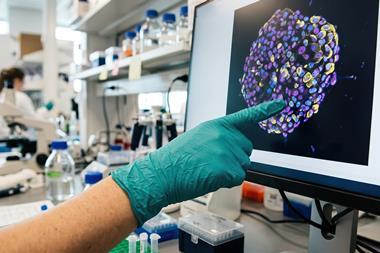
Evidence had emerged in recent years that certain inhibitors may destabilise their targets, but the larger picture still wasn’t visible. To clarify this, the team profiled 98 kinases against a library of 1,570 inhibitors, tracking the abundance of each protein over time.
The team profiled 98 kinases against a library of 1,570 inhibitors, tracking the abundance of each protein over time.
The results demonstrated that 232 compounds lowered the levels of at least one kinase, affecting 66 different kinases across the panel. Some followed a known mechanism called ‘chaperone deprivation’, in which inhibitor binding prevents the chaperone HSP90 from stabilising its client proteins. But many others did not. Instead, the inhibitors pushed kinases into altered states – through changes in activity, location or molecular assembly – that made them much less stable and therefore marked for clearance by the cell’s quality-control machinery.
Three distinct mechanisms, one unifying rule
To explore these mechanisms in detail, the researchers examined three kinases with markedly different fates. One kinase, LYN, was eliminated within minutes once an inhibitor disrupted its natural stability switch. Another, BLK, was degraded only after being released from the cell membrane into the cytosol by a membrane-bound protease complex. A third, RIPK2, was cleared after forming large protein clusters that the cell removed using its recycling systems.
“This study demonstrates that degradation is not an anomaly but part of the pharmacological spectrum of kinase inhibitors,” says Georg Winter, Director at the AITHYRA Institute for Biomedical AI, adjunct Principal Investigator at CeMM and senior author of the study. “Understanding this dimension could help us design better drugs that don’t just silence kinases but remove them altogether – and in some cases, it may explain unexpected effects of existing therapies.”




Topics
- Analytical Techniques
- Cancer
- Cancer
- Drug Development
- Drug Discovery
- Drug Discovery Processes
- Drug Targets
- Enzymes
- Georg Winter (Director at the AITHYRA Institute for Biomedical AI)
- High-Throughput Screening (HTS)
- Kinases
- Molecular Biology
- Molecular Modelling
- Molecular Targets
- Natalie Scholes (senior postdoctoral researcher at CeMM)
- Pharmacology
- Protein Expression
- Small Molecules
- the AITHYRA Institute for Artificial Intelligence in Biomedicine (Vienna)
- the Institute for Research in Biomedicine (Barcelona)
- the Research Center for Molecular Medicine of the Austrian Academy of Sciences in Vienna (CeMM)
- Translational Science