



All Artificial Intelligence & Computational Tools articles – Page 2
-
 News
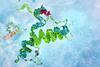
NewsAI uncovers antimicrobial peptides hidden within prion proteins
Researchers at the University of Pennsylvania have used artificial intelligence to identify a new class of antimicrobial peptides within prion proteins, traditionally associated with neurodegenerative disease. The discovery reveals 1,179 potential antibiotic candidates, with laboratory and animal studies confirming activity against drug-resistant bacterial strains.
-
 Article
Drug development has changed. Bioanalysis is changing with it
As drug developers pursue increasingly complex therapies, traditional bioanalytical approaches are being put to the test. How is the field adapting to meet these new demands?
-
 News
NewsEuropean initiative aims to bring molecular dynamics into mainstream drug discovery
What if the vast amounts of data generated by molecular dynamics simulations could be routinely shared and reused? A new €10 million European initiative aims to do just that, helping researchers gain a deeper understanding of protein behaviour and drug-target interactions.
-
 Report
AI in Drug Discovery: Progress, Limits and What Comes Next
AI has attracted enormous investment across drug discovery, but major questions still remain around validation, reproducibility and real-world application. In our latest Beyond the Lab report, experts discuss where the technology is starting to influence discovery workflows – and where limitations continue to slow adoption.
-
 News
NewsELRIG announces keynote speakers for Drug Discovery 2026 conference in London
ELRIG has announced its keynote speaker programme for Drug Discovery 2026, with LifeArc’s Dr Sam Barrell CBE delivering the opening address.
-
 Article
Why AI models need patient data to deliver in drug discovery
Despite rapid advances in AI, many drug discovery models still struggle to translate computational predictions into clinical outcomes. Thomas Clozel explains how Owkin is training AI on large-scale patient-derived data while integrating experimental and clinical validation directly into model development.
-
 News
NewsAI system reduces animal testing in drug discovery by 50 percent
German researchers have developed genESOM, a generative AI system that could reduce animal numbers in preclinical drug testing by 30 to 50 percent.
-
 Article
The scale divide: competing strategies in AI drug discovery
Two approaches to AI in preclinical drug discovery are diverging, from multi-thousand GPU systems to models with only a handful of parameters, with early results raising questions about which will deliver.
-
 News
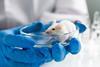
NewsAI system detects pain in laboratory mice through facial analysis
Researchers at ETH Zurich have developed an automated system that uses infrared imaging and artificial intelligence to assess pain in laboratory mice by analysing subtle facial expressions, offering a more consistent and humane alternative to traditional manual observation methods.
-
 News
NewsELRIG announces keynote speakers for Advances in Cell-based Screening 2026 in Gothenburg
ELRIG has announced the keynote speakers for its 2026 Advances in Cell-based Screening conference in Gothenburg, where scientists will gather to explore how human-first models, advanced cell biology and AI are changing the future of drug discovery.
-
 News
NewsNew AI tool could accelerate drug discovery and cut lab costs
Scientists have developed a machine learning system that can predict how complex chemical reactions will produce the correct molecular form for medicines.
-
 News
NewsNew AI foundation model aims to speed up drug discovery
Insilico Medicine and Liquid AI have partnered to develop a lightweight artificial intelligence foundation model designed to support multiple stages of drug discovery.
-
 Article
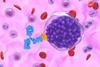
Making immunotherapy safer and more accessible through continuous digital monitoring
Immunotherapies such as CAR-T are extending survival, yet reliance on inpatient monitoring for cytokine release syndrome continues to restrict access. This article explores how continuous digital monitoring and AI-driven analysis could enable safer outpatient delivery and support more scalable immunotherapy adoption.
-
 Article
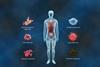
Advancing drug discovery with reproducible, animal-free 3D systems
Lukas Gaats and his team at mo:re are using automation to bring consistency to 3D cell culture and move drug discovery beyond animal models. Read on to find out how.
-
 Article
Vibe coding 101 for drug discovery scientists
Find out how AI-assisted development is democratising software creation in life sciences.
-
 Article
AI begins to enter Alzheimer’s drug discovery pipelines
Artificial intelligence is increasingly used to analyse large, multimodal Alzheimer’s datasets and inform target discovery and trial design. A new JPAD special issue highlights how these methods are moving from experimentation towards practical application in drug discovery.
-
 News
NewsVirus-mimicking LENN nanoparticles deliver mRNA to bladder cancer cells
Researchers have developed virus-inspired LENN nanoparticles that deliver mRNA therapies directly to bladder cancer cells, remain stable after freeze-drying and avoid triggering immune responses.
-
 News
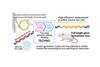
NewsNew TECHNO platform enables large-scale human gene integration in mice
Japanese researchers have developed a new gene-editing platform, TECHNO, that allows entire human genes – including regulatory regions – to be inserted into mice, allowing for better disease modelling and drug testing.
-
 News
NewsSchrödinger partners with Lilly TuneLab on AI drug discovery
Schrödinger has announced a collaboration with Eli Lilly’s TuneLab platform, integrating advanced AI-driven drug discovery workflows into its LiveDesign enterprise informatics system.
-
 News
NewsNew Lumos AI platform targets precision in mental health drugs
Headlamp Health has launched Lumos AI®, a new decision-support platform designed to bring greater precision to neuroscience drug development.