



All Disease Research articles – Page 15
-
 News
NewsAdvancing the understanding of rare heart conditions
A potential link between truncating variants and the development of DCM has been found, and a patient-focused registry about PPCM was made.
-
 Article
A Guide to DNA Damage Response and Innate Immunity
In this guide, we provide an overview of the DDR and innate immune pathway and describe Transcreener Assays and Assay Systems for key targets.
-
 Article
Not all neoantigens are created equal
Founder and CSO of Achilles Therapeutics Dr Sergio Quezada reveals how the landmark TRACERx study has gleaned key insights that could make the difference between success and failure in immunotherapy treatment.
-
 Report
Beyond the lab: screening
Register to access the very latest research, insights and innovations including CRISPR activation screening, AI-aided screening and using nanofibrillar cellulose hydrogels.
-
 Article
The role of STRIs in cancer
Within cancer cells, the eIF4F complex’s dysregulation amplifies the translation of cancer-promoting proteins, establishing it as a critical juncture in malignancy and resistance to treatment. eFFECTOR Therapeutics has responded with Selective Translation Regulator Inhibitors (STRIs). These STRIs are precision instruments dismantling the foundations of tumour growth, immune evasion, and resistance ...
-
 Article
CAR-NK cells: promising for cancer therapy
The suitability of NK cells for cancer therapy has been challenged by some investor and business interests because of limited efficacy data, is this a valid belief at the present stage of development of the immune therapy field?
-
 Article
Navigating the challenges of cell therapies
Cell therapies hold great potential for treating complex diseases, yet they face significant limitations and challenges. Current cell therapies have difficulty distinguishing between healthy and cancerous cells, often resulting in adverse effects. Vittoria's innovative Senza5 platform, with its unique CD5-targeting approach, aims to enhance the efficacy, safety, and speed of ...
-
 News
NewsMicrocapsule-loading exosomes to treat vitreoretinal diseases
Scientists have developed ExoCaps, self-healing microcapsules that are more feasible than other cell-based technologies.
-
 Article
Novel method for early cancer diagnosis
A recent scientific collaboration, led by the Institute of Nuclear Physics of the Polish Academy of Sciences, has overcome measurement challenges, enabling reliable cancer diagnosis.
-
 Article
The inner workings of environmental bacterium
Researchers have achieved profound insights into the inner workings of a prevalent environmental bacterium.
-
 Whitepaper
ebook: Maximizing preclinical confidence in target efficacy and safety
This ebook outlines Euretos’ approach to target discovery and indication expansion. Whilst also discussing data-driven target selection.
-
 Article
How organoids can redefine pre-clinical research
Organoids, lab-grown 3D structures that mimic human organs, are redefining preclinical research through bypassing the ethical and practical limitations of animal models. Technological advancements in organoid research, including automation and improved analytical tools, promise to unlock new possibilities by streamlining the application of these 3D structures to enhance drug development ...
-
 Event
EventLiverpool Breakfast Briefing
Drug Target Review in association with ELRIG UK and BioIVT will host an exclusive, free-to-attend, breakfast briefing during the annual Drug Discovery event this October in Liverpool, UK. The highly anticipated breakfast briefing is open to all attendees of ELRIG’s Drug Discovery event, ELRIG UK and Drug Target Review members ...
-
 News
NewsAre female mice better protected against obesity?
The University of California underwent a mouse study disclosing underlying sex differences in mice for obesity.
-
 News
NewsExtracellular vesicles could slow spread of fibrosis
US researchers studied the extracellular vesicles of fibrosis and find potential avenue for new treatments and therapeutics.
-
 Webinar
Bridging the gap: using organ-on-a-chip as an experimental tool to develop (cost) effective therapeutics
The webinar will explore primary concerns in drug discovery development and why drugs fail.
-
 News
NewsA structural insight into HIV drug-resistance mechanisms
New Salk Institute, US, research could lead to the development of new HIV therapeutics that overcome resistance to existing drugs.
-
 News
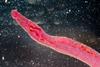
NewsNovel targets identified for treatment of schistosomiasis
Researchers from Brazil discovered that survival of the parasitic worm that cause the disease schistosomiasis, depends on expression of a specific type of RNA. In animal trials, inhibition of the molecule interrupted the infection.
-
 News
NewsInvestigating heart disease through arterial calcification and repair mechanisms
Professor at Texas Tech University's Department of Biological Sciences has been granted an Innovative Project Award by the American Heart Association to delve into the intricacies of atherosclerosis, a condition responsible for artery thickening and severe health complications.
-
 News
NewsSpecialised white blood cells could lead to more preventative treatments
Australian researchers analyse the way specialised white blood cells produce an immune response, which could lead to the development of preventative treatments for cancer and infectious diseases.