



All Imaging & Diagnostics articles – Page 5
-
 Article
From lab to clinic: the rise of Radio-DARPins in oncology
As radioligand therapy continues to show promise, its application in solid tumours remains limited by long-standing biological challenges. In this interview, Julien Torgue, CSO at Orano Med, discusses a new collaborative platform – Radio-DARPins – and how it could help overcome key barriers to clinical progress.
-
 News
NewsHow a PRL3-targeting cancer drug could help millions see again
Singapore researchers have found that cancer drug PRL3-zumab shows strong potential for treating wet age-related macular degeneration and diabetic retinopathy - two leading causes of blindness worldwide.
-
 Article
The future of CNS drug development: signs of real progress
New therapeutic approaches are emerging for CNS disorders – but can they overcome the toughest barriers in drug development? Find out what is driving progress and what still stands in the way.
-
 News
NewsMicroglia replacement halts ALSP progression in landmark trials
Scientists from Fudan University have halted the progression of ALSP, a rare and fatal brain disease, using a pioneering microglia replacement therapy - marking the first effective clinical approach to tackling the disease.
-
 News
NewsMitochondria: melanoma’s hidden vulnerability
Scientists at Lund University have shown that aggressive melanoma tumours are driven by overactive mitochondrial processes – revealing a potential treatment strategy using drugs already approved for other conditions.
-
 Article
What single cells are revealing about brain disorders
Single-cell and spatial technologies are giving researchers an unprecedented view of how brain diseases like Alzheimer’s really work. The result? Faster discovery, clearer targets and a new path towards more effective treatments.
-
 News
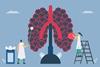
NewsRapid cell reprogramming creates lung-like cells to combat COPD
Scientists from Nagoya University have developed a fast and safe method to create lung cells from skin-like fibroblasts - without using stem cells. This technique could allow for new regenerative therapies for diseases like chronic obstructive pulmonary disease (COPD).
-
 Article
Smart automation for every lab, not just big pharma
Drug Target Review spoke with Giancarlo Basile at SLAS Europe 2025 about MGI’s bold shift from sequencing specialist to automation partner – helping research companies of all sizes achieve accuracy, speed and reproducibility.
-
 News
NewsNew mouse model mimics rare GRIN2D disorder
Researchers at Tel Aviv University have developed a new mouse model that accurately mimics a rare and severe genetic disorder caused by mutations in the GRIN2D gene – allowing for study of the disease’s progression and the testing of potential drug therapies.
-
 News
NewsLeukaemia-on-a-chip mimics bone marrow for better CAR T testing
A new “leukaemia-on-a-chip” device replicates human bone marrow and immune interactions, enabling researchers to observe CAR T cell therapies in action - potentially allowing for more personalised treatment strategies for leukaemia patients.
-
 Article
Machine Learning and AI in Enhancing Image Analysis of 3D Samples
Want to understand the real impact of AI in 3D sample analysis? This episode cuts straight to how machine learning is accelerating research and overcoming current limitations.
-
 News
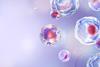
NewsMeet the hemifusome: a new organelle with big impact
Scientists have discovered a previously unknown organelle inside human cells - the hemifusome - that could change our understanding of rare genetic disorders.
-
 News
NewsScientists grow 3D brain that mimics the real thing
Researchers at POSTECH have developed a new 3D brain model that closely mimics the structure and function of human brain tissue – marking a major advance in early disease detection.
-
 News
News3D model reveals hidden drivers of smell regeneration
Scientists have developed a simple- 3D mouse tissue model to study how the nose regenerates smell-sensing neurons. The goal is to create an organoid system that can be used to screen potential therapies for smell loss.
-
 Article
The next phase of the multiomics evolution, powered by AI
Genomics laid the foundation for precision medicine, but on its own, it offers only part of the picture. This article explores how integrated multiomics can provide the deeper biological context needed to drive more effective therapies forwards.
-
News
Stanford grows vascularised mini-organs
Stanford scientists have successfully grown heart and liver organoids that include functioning blood vessels. This breakthrough overcomes a major size and maturity barrier, which could advance disease modelling and regenerative therapies in the future.
-
 Article
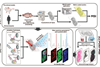
A spatial approach to understanding drug dynamics using mass spectrometry imaging
What if you could actually see where a drug travels in the body down to the cellular level. Find out how mass spectrometry imaging (MSI) is making that possible – reshaping drug development from the inside out.
-
 Article
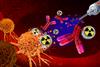
Why radiopharmaceuticals are gaining ground in the fight against cancer
Radiopharmaceuticals represent a rapidly advancing field in oncology, using radioactive compounds to both detect and treat cancer at the molecular level. This article explores how targeted radiation is improving patient outcomes while reducing systemic toxicity.
-
 News
NewsScientists create advanced 3D liver model mimicking real tissue
Scientists have developed a 3D liver model, known as the periportal assembloid. This model replicates the liver’s complex structure and bile transport system, enabling more precise study of disease progression.
-
 Article
What SLAS 2025 really told us about drug discovery
Forget the buzzwords - SLAS 2025 showed what’s genuinely driving progress in drug discovery: usable AI, collaborative platforms and tools that solve real problems.