



All Imaging & Diagnostics articles – Page 2
-
 Webinar
What it takes to automate high-content imaging at scale
This webinar examines the design trade-offs and technical constraints involved in building a high-throughput robotic imaging pipeline for complex biological workflows.
-
 Article
International Women’s Day: digital pathology in early drug discovery
For International Women’s Day, Dr Amanda Hemmerich, Global Director of Digital Pathology & Innovation at IQVIA Laboratories, describes how digital pathology is being applied in early drug development and what it takes to build credibility in a multidisciplinary technical field.
-
 News
NewsNew OC-PAM AI tool tracks cancer organoid drug response
Scientists have developed an AI-enhanced imaging platform that enables non-invasive, label-free and longitudinal monitoring of cancer organoids and spheroids.
-
 News
NewsMini-stomach organoids grown to improve disease research
Scientists have grown the first multi-regional “mini-stomach” in the lab, creating a new way to study rare genetic stomach diseases and help to develop new treatments for digestive conditions.
-
 News
NewsHow ageing cells affect brain development and neurodegeneration
New research has revealed how cellular senescence – the process in which ageing cells change function – shapes human brain structure from development to old age, improving our understanding of brain ageing and neurodegenerative diseases.
-
 News
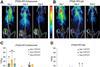
NewsClaudin 18.2-targeted therapy advances GI cancer treatment
A novel imaging-guided radiopharmaceutical targeting claudin 18.2 has shown that it can precisely detect and effectively treat gastric and pancreatic tumours, completely eradicating cancer in some preclinical models.
-
 Article
Rethinking drug discovery through transcription factor biology
Complex diseases rarely have single targets. By focusing on transcription factor activity and disease signatures, Scripta Therapeutics is taking a different approach to identifying the drivers of pathology.
-
 News
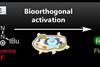
NewsNew fluorescent technology tracks drug responses in cells
Researchers have developed new innovative fluorescent labels that allow scientists to observe cellular processes with unprecedented clarity – offering a powerful tool for medicine, drug research and cell biology.
-
 News
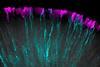
NewsFunctional retinal organoids improve drug testing for eye disease
Researchers have developed vascularised human retinal organoids featuring the first fully functional light-signal pathways in lab-grown human retina models, opening new possibilities for studying eye disease and testing therapies.
-
 Article
Why tau still lacks treatments and how funders are responding
Tau drives PSP, CBD and other neurodegenerative diseases, yet there are still no disease-modifying treatments. Here, Dr Glenn Harris from the Rainwater Charitable Foundation shares how a coordinated funding effort is supporting basic research to understand tau mechanisms, improve detection and progress therapeutic development.
-
 News
NewsMaternal stress may alter foetal brain development via immune pathways
Stress during pregnancy may disrupt the maternal gut-immune system, altering foetal brain development and revealing sex-specific vulnerabilities linked to neurodevelopmental risk
-
 News
NewsBrain ‘master switch’ discovery could lead to new neurodegenerative therapies
Scientists have captured, for the first time, dynamic changes in a crucial neuronal ‘master switch’ inside the living brain, potentially informing new future treatments for neurodegenerative diseases.
-
 News
NewsNew research aims to make FDA-approved drugs safer for the brain
Life-saving HIV and cancer drugs can carry serious neurological risks, and new funding will help UMBC researchers discover how these medicines damage the brain – which could help to inform safer treatments.
-
 News
NewsParkinson’s: new study rethinks dopamine’s role in movement
A new study is challenging long-held beliefs about dopamine’s role in movement, revealing new insights into how Parkinson’s disease treatments work and pointing towards more targeted future therapies.
-
 News
NewsPlatelet-inspired nanoparticles could improve treatment of inflammatory diseases
Scientists have developed platelet-inspired nanoparticles that deliver anti-inflammatory drugs directly to brain-computer interface implants, doubling their effectiveness.
-
 News
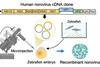
NewsNew reverse genetic system accelerates norovirus vaccine research
Researchers at The University of Osaka have developed a new system to study human norovirus, with the hope of being able to develop vaccines and antiviral treatments faster.
-
 Article
RNA that knows where to go: the rise of targeted delivery
What if RNA medicines could be guided directly to tumours, sparing healthy tissue and reducing side effects? Advances in targeted delivery are bringing that vision closer to reality.
-
 News
NewsAutomated lung organoids to speed up new drug development
Scientists have developed an automated method to grow lung organoids, with the hope of speeding up drug testing, reducing reliance on animal models and helping to develop new personalised treatments.
-
 Article
The partnership changing the pace of radiopharmaceutical development
A new collaboration between Crown Bioscience and Medicines Discovery Catapult is bringing advanced tumour models together with world-class imaging and radiochemistry to accelerate the development of next-generation radiopharmaceuticals.
-
 News
NewsResearchers identify new drug site on epilepsy target SV2A
A team led by St. Jude Children’s Research Hospital and UT Southwestern has mapped how key anti-epilepsy drugs latch onto their neural target, SV2A.