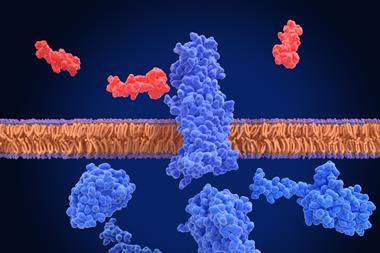
A team led by St. Jude Children’s Research Hospital and UT Southwestern has mapped how key anti-epilepsy drugs latch onto their neural target, SV2A.

A multi-institute team led by St Jude Children’s Research Hospital and UT Southwestern Medical Center has, for the first time, mapped how certain anti-epilepsy drugs interact with their molecular target. Using cryo-electron microscopy, the researchers discovered the structural changes that occur in synaptic vesicle glycoprotein 2A (SV2A), a membrane protein present in nearly all neurons, when drugs such as levetiracetam bind. The study also identified how experimental modulators engage an alternative site on SV2A, offering potential pathways to improve drug potency.
Understanding a long-standing mystery
Prior to this study, scientists had limited insight into what occurs when anti-epilepsy drugs attach to SV2A. Levetiracetam, one of the drugs examined, is the first and, to date, only three-dimensional (3D) printed drug product approved by the Food and Drug Administration (FDA) and is also listed on the World Health Organization’s Essential Medicines List. This means that understanding its interaction with SV2A is crucial.
Prior to this study, scientists had limited insight into what occurs when anti-epilepsy drugs attach to SV2A.
“There are several compounds that bind to SV2A, but its biology is still largely unknown; its native substrate hasn’t even been identified,” explained co-corresponding author Dr Chia-Hsueh Lee from the St Jude Department of Structural Biology. “SV2A is highly expressed in neurons, so its medical importance and unknown biology motivated us to learn more.”
Revealing structural insights
The researchers obtained detailed structures of SV2A in its natural state as well as in combination with a panel of FDA-approved and experimental anti-seizure therapies. In addition to the primary drug-binding site, they explored a secondary region, known as an allosteric site, which can modulate the effects of drugs binding to the main site.
Secondary site may unlock more potent treatments
The findings demonstrated some modulators enhance the effects of certain therapies but not others. For instance, one modulator improved the effects of levetiracetam and brivaracetam but did not affect the experimental drug padsevonil. Levetiracetam and brivaracetam exclusively bind the primary site, triggering the structural changes typical of this transporter protein family, while padsevonil binds both the primary and allosteric sites. These results highlight the complexity of SV2A’s interactions with drugs and provide valuable guidance for designing future therapeutics.
The findings demonstrated some modulators enhance the effects of certain therapies but not others.
“Across the different members of this transporter family, the primary drug site is more conserved than the allosteric site. So, if you want a more specific compound, you should design it to bind only to the allosteric site,” Lee said. “This will allow therapies to be more specific to SV2A, rather than drugs that inhibit other superfamily members and cause side effects.”
Next steps in SV2A research
Lee and his team are continuing to study SV2A to clarify its biological role in neuronal cells. “Developing better inhibitors or modulators will allow us to dissect SV2A’s functions and determine whether it truly works as a transporter,” he said. “The more we understand this protein, even from a pharmacological perspective, the more tools we have to control or modulate it.”
The study not only explains the molecular mechanisms of widely used anti-epilepsy drugs but also aides the development of more effective and specific treatments, potentially providing new therapeutic approaches for millions of patients with epilepsy worldwide.


Topics
- Analytical Techniques
- Dr Chia-Hsueh Lee (St Jude Department of Structural Biology)
- Drug Development
- Drug Discovery
- Drug Discovery Processes
- Drug Targets
- Imaging & Diagnostics
- Microscopy
- Molecular Targets
- Neurological disorders
- Neurosciences
- St Jude Children’s Research Hospital
- Structural Biology
- Tools and techniques
- Translational Science
- UT Southwestern Medical Center