



All Infectious disease articles – Page 6
-
 News
NewsNew painless vaccine technology targets viruses
Learn how Kindeva and Emervax are advancing vaccine delivery with painless, needle-free technology designed to improve accessibility and uptake worldwide.
-
 News
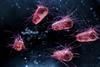
NewsPhage therapy: A step forward in the fight against antibiotic resistance
A new study shows how phages, viruses that kill bacteria, can coexist on a single bacterial strain. This offers valuable insights for developing more effective therapies against antibiotic-resistant infections.
-
 News
NewsRadiotracer targets key cancer biomarker for precision treatment
A breakthrough in molecular imaging could transform how doctors target solid tumours, offering more personalised and effective treatment options.
-
 Article
Nobel Prize celebrates AI's role in protein structure innovation
The 2024 Nobel Prize in Chemistry honours AI's transformative impact on protein science, with breakthroughs set to reshape drug development.
-
 Article
New insights into the role of viral capsids in gene therapy safety
Viral capsid assembly and quality are key factors in gene therapy success and safety. Here, Dr Chelsea Pratt explores how cutting-edge tools are enabling scientists to tackle these challenges and improve patient outcomes.
-
Article
Women in STEM with Avideh Nazeri
Avideh Nazeri, Vice President of Clinical, Medical and Regulatory for Novo Nordisk UK, reflects on her journey through the world of STEM, highlighting the resilience and determination required to overcome biases and challenges along the way. She discusses how perseverance, collaboration and independent thinking have shaped her career, and offers ...
-
 News
NewsNovel nasal spray effectively prevents influenza infection
The nasal spray reduced influenza virus levels by >99.99 percent, which could safeguard public health if validated in humans.
-
 News
NewsNew monoclonal antibody drug could combat antimicrobial resistance
Scientists have developed a monoclonal antibody drug that could help to prevent infection from Acinetobacter baumannii.
-
 News
NewsmRNA vaccine provides enhanced protection against mpox
The mRNA vaccine candidate more effectively limited symptoms and disease duration in non-human primates.
-
 Article
The rising demand for lentiviral vectors for in vivo gene therapy
Fuelled by advances in rare disease treatments and vaccination efforts, Natalia Elizalde, CBO at VIVEbiotech, discusses how the market demand for lentiviral vectors is evolving, the new therapeutic areas emerging as potential targets for in vivo gene therapy and the latest technological advancements in the development and delivery of in ...
-
 News
NewsNew two-step vaccination strategy for influenza
The novel strategy demonstrates a strong immune response, both body-wide and specifically in the upper respiratory tract, in porcine models.
-
 Article
Exploring the potential of ADCs beyond oncology
Antibody Drug Conjugates (ADCs) are already deployed as part of the roster of oncology treatments, but here, Mike Ward, Head of Thought Leadership for Life Sciences & Healthcare, Clarivate, looks into their potential to help treat a whole range of other diseases and conditions. He discusses the barriers and enablers ...
-
 News
NewsReprogramming B cells to produce custom antibodies
The new technique could be adapted to produce a wide range of antibodies to combat chronic conditions like HIV.
-
News
Improving the effectiveness of immunotherapy for glioblastoma
Researchers utilised AI to identify genes that reprogramme GBM cancer cells into dendritic cells within the tumour.
-
 News
NewsAdvancing HIV treatment with a small molecule inhibitor
The new study demonstrated that a small molecule inhibitor, BLZ945, could be used as a potential therapeutic to achieve viral clearance.
-
 News
NewsMini-lungs enable breakthroughs in SARS-CoV-2 research
Researchers discovered two potential new drug applications with the possible clinical use of surfactant early in COVID-19 cases.
-
 News
NewsDevelopment of a new and promising antimalarial agent
The new agent, DIF-1(+3), proved to be as effective against drug-resistant malaria as it was against susceptible strains.
-
 News
NewsThe role of KDR in the survival of HTLV-1-infected T cells
KDR inhibitors could be very impactful for treatment of ATLL and HAM/TSP or prevent disease by lessening the viral load of HTLV-1.
-
 News
NewsSmall molecule inducers of trained immunity found
Researchers screened over 2,000 small molecules and have now more than doubled the known compounds reported to induce trained immunity.
-
 News
NewsImproving vaccine responses by targeting IL-10
In an animal model, scientists have demonstrated that targeting Interleukin-10 during vaccine delivery enhances the vaccine’s ability to protect against infection.