



All Infectious disease articles
-
 News
NewsUK’s first AI-robotic organoid lab opens in Liverpool
A £20 million high-security facility in Liverpool is set to accelerate drug and vaccine discovery by integrating artificial intelligence, robotics and human organoid technology within a Category 3 containment environment.
-
 News
NewsNew malaria mutations linked to resistance against multiple front-line drugs
Whole-genome sequencing of parasites from Ugandan patients has uncovered a cluster of genetic variants linked to reduced susceptibility to multiple front-line malaria treatments, with researchers warning the mutations are spreading rapidly.
-
 News
NewsAI designs functional bacteriophage genomes to overcome bacterial resistance
Scientists have used artificial intelligence to design complete, functional bacteriophage genomes from scratch, with engineered phages capable of overcoming resistance in bacteria that had defeated naturally occurring viruses — marking a significant step towards AI-driven whole-genome engineering.
-
 News
NewsResearchers develop AI system to accelerate tuberculosis drug discovery
Researchers at Texas A&M have developed AI-driven platforms to help scientists navigate the bottlenecks of tuberculosis drug discovery, from eliminating nuisance compounds to unlocking years of archived research data.
-
 News
NewsDoxycycline found to disrupt bacterial ribosomes via two unknown mechanisms
Researchers have identified two previously unknown mechanisms by which doxycycline inhibits bacterial protein synthesis, findings that could inform the design of next-generation antibiotics against drug-resistant pathogens.
-
 News
NewsOral antiviral GHP-88310 candidate shown to block measles transmission in ferret model
An experimental oral antiviral has demonstrated the ability to prevent both airborne and contact-based transmission of a measles surrogate virus in ferrets, offering a potential new tool to complement vaccination during outbreaks.
-
 News
NewsExperimental HIV vaccine generates broadly neutralising antibodies in primates
A collaborative research team from LJI, Scripps Research and IAVI has developed an experimental HIV vaccine that successfully generated broadly neutralising antibodies in rhesus macaques, marking a pivotal advance in the 14-year effort to design an effective HIV vaccine.
-
 News
NewsAI and lab techniques accelerate tuberculosis drug discovery
Researchers at UMass Amherst have combined high-throughput laboratory screening with an AI neural network to identify compounds capable of breaching the protective outer membrane of Mycobacterium tuberculosis, potentially accelerating the search for new TB therapeutics.
-
 News
NewsDual antibody cocktail offers complete Nipah virus protection
Researchers at Mount Sinai have developed the first fully human monoclonal antibody cocktail to provide complete protection against Nipah and Hendra viruses in preclinical models, offering a potential blueprint for treating high-consequence zoonotic pathogens with no approved therapies.
-
 News
NewsEpilepsy drug sodium valproate could improve vaccine immune responses
A commonly prescribed epilepsy drug has shown striking potential as a vaccine booster in a controlled human trial, more than doubling antibody levels and increasing T cell responses tenfold at a fraction of its standard therapeutic dose.
-
 News
NewsStreptomyces antibiotic ‘megacluster’ targets biotin to combat drug-resistant infections
Researchers at McMaster University have identified an unprecedented antibiotic ‘megacluster’ in Streptomyces bacteria, harbouring four co-located gene clusters that produce compounds collectively targeting bacterial biotin biosynthesis, uptake and utilisation — with two proving effective against multidrug-resistant E. coli in animal models.
-
 News
NewsAI uncovers antimicrobial peptides hidden within prion proteins
Researchers at the University of Pennsylvania have used artificial intelligence to identify a new class of antimicrobial peptides within prion proteins, traditionally associated with neurodegenerative disease. The discovery reveals 1,179 potential antibiotic candidates, with laboratory and animal studies confirming activity against drug-resistant bacterial strains.
-
 News
NewsCerebral organoids identify Ebola virus persistence in neural tissue
Researchers have used human brain organoids to demonstrate that Ebola virus can replicate in neural tissue for up to 120 days, offering new insights into viral persistence mechanisms in immune-privileged sites and late-stage inflammatory complications in survivors.
-
 Article
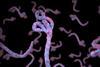
Cerebral organoids reveal how Ebola virus persists in neural tissue
How does Ebola virus survive long after recovery? A new study using human cerebral organoids explores viral persistence in neural tissue and the growing role of organoid models in drug discovery research.
-
 News
NewsAI identifies 23 antiviral candidates for Bundibugyo Ebola strain
US researchers have deployed artificial intelligence and molecular docking software to identify 23 antiviral compounds with potential activity against Bundibugyo Ebolavirus, as the rare strain continues to spread in the Democratic Republic of Congo with a fatality rate approaching 40 percent.
-
 Article
When antibiotics are not enough: the case for immune-engaging therapies
As antimicrobial resistance grows and patient populations become more complex, the limitations of antibiotics are becoming harder to ignore. Dr Helen Bright, CSO at Centauri Therapeutics, discusses a new approach that targets both the pathogen and the host.
-
 News
NewsMitochondrial fission activation offers new tool in fight against antibiotic resistance
Scientists at The University of Queensland have discovered that activating mitochondrial fission can enhance immune defences against antibiotic-resistant bacteria.
-
 News
NewsCD4+ T cells identified as key to hepatitis B clearance
University of California, San Francisco researchers have identified a crucial immune mechanism involving CD4+ T cells that explains why some chronic hepatitis B patients successfully clear the virus after stopping antiviral treatment.
-
 News
NewsAI system transforms weak antibiotics into powerful treatments
University of Pennsylvania researchers have developed ApexGO, an AI system that refines imperfect antibiotic candidates through calculated modifications rather than database screening.
-
 News
NewsNew malaria drug T111 targets all parasite stages in single treatment
A novel compound developed over 15 years of research has demonstrated unprecedented activity against liver, blood and sexual stages of Plasmodium parasites, possibly positioning it as a potential cure for malaria.