



All Molecular Modelling articles
-
 News
NewsMathematical model reveals self-reinforcing mechanism behind HE-S2 ADC cancer therapy
A mathematical model developed by researchers from Mass General Brigham and the University of Cyprus suggests that the experimental immunomodulatory antibody-drug conjugate HE-S2 may become progressively more effective as it reduces tumour size.
-
 News
NewsMathematical model probes metals’ role in Alzheimer’s plaque formation
A mathematical framework simulates how metals such as copper and zinc interact with amyloid-beta, offering a new computational tool to explore plaque formation and potential therapeutic interventions in Alzheimer’s disease.
-
 Article
Why AI struggles with new drug targets – and how physics could help
Virtual screening can assess billions of compounds, but performance can fall on unfamiliar targets. Combining AI with molecular physics could help make predictions more reliable.
-
 News
NewsBig Picture Bio raises £2.2m to develop AI cancer combination therapies
UK-based cancer drug discovery company Big Picture Bio has closed £2.2 million in funding to advance AI-designed combination therapies into laboratory validation, using a generative world model to map complex tumour biology across disease sites and patient subgroups.
-
 News
NewsAI and genetics identify WNK2 inhibitor for osteoarthritis treatment
Researchers at University of Utah Health have used artificial intelligence and human genetic data to identify a promising early-stage drug candidate targeting WNK2, a protein linked to inherited osteoarthritis, with the lead compound reducing inflammatory gene activity and supporting cartilage cell health in laboratory models.
-
 News
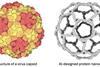
NewsAI-designed proteins self-assemble into virus-like drug delivery structures
An international collaboration has developed AI-designed protein structures that self-assemble into virus-like nanocages using quasisymmetry principles, offering new possibilities for targeted drug delivery, vaccine development and genetic material transport without relying on modified viral proteins.
-
 News
NewsEuropean initiative aims to bring molecular dynamics into mainstream drug discovery
What if the vast amounts of data generated by molecular dynamics simulations could be routinely shared and reused? A new €10 million European initiative aims to do just that, helping researchers gain a deeper understanding of protein behaviour and drug-target interactions.
-
 News
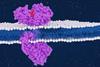
NewsAI-designed miniproteins target GPCRs in drug discovery
GPCRs account for a significant proportion of approved drug targets, yet selectively controlling their activity remains a major challenge. Researchers have now used AI-assisted protein design to create miniproteins capable of activating or inhibiting these receptors, providing an alternative strategy for targeting this important class of membrane proteins.
-
 News
NewsAI identifies 23 antiviral candidates for Bundibugyo Ebola strain
US researchers have deployed artificial intelligence and molecular docking software to identify 23 antiviral compounds with potential activity against Bundibugyo Ebolavirus, as the rare strain continues to spread in the Democratic Republic of Congo with a fatality rate approaching 40 percent.
-
 News
NewsNovel enzyme inhibitors exploits key weakness in malaria parasite
Researchers from the Universities of Bath and Leeds have engineered a novel class of aminopeptidase P inhibitors with enhanced binding affinity and antiparasitic activity against Plasmodium falciparum.
-
 Article
The scale divide: competing strategies in AI drug discovery
Two approaches to AI in preclinical drug discovery are diverging, from multi-thousand GPU systems to models with only a handful of parameters, with early results raising questions about which will deliver.
-
 News
NewsNew approach targets ‘undruggable’ proteins in prostate cancer
A novel drug design strategy has achieved binding strengths up to a million times greater than previous approaches against intrinsically disordered proteins, potentially leading to new treatments for prostate cancer and other diseases involving these historically intractable targets.
-
 Article
Beyond serendipity: rational design and AI’s expansion of the undruggable target landscape
For decades, drugging the ‘undruggable’ was thought to require luck rather than logic. Today, AI is transforming serendipity into strategy by enabling rational, data-driven approaches to previously inaccessible targets.
-
 News
NewsMolecular map reveals thromboxane receptor structure for new blood clotting drug development
International researchers have mapped the structure of the thromboxase A₂ receptor using cryo-electron microscopy, revealing some unexpected activation mechanisms.
-
 Article
AI builds dual-action cancer drug targeting PKMYT1
Research published in Nature Communications shows how generative AI can be used to design complex dual-action cancer drug candidates. Insilico Medicine has developed a PKMYT1 degrader that both eliminates the target protein and blocks its activity, demonstrating the growing role of AI in advanced drug discovery.
-
 Interview
Physics-based modelling offers a new way to study drug targets
Australian start-up OmnigeniQ has demonstrated what it describes as the first deterministic, physics-based computation of a human protein in its native state.
-
 News
NewsNew AI tool could accelerate drug discovery and cut lab costs
Scientists have developed a machine learning system that can predict how complex chemical reactions will produce the correct molecular form for medicines.
-
 News
NewsNew generative AI method could make drug discovery faster
A newly developed AI-driven technique could dramatically speed up the discovery of drugs and advanced materials, enabling scientists to design chemically valid, property-targeted molecules in minutes rather than years.
-
 Article
2026: the year AI stops being optional in drug discovery
AI is moving from a supporting role into the core of drug discovery. By 2026, it is expected to shape how targets are chosen, how biology is analysed and how development decisions are made.
-
 News
NewsSchrödinger partners with Lilly TuneLab on AI drug discovery
Schrödinger has announced a collaboration with Eli Lilly’s TuneLab platform, integrating advanced AI-driven drug discovery workflows into its LiveDesign enterprise informatics system.