


All Neurons articles – Page 4
-
News
Vascular cells essential in forming long-term memories
New research reveals capillary cells and neurons work together to ensure memory formation and storage.
-
 Article
Human neuronal cells: possibilities in drug safety testing
Human derived induced pluripotent stem cells (hiPSCs) have revolutionised research and are increasingly used for toxicology screening and disease modelling. Early detection of neurotoxicity induced by potential new therapies is a major challenge, and hiPSC-neuronal cells may provide a solution. These cells demonstrate considerable promise for uncovering drug-induced ...
-
News
Protein-triggered motor neuron loss in amyotrophic lateral sclerosis
The intricate control of our bodily movements relies on a network of neural pathways connecting the brain and spinal cord. Key among these pathways is the transmission of commands from neurons in the cerebral cortex to motor neurons in the spinal cord, which in turn activate muscles, enabling fluid motion. ...
-
 News
Modified neural stem cells for spinal cord injury
Using genetically modified human neural stem cells (hNSCs), researchers demonstrated that targeted manipulation of a specific gene expression within hNSCs can facilitate the restoration of damaged neural circuits and recovery of locomotor functions.
-
 News
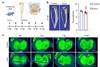
Primary cilia's role in cartilage regeneration after growth plate fractures
Activation of the Hedgehog signalling pathway through cilia holds promise for promoting cartilage repair and overcoming growth plate injuries.
-
 News
MSK1’s importance for cognitive benefits
New study uncovers role of a neuronal protein kinase called mitogen- and stress-activated protein kinase 1 (MSK1) in mediating the cognitive benefits of environmental enrichment.
-
 News
Substance abuse inhibits cognitive flexibility
New US research underlines the relationship between substance use and significant modifications to an inhibitory brain circuit, resulting in decreased cognitive flexibility
-
 News
Human Brain Project study offers insights into neurotransmitter receptor organisation
Researchers from the Human Brain Project (HBP) and collaborating institutions have made significant strides in understanding the distribution of receptors in the brain. Through a comprehensive mapping study, they discovered two distinct gradients of receptor expression per neuron in the cortex, shedding light on its organisation and functionality.
-
 News
Neurotransmitter receptor patterns can separate sensory and cognitive networks
Neurotransmitter receptor patterns define key organisational principles in the brain, UK scientists have discovered.
-
 News
A new way to visualise sensory neurons
US researchers have uncovered a novel method using a tool used to visualise ion channels in mechanosensory neurons.
-
 News
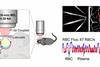
Predicting cerebrovascular diseases with retinal imaging
New imaging approach reveals that changes in retinal microcirculation may indicate cerebrovascular diseases that involve reduced blood flow.
-
 News
Viruses can cause brain cells to fuse leading to a malfunctioning CNS
Researchers from Australia explore how viruses can alter brain cells, and thus the functions of our nervous system, leading to neurological symptoms.
-
 News
Nerve regeneration offers hope for blindness and paralysis
US researchers uncover that certain nerve cells that have the capacity to regrow, are necessary for axon regeneration, providing hope for conditions like blindness and paralysis.
-
 News
Neurons that are responsible for recognition
Researchers from South Korea uncover that neurons in the hippocampus play a crucial role in assigning positive value through interactions with others.
-
 News
Novel mutation linked to late-onset Alzheimer's disease
Chinese researchers discover a mutation, referred to as the "Shanghai APP" mutation, which has been linked to late-onset Alzheimer's disease and offers fresh insights into the disease's underlying molecular mechanisms.
-
 News
Molecular biology behind memory development in early childhood
Researchers from Canada develop a greater understanding about the molecular mechanisms for memory development in early childhood.
-
 News
Rhythmic brain activity helps maintain temporary memories
US researchers have discovered that rhythmic brain activity organises the neuronal pathways that maintain short-term memories.
-
News
Brain cells found to transfer material to neurons in mice
Researchers have discovered that oligodendrocyte-lineage cells transfer cell material to neurons in a mouse brain. They have provided the first evidence of coordinated nuclear interaction between these cells and neurons.
-
News
Alzheimer’s study shows improved memory and mood with enhanced neurons
Using rodent models, the researchers emphasized the potential of newly generated neurons in adulthood to serve as therapy for addressing the functional deficits and pathology associated with Alzheimer's disease.
-
 News
Study reveals new insights on brain development through adolescence
According to US researchers, brain maturation follows a sequence that renders youth sensitive to environmental impacts through adolescence.