



All Neurons articles – Page 2
-
 News
NewsImproving brain resilience: Rab proteins and future treatments
New research has discovered how Rab proteins control the delivery of critical supplies to strengthen neural connections, providing researchers with important insights into memory formation and potential strategies for Alzheimer’s resilience.
-
 News
NewsDARG cells may drive neurodegeneration in progressive MS
Scientists have discovered a rare type of brain cell that appears to drive the chronic inflammation seen in progressive multiple sclerosis – which could potentially lead to new disease-modifying therapies.
-
 News
NewsDDHD2 enables neurons to synthesise and burn fat for energy
Scientists have discovered that neurons can burn and make their own fats for energy – a finding that could lead to new treatments for rare and currently untreatable brain diseases.
-
 News
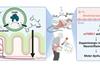
NewsOral bacteria in gut could play role in Parkinson’s disease development
Korean researchers have discovered that oral bacteria in the gut may contribute to Parkinson’s disease – highlighting a potential new target for treatment.
-
 News
NewsChronic neuron overactivation drives Parkinson’s cell death
New research from Gladstone Institutes shows that chronic overactivation of dopamine-producing neurons can directly trigger their death, offering new insights into why these cells deteriorate in Parkinson’s disease which could lead to potential therapies to slow its progression.
-
 News
NewsFrom graphene to grey matter: tech that supercharges brain organoids
Researchers at UC San Diego have discovered a graphene-based technology that accelerates the maturation of human brain organoids, offering a safer, non-invasive way to model diseases like Alzheimer’s.
-
 News
NewsAI-driven Alzheimer’s therapies show promise in early studies
Porosome Therapeutics has announced new advancements in Alzheimer’s treatment – presenting therapies that restore neuronal function, reduce Tau protein levels and reverse disease pathology in human brain organoids.
-
 Article
What single cells are revealing about brain disorders
Single-cell and spatial technologies are giving researchers an unprecedented view of how brain diseases like Alzheimer’s really work. The result? Faster discovery, clearer targets and a new path towards more effective treatments.
-
 News
NewsSOD1 protein found to trigger treatable Parkinson’s progression
Scientists at the University of Sydney have discovered a malfunctioning brain protein linked to Parkinson’s - which could lead to new therapies for the debilitating condition in the future.
-
 News
NewsScientists grow 3D brain that mimics the real thing
Researchers at POSTECH have developed a new 3D brain model that closely mimics the structure and function of human brain tissue – marking a major advance in early disease detection.
-
 News
News3D model reveals hidden drivers of smell regeneration
Scientists have developed a simple- 3D mouse tissue model to study how the nose regenerates smell-sensing neurons. The goal is to create an organoid system that can be used to screen potential therapies for smell loss.
-
 Article
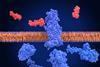
Targeting GLP-1 in the brain could transform obesity care
What if a single hormone could control appetite in two entirely different ways? Professor Stefan Trapp of University College London reveals how GLP-1’s dual role in the brain and gut could transform obesity treatment.
-
 News
NewsAstrocyte protein RTP801 linked to Alzheimer’s cognitive decline
A new study from the University of Barcelona’s Institute of Neurosciences has discovered a crucial role for the RTP801 protein in astrocytes, potentially making way for future therapies aimed at slowing or reversing cognitive decline.
-
 News
NewsPreventing F-actin build-up improves drosophila healthspan
Disrupting F-actin in aged brains restored brain autophagy to youthful levels and reversed some cellular markers of brain ageing.
-
 News
NewsNew toxic component in the evolution of Alzheimer’s disease
UBneuro scientists discovered that reducing RTP801 expression prevented cognitive deficits and inflammation.
-
 News
NewsNew link found between immune system and neurological disease
Findings show that alpha-synuclein and an immune response are required for Lewy body formation, in an effect specific to dopaminergic neurons.
-
 News
NewsElucidating the pathophysiology of migraines
Researchers show that proteins released from the brain during migraine with aura are transported by CSF to pain-signalling nerves.
-
 News
NewsCapturing the computational abilities of real neurons
A new neural network computational model has been developed, which more closely reflects the abilities of real neurons and could advance AI progress.
-
 News
NewsNew brain organoids express proteins in a human brain-specific manner
Culture conditions during embryoid body formation can be enhanced to gain glia-associated proteins and neural network activity.
-
News
CNTN4 modulates factors involved in Alzheimer's disease
The discovery that CNTN4 and APP have a co-dependent relationship has wider implications for neurodevelopmental disorder understanding.