



All Analytical Techniques articles – Page 5
-
 Article
Tackling the organ shortage through vascular bioengineering
Frontier Bio’s vascular bioengineering research connects tissue modelling with graft development to advance regenerative medicine and drug discovery.
-
 Article
Transforming central labs with automation and AI: setting new standards for modern trials
Demands on central laboratories are consistently increasing, heightening the challenge to deliver operational excellence and the highest standard of scientific integrity with both speed and agility. ICON Laboratories is transforming the way we leverage data and intelligent operational models to meet evolving trial needs.
-
 News
NewsBacterial traces discovered within gliomas and brain metastases
Scientists have discovered active bacterial traces inside brain tumours, overturning assumptions about the brain’s sterility and opening up new possibilities for understanding – and potentially treating – gliomas and brain metastases.
-
 Article
Making science run at the speed of thought: the reality of AI in drug discovery – Part 1
Everyone talks about AI speeding up drug discovery, but Eric Ma explains why, without clean data and statistical discipline, it can actually do the opposite.
-
 Article
Deep data not big data
Bigger isn’t always better. In drug discovery, Dr Michael Ritchie argues that the future belongs not to those with the most data, but to those who understand its biological depth.
-
 Article
AI and the future of biomarker analysis in early R&D
AI is transforming biomarker analysis in early drug discovery, revealing hidden biological patterns that improve target discovery, patient selection and trial design for more precise and predictive R&D.
-
 News
NewsFGD3 protein enhances breast cancer therapies
Scientists have identified a little-known protein, FGD3, that can boost the power of key breast cancer treatments by helping drugs rupture tumour cells and activate the immune system.
-
 News
NewsNew framework enhances reliability of virtual cell models
Shift Bioscience have announced new research revealing that AI-driven virtual cell models perform far better than previously thought when assessed with correctly calibrated metrics.
-
 Article
Why first-void urine could potentially change the future of HPV screening
From richer biomarker content to patient-friendly sampling, first-void urine is emerging as a promising tool in precision health. Here is why scientists are paying attention.
-
 News
NewsUK Government announce plans to phase out animal testing for drugs
The UK government have announced a new strategy to phase out animal testing in scientific research, aiming to replace traditional experiments with innovative human-relevant methods such as organ-on-a-chip systems and AI analysis.
-
 Article
Beyond weight loss: the gap in current drug development for obesity
Current obesity drug development remains overly focused on short-term weight reduction, despite obesity being a chronic, multifactorial disease. Broader, mechanism-driven approaches are needed to ensure durable efficacy, safety and accessibility.
-
 News
NewsAlzheimer’s may disrupt fat tissue and raise metabolic disease risk
Researchers have discovered that Alzheimer’s may disrupt communication between nerves and blood vessels in fat tissue which could explain why people with Alzheimer’s are often diagnosed with heart disease and metabolic problems.
-
 News
NewsRNA folding: new model could change future drug design
A Japanese research team has simulated how RNA molecules fold, using cutting-edge computational tools to model complex structures with accuracy – a breakthrough that could accelerate the development of RNA-based medicines and therapies.
-
 Article
Inside ELRIG Drug Discovery 2025: automation, AI and human-relevant models
At ELRIG’s Drug Discovery 2025, Drug Target Review spoke with the teams turning big ideas into usable tools – automation, AI and biology – that help scientists work smarter.
-
 Article
Meet WRPRFa: the precision peptide changing how we study pain
A newly developed peptide, WRPRFa, is giving scientists a clearer view of how the acid-sensing ion channel (ASIC3) drives pain signalling.
-
 Report
Lab Automation: Where Discovery Scales
Automation now plays a central role in discovery. From self-driving laboratories to real-time bioprocessing, this report explores how data-driven systems improve reproducibility, speed decisions and make scale achievable across research and development.
-
 News
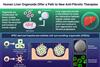
NewsLab-grown liver offers new platform to test fibrosis drugs
Japanese scientists have developed a lab-grown liver organoid that mimics human liver regeneration, offering a new platform to study fibrosis and test therapies.
-
 Article
What’s changing in cancer drug discovery – and why it matters now
Take part in a live Q&A with oncology experts as they explore the scientific advances driving cancer drug discovery.
-
 Article
When chemistry corrects biology: the deuterated return of a MET inhibitor
A promising MET inhibitor failed in the clinic due to human-specific metabolism. Now its deuterated analogue, DO-2, is showing that a simple isotope swap might overcome the problem.
-
 News
NewsOveractive neurons linked to schizophrenia-like behaviour
Scientists have identified an overactive brain cell type linked to schizophrenia-like symptoms in mice – a discovery that could lead to new, targeted treatments to prevent cognitive impairments.