



All Assays articles – Page 4
-
 Article
AI and the future of biomarker analysis in early R&D
AI is transforming biomarker analysis in early drug discovery, revealing hidden biological patterns that improve target discovery, patient selection and trial design for more precise and predictive R&D.
-
 Article
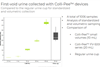
Why first-void urine could potentially change the future of HPV screening
From richer biomarker content to patient-friendly sampling, first-void urine is emerging as a promising tool in precision health. Here is why scientists are paying attention.
-
 Article
Inside ELRIG Drug Discovery 2025: automation, AI and human-relevant models
At ELRIG’s Drug Discovery 2025, Drug Target Review spoke with the teams turning big ideas into usable tools – automation, AI and biology – that help scientists work smarter.
-
 News
NewsNuclera expands into Australasia with Solve Scientific partnership
Cambridge-based biotech firm Nuclera has partnered with Solve Scientific Australia to expand access to its eProtein Discovery™ System across Australia and New Zealand.
-
 Report
Lab Automation: Where Discovery Scales
Automation now plays a central role in discovery. From self-driving laboratories to real-time bioprocessing, this report explores how data-driven systems improve reproducibility, speed decisions and make scale achievable across research and development.
-
 News
NewsNew blood test detects Alzheimer’s years before symptoms
Scientists have developed two rapid and affordable blood tests that can detect early markers of Alzheimer’s disease – potentially decades before symptoms appear.
-
 Article
What’s changing in cancer drug discovery – and why it matters now
Take part in a live Q&A with oncology experts as they explore the scientific advances driving cancer drug discovery.
-
 Article
When chemistry corrects biology: the deuterated return of a MET inhibitor
A promising MET inhibitor failed in the clinic due to human-specific metabolism. Now its deuterated analogue, DO-2, is showing that a simple isotope swap might overcome the problem.
-
 Article
From wild fungi to faster drug discovery
Nature’s pharmacy has yielded half of today’s medicines, yet most of its potential remains untapped. AI is now changing how quickly new therapies can be found.
-
 News
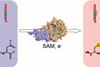
NewsEnzyme PapB could boost diabetes and obesity peptide drugs
Researchers have discovered an enzyme, PapB, that can ‘tie off’ therapeutic peptides into stable rings, which could help improve GLP-1 drugs for diabetes and obesity – making them more effective and longer lasting.
-
 Article
SPNS1 mutations reveal new lysosomal lipid recycling pathway
Scientists have linked rare mutations in SPNS1 to a previously unknown lipid recycling pathway in lysosomes, revealing how faulty fat processing can trigger muscle and liver disease.
-
 Article
The predictive validity crisis: Pharma’s productivity paradox – Part I
Drug discovery now costs 100 times more per FDA-approved drug than in 1950, despite vast advances in biology and computing. The core problem is the collapse of predictive validity in preclinical models, which sits at the heart of pharma’s productivity paradox.
-
 News
NewsHIV antibody 04_A06 almost neutralises all strains
A newly discovered antibody, 04_A06, has shown unprecedented effectiveness against HIV, neutralising 98.5 percent of tested strains and permanently suppressing the virus in humanised mice.
-
 Article
Advancing gene editing: the role of lipid nanoparticles in CRISPR delivery
CRISPR therapies depend on delivery and lipid nanoparticles are emerging as a more flexible and scalable option than viral vectors.
-
 News
NewsScientists track amyloid plaques in living mice for first time
A new fibre-optic method lets researchers monitor amyloid plaque buildup in living, freely moving mice – offering a minimally invasive way to track Alzheimer’s disease progression and test potential therapies.
-
 Article
An ethical shift in NHP research: iPSC-derived cardiomyocytes for safer pharmacology
As regulators move to phase out primate testing, NHP-derived iPSC cardiomyocytes are emerging as a scalable, ethical and scientifically robust alternative - offering drug developers a clear path to faster, more predictive, and more responsible innovation.
-
 News
NewsBlocking SLAMF6 enables T cells to kill leukaemia cells
Researchers have discovered a surface protein that helps acute myeloid leukaemia cells evade the immune system, offering potential insights to aid the development of new treatments.
-
 News
NewsCloneSeq-SV: new blood test tracks ovarian cancer recurrence
Researchers have developed a new blood test method, CloneSeq-SV, that tracks treatment-resistant ovarian cancer cells over time. The approach could help predict recurrence and guide targeted therapies.
-
 Article
Fast-tracking advanced therapies without compromising regulatory success
Early planning for potency CQAs, comparability and evolving global regulations can set advanced therapies on the fastest path to approval. Dr Christian Schneider shares how to prepare from the start to accelerate development without compromising the evidence regulators expect.
-
 News
NewsHibernator liver organoids reveal strategy to improve transplant survival
Researchers have created liver organoids from hibernating Syrian hamsters, revealing how these cells survive cold storage - a discovery that could improve liver transplant success.