



All Cell & Gene Therapy articles – Page 3
-
 News
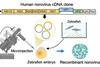
NewsNew reverse genetic system accelerates norovirus vaccine research
Researchers at The University of Osaka have developed a new system to study human norovirus, with the hope of being able to develop vaccines and antiviral treatments faster.
-
 News
NewsLive-cell liquid biopsy study aims to transform cancer treatment
Vortex Liquid Biopsy Solutions has launched a new clinical study with The Doctors Laboratory to assess how its live-cell liquid biopsy technology could change cancer monitoring and treatment.
-
 News
NewsTY1: new experimental drug restores tissue after heart attack
Scientists have developed an experimental RNA-based drug, TY1, that repairs DNA, reduces scar tissue and could lead to new treatments for heart attacks and autoimmune diseases.
-
 News
NewsNew CAR-NKT treatment destroys metastatic pancreatic tumours
A novel CAR-NKT immunotherapy developed at UCLA has shown striking success in preclinical models of metastatic pancreatic cancer, which could hopefully lead to more accessible treatments.
-
 News
NewsPre-transplant treg therapy reduces GVHD risk for blood cancer patients
Priming the immune system ahead of a stem cell transplant may be key to safer, more effective care for blood cancer patients, according to new research showing major reductions in transplant complications.
-
 Article
The mother of invention: from steam engines to AI-designed drugs
Every great leap in history started with a single, urgent need. Now AI is emerging as the next great engine of invention, transforming the future of medicine faster than ever imagined.
-
 News
NewsNew mRNA therapy targets drug-resistant pneumonia
A new mRNA therapy that prompts the body to produce bacteria-killing ‘peptibodies’ has shown early success in preclinical models, offering a potential new tool in the fight against antibiotic-resistant pneumonia.
-
 News
NewsRhosin shown to reverse blood stem cell ageing
Scientists have discovered that the drug Rhosin can rejuvenate ageing blood stem cells by inhibiting a key protein linked to cellular decline, providing a potential new strategy to combat age-related diseases.
-
 News
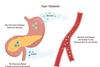
NewsBlood stem cell and islet cell transplant combo reverses Type 1 diabetes
Stanford researchers have cured Type 1 diabetes in mice using a combination of blood stem cell and pancreatic islet cell transplants.
-
 News
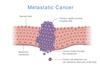
NewsNew stealth CRISPR method reduces immune interference in tumours
Researchers have developed a novel CRISPR method that evades the immune system in mice, allowing scientists to study tumour growth and metastasis more accurately.
-
 News
NewsNew CAR-T cell therapy capable of destroying glioblastoma cells
A new CAR-T treatment developed in Switzerland has shown striking early success against glioblastoma, one of the deadliest brain cancers, and is now moving towards human trials.
-
 Article
Tackling the organ shortage through vascular bioengineering
Frontier Bio’s vascular bioengineering research connects tissue modelling with graft development to advance regenerative medicine and drug discovery.
-
 News
NewsCRISPR disruption of NRF2 re-sensitises tumours to chemo
Researchers have shown that using CRISPR to disable the NRF2 gene can restore chemotherapy sensitivity and slow tumour growth.
-
 Article
Resetting retinal networks with a gene-agnostic approach
What if treating blindness did not mean fixing a single faulty gene? Find out how modifier gene therapy is designed to protect vision by targeting broader retinal pathways.
-
 Article
Circular RNA technology: the future of gene therapy
Pioneering circular RNA could redefine what the future of gene therapy looks like. Erik Digman Wiklund, CEO of Circio, shares how his company’s platform is enhancing gene expression and tackling toxicity challenges through smarter design and scientific collaboration.
-
 News
NewsZuckerberg's Biohub announces AI-powered biology to accelerate drug discovery
The initiative combines cutting-edge artificial intelligence with large-scale biological data, with the aim to transform how new treatments, drugs and therapies are developed.
-
 Article
Recombinant KLK1: the next step in stroke and preeclampsia treatment
With its lead candidate DM199, DiaMedica Therapeutics is advancing a recombinant form of KLK1 to restore blood flow, improve endothelial function and address unmet needs in the treatment of stroke and preeclampsia.
-
 News
NewsSugar-coated tumours: a new target for pancreatic cancer
Researchers have discovered that pancreatic tumours evade the immune system by disguising themselves with a sugar coating. To combat this, they have developed a new antibody therapy that blocks this ‘don’t-attack’ signal, which slows tumour growth.
-
 Article
Inside ELRIG Drug Discovery 2025: automation, AI and human-relevant models
At ELRIG’s Drug Discovery 2025, Drug Target Review spoke with the teams turning big ideas into usable tools – automation, AI and biology – that help scientists work smarter.
-
 Report
Lab Automation: Where Discovery Scales
Automation now plays a central role in discovery. From self-driving laboratories to real-time bioprocessing, this report explores how data-driven systems improve reproducibility, speed decisions and make scale achievable across research and development.