



All Drug Discovery Processes articles – Page 21
-
 News
NewsCDK4/6 and PARP combo improves prostate cancer treatment
Researchers at VHIO have discovered a new way to overcome drug resistance in metastatic prostate cancer – by combining CDK4/6 inhibitors with follow-up therapies.
-
 News
NewsNew drug combo targets PRMT5 to fight deadly cancers
Scientists at Virginia Tech’s Fralin Biomedical Research Institute have identified a promising drug target – PRMT5 – that could make treatment-resistant lung, brain and pancreatic cancers more vulnerable to therapy.
-
 Article
Antibodies come full circle: biopharma back at the bench
Recombinant antibody technology is redefining research standards - bringing biopharma-grade precision, consistency, and customisation to the lab. Discover how advances like Fc engineering and chimerisation are accelerating progress from basic discovery to clinical insight.
-
 News
NewsHow FtsZ and ZapA proteins drive bacterial cell division
Japanese researchers have discovered how the bacterial proteins FtsZ and ZapA work together to drive cell division – a discovery that could guide the development of new antibacterial treatments.
-
 Article
From lab to clinic: the rise of Radio-DARPins in oncology
As radioligand therapy continues to show promise, its application in solid tumours remains limited by long-standing biological challenges. In this interview, Julien Torgue, CSO at Orano Med, discusses a new collaborative platform – Radio-DARPins – and how it could help overcome key barriers to clinical progress.
-
 News
NewsELRIG announces keynote speakers for Drug Discovery 2025 in Liverpool
ELRIG (European Laboratory Research & Innovation Group) has announced the keynote speakers for Drug Discovery 2025, Europe’s premier life sciences conference, taking place at ACC Liverpool from 21–22 October 2025.
-
 Article
Why smarter financial planning could be key to clinical trial success
Effective financial management is vital for clinical trial success, yet many preclinical and clinical companies face inefficiencies due to outdated systems. Jennifer Kyle, CEO of Condor Software, explains how advanced financial platforms can streamline processes, improve forecasting and ensure better resource allocation throughout drug development.
-
 News
NewsDeep-sea sugar EPS3.9 sparks immune attack on tumours
Scientists have isolated a sugar molecule from deep-sea bacteria that triggers pyroptosis - a form of inflammatory cell death - to halt tumour growth - highlighting the potential of marine microbes in drug development.
-
 News
NewsPioneering Nipah vaccine for pigs aims to protect humans too
Scientists at The Pirbright Institute have developed and successfully tested three experimental vaccines to protect pigs against the deadly Nipah virus - a first step to preventing transmission to humans.
-
 News
NewsNew sticky material mimics gecko feet to fight tumours
Inspired by the gecko lizard’s grip, scientists at CU Boulder have developed a sticky, biodegradable material that clings to tumours and delivers chemotherapy drugs over several days.
-
 Article
Plasmids: Tackling Supply Chain and Manufacturing Challenges
Gene therapy’s progress depends on reliable supply chains and efficient manufacturing. In this episode, we explore the challenges and strategies involved in plasmid production - an essential component in advancing life-changing therapies.
-
 Article
Fixing failed drugs: AI solutions for toxicity in drug discovery – part 3
What role could large language models and AI agents play in drug safety? In Part 3, Layla Hosseini-Gerami of Ignota Labs discusses how emerging technologies might make toxicity analysis faster, more accessible and part of the drug discovery workflow from day one.
-
 News
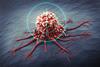
NewsSmart nanogels help CAR-T cells penetrate tumours
Researchers in China have developed a next-generation CAR-T cell therapy armed with nanogels that can penetrate the dense barriers of solid tumours. This addresses a major limitation in the treatment of solid cancers with immunotherapy.
-
 News
NewsNew 3D bioprinted lung tissue could transform respiratory research
UBC Okanagan researchers have developed a new 3D bio-printed lung model that closely mimics the complexity of human tissue – providing scientists with a powerful new tool for studying respiratory diseases.
-
 News
NewsNew AI model PROTsi identifies aggressive tumours using protein markers
Researchers in Brazil and Poland have developed an AI-powered tool that predicts cancer aggressiveness by analysing protein expression - offering new insights into tumour behaviour.
-
 News
NewsAutoimmune breakthrough: Egr-1 regulates treg cells in diseases like MS
Scientists have found a key mechanism driving immune regulation in autoimmune diseases like MS and IBD – which could lead to new targeted treatments.
-
 Article
Designing antibodies to think before they bind
Standard antibody therapies bind their target and trigger a response. But what if the real breakthrough is designing antibodies that first recognise context before they act? This article looks at how bispecifics are becoming smarter, more selective and more precise.
-
 News
NewsDiscovery of hidden survival mechanism in MRSA points to new drug targets
In the fight against antibiotic-resistant bacteria, researchers at Michigan State University (MSU) have made a discovery that could change how we target deadly pathogens like Staphylococcus aureus and its drug-resistant strain - MRSA.
-
 News
News€15M-backed tech targets tumour complexity
Paris-based One Biosciences, a precision oncology biotech company, has raised €15 million in Series A financing to accelerate the development of its AI-powered single-cell tumour profiling platform.
-
 News
NewsNew weekly injection could transform Parkinson’s disease treatment
A new weekly injection developed by University of South Australia scientists could change Parkinson’s treatment by replacing the need for multiple daily pills – potentially helping millions of patients worldwide.