



All Drug Targets articles – Page 22
-
 Article
Women in STEM with Juliet Williams
As part of our series highlighting women in STEM, we spoke to Juliet Williams, Head of Research at Kymera. She discusses what inspired her early passion for science, the power of mentorship and what excites her most about the future of targeted protein degradation – and its potential to deliver ...
-
 News
NewsTreating HCC with genetically modified NK-cell therapy
Blocking the TGF-β signalling pathway produced effective antitumour activity against hepatocellular carcinoma.
-
 Webinar
CRISPR™ MDCKII cell lines development for bioavailability and DDI assessments
Join this webinar to hear from Eurofins Discovery on the latest offerings for drug-drug interaction assessments using CRISPR KO/KI MDCKII cell lines
-
 News
NewsElucidating the pathophysiology of migraines
Researchers show that proteins released from the brain during migraine with aura are transported by CSF to pain-signalling nerves.
-
 Article
Could illuminating the surfaceome help find new targeted cancer therapies?
At the heart of precision oncology is the need to increase our understanding and knowledge of surface proteins found on tumour cells. Here Roman Thomas, CEO of DISCO Pharmaceuticals, explains how it is using cutting-edge technology to explore the surfaceome – a map of the proteins on the cell’s surface ...
-
 News
NewsOvercoming chemotherapy resistance in pancreatic cancer
Researchers have discovered that pancreatic cancer’s resistance to chemotherapy is related to the physical stiffness of the extracellular matrix.
-
 Article
How MMR-deficient colorectal cancers regulate their growth
Understanding how MMR-deficient colorectal cancers drive tumour growth and avoid immune detection could pave the way for personalised cancer medicine.
-
 News
NewsDeveloping a globally-applicable HIV cure
A new assay has been developed which enables the detailing of intact proviral genomes of under-studied HIV strains.
-
 News
NewsStudying the epigenetic profile of beta cells in insulinoma
Researchers found that tumour beta cells lose their repression marks and express elevated levels of oncogenes.
-
 News
NewsElucidating the loss of mobility caused by LGMD2B
The hiPSC-derived skeletal muscle model is the first to uncover the biological mechanisms underlying loss of mobility.
-
 News
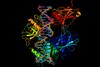
NewsThe potential of deep learning: generating drug targets
Researchers have designed synthetic, soluble versions of cell membrane proteins, which will enable faster and easier screening for new drugs.
-
 News
NewsMini-colons offer improved cellular diversity, longevity and function
Mini-colons, which closely resemble in vivo tissue, were used for several applications, including the characterisation of anticancer drug toxicity profiles.
-
 Webinar
The value of GPCR cell-based assays in drug discovery
Join this webinar to discover how GPCR functional, cell-based assays determine off-target effects, reveal safety issues, and define drug mechanism of action to ultimately evaluate the therapeutic potential of candidate molecules.
-
 News
NewsNew 3D genomic profiling technique details PanINs
Researchers have developed a 3D approach to improve the characterisation of pancreatic intraepithelial neoplasias.
-
 News
NewsNew ENaC blocker demonstrates an extended duration of action
The novel drug, ETD001, could provide an improved approach for mucus clearance in cystic fibrosis patients.
-
 News
NewsWerner syndrome: mechanism behind atherosclerosis elucidated
Researchers have developed a new in vitro co-culture system which enables an in-depth molecular analysis of atherosclerosis.
-
 News
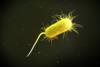
NewsP. aeruginosa infection method elucidated with microtissue model
Researchers found, using human respiratory epithelium organoids, that P. aeruginosa breaches respiratory epithelia by goblet cell invasion.
-
 Article
A T cell receptor immunotherapy against a novel target
In this Q&A, Associate Director, Research at Immunocore, Dr Ana Pereira Ribeiro, talks about IMC-R117C, a T cell receptor bispecific immunotherapy directed towards a novel target, PIWIL1, and about to enter Phase I testing in colorectal and gastrointestinal cancers.
-
 News
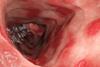
NewsNew biological pathway in IBD discovered
Researchers have identified a new biological pathway driving IBD and similar conditions that could be targeted with MEK inhibitors.
-
 News
NewsMitigating fibrotic barriers in pancreatic cancer
A human pancreatic cancer fibrotic barrier model illuminates how targeting the TGFβ/ROCK2/YAP signalling axis could enhance drug delivery.