



All Drug Targets articles – Page 18
-
 Article
Next-generation drug design: how generative AI can tackle undruggable targets
Generative AI is broadening the boundaries of what is possible in drug discovery. In this article, Murat Tunaboylu, CEO and Co-founder of Antiverse, reveals how the zeitgeist technology is enabling scientists to tackle previously undruggable targets like GPCRs and ion channels to deliver patient impact faster.
-
 News
NewsAstrocyte protein RTP801 linked to Alzheimer’s cognitive decline
A new study from the University of Barcelona’s Institute of Neurosciences has discovered a crucial role for the RTP801 protein in astrocytes, potentially making way for future therapies aimed at slowing or reversing cognitive decline.
-
 News
NewsNew investigational therapy shows promise for treating skeletal disorders
Tyra Biosciences has announced new data showing that its investigational therapy, TYRA-300, improves bone growth and corrects skeletal abnormalities in preclinical models of achondroplasia and hypochondroplasia.
-
 News
NewsTargeting the clock: new drug disrupts glioblastoma stem cells
Scientists have developed a new drug, SHP1705, that targets hijacked circadian clock proteins used by glioblastoma stem cells to grow and resist treatment.
-
 Article
AACR 2025: translating research into real-world impact
From first-in-human trial results to emerging AI tools and patient-focused innovations, AACR 2025 offered a clear snapshot of where cancer research is heading. Drug Target Review was on the ground in Chicago to explore the clinical data, technologies, and conversations shaping cancer drug development.
-
 News
NewsNew dual-targeting strategy shows promise in treating pancreatic cancer
Researchers at the University of Michigan have discovered a powerful combination therapy that eradicates pancreatic tumours in preclinical models, offering hope for new treatments against one of the most treatment-resistant cancers.
-
 News
NewsRepurposed anti-inflammatory drug may help treat alcohol use disorders
A new study by Scripps Research reveals that apremilast, an FDA-approved anti-inflammatory drug, may help reduce both alcohol consumption and pain sensitivity, offering a potential dual therapy for alcohol use disorder.
-
 News
NewsTargeting zombie cells: a new treatment for chronic back pain
McGill University researchers have found that two drugs can eliminate senescent “zombie cells” in spinal discs, offering a potential new treatment for chronic low back pain.
-
 News
NewsAdvanced test predicts ALK inhibitor success in lung cancer
Researchers have developed a test that accurately predicts whether patients with ALK-positive lung cancer will respond to targeted treatments. This could significantly enhance personalised cancer therapies and overcome treatment resistance.
-
 News
NewsOutsmarting cancer by exploiting DNA repair flaws
Researchers at ETH Zurich in Switzerland have mapped the complex network cells use to repair their genetic material, revealing previously hidden vulnerabilities in cancer cells.
-
 Whitepaper
Guide: Create DNA Template for In Vitro mRNA Synthesis
Learn how to simplify the entire DNA template generation workflow, streamlining mRNA therapeutic research.
-
 Article
LB-102: Redefining schizophrenia treatment in drug discovery
Find out how LB Pharmaceuticals' LB-102 is advancing schizophrenia treatment. This first-in-class antipsychotic demonstrates strong efficacy, safety and tolerability, potentially addressing both acute and negative symptoms. Explore its potential impact on neuropsychiatric drug discovery.
-
News
Identifying a new target for metabolic liver disease treatment
Scientists have identified protein tyrosine phosphatase delta (PTPRD) as a key regulator of liver metabolism, offering a potential new drug target for treating metabolic liver diseases like MASLD and MASH.
-
 Article
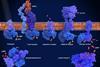
Advancements in hit identification for membrane protein drug discovery
GPCRs are crucial drug targets, but their complex structures present significant challenges in drug discovery. In this article, Domainex’s Philip Rawlins explores how fragment-based screening and innovative technologies like PoLiPa are helping to overcome these hurdles, with a focus on the Adenosine A2a receptor.
-
 News
NewsPSPC1 knockout slows AML in preclinical models
Scientists at UT Health San Antonio have identified PSPC1 in mouse models as a promising new drug target for acute myeloid leukaemia (AML), a deadly blood cancer with limited treatment options.
-
 Webinar
Advancing ADC Development: End-to-End Solutions from Design to Characterization
Dr. Francisca Neethling from Eurofins Discovery explores the comprehensive process of ADC development, covering payload linker design, optimization, and the bioanalytical and functional characterization of ADC molecules.
-
 News
NewsNew approach targets VHR enzyme for sepsis treatment
A new study reveals a promising approach to sepsis treatment by targeting the VHR enzyme using fragment-based drug discovery. This innovative method could lead to more effective therapies for sepsis and other immune-related conditions.
-
 News
NewsDrug OLX-07010 shows promise in treating tau diseases
OLX-07010, a new drug from Oligomerix, shows potential in reducing tau protein tangles, a key factor in Alzheimer's and other tau-related diseases. Early studies suggest it could be a breakthrough in targeting tau aggregation and improving brain function.
-
 News
NewsTract Bio identifies drug targets for oesophageal cancer
Tract Bio’s new research reveals key insights into the evolution of oesophageal adenocarcinoma (EAC) and identifies promising drug combinations for more effective treatment.
-
 News
NewsNew research offers hope for high-grade glioma treatment
High-grade glioma, an aggressive brain cancer affecting both paediatric and adult patients, remains difficult to treat. A collaborative study from the University of Michigan, Dana-Farber Cancer Institute, and the Medical University of Vienna reveals a promising new treatment approach.