



All High-Throughput Screening (HTS) articles – Page 8
-
 Article
How real-world data is accelerating drug discovery
Vish Srivastava considers the benefits of expanding the role of real-world data in drug discovery to provide improved therapies, faster and with greater success.
-
 News
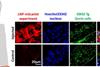
NewsNew mRNA therapy could inform future male infertility treatments
Scientists have restored sperm production in mice with a genetic form of male infertility using mRNA delivered via lipid nanoparticles, with the hope of informing future treatments for non-obstructive azoospermia.
-
 Article
Building reliable organoid models for human-relevant drug discovery
Organoids are changing the landscape of biomedical research, with automation and AI driving new levels of consistency, scalability and human relevance. Aaron Risinger of Molecular Devices discusses how these technologies are advancing precision medicine – and the challenges that remain.
-
 News
NewsRegistration for ELRIG’s Drug Discovery 2025 closes on 30 September
Registration for ELRIG’s Drug Discovery 2025 will close on 30 September. The free to attend conference, held on 21–22 October in Liverpool, will bring together thousands of scientists, exhibitors and expert speakers.
-
 News
NewsNew AI method maps how tuberculosis drugs destroy bacteria
Scientists at Tufts University have developed an AI tool that demonstrates how tuberculosis drugs kill bacteria – an advancement that could speed-up the discovery of shorter, more effective treatments.
-
 Article
Consumables engineered for speed and reproducibility in drug discovery
What if familiar lab formats could be redesigned to remove the weak points in permeability and absorbance testing? This article explores how design choices in common consumables can improve both speed and reproducibility in early-stage research.
-
 Webinar
Innovating Obesity Drug Discovery: Trends, Challenges, and Translational Strategies
Facing roadblocks in obesity drug discovery? Discover how integrated, validated strategies are helping teams accelerate development and reduce risk.
-
 Article
Fixing failed drugs: AI solutions for toxicity in drug discovery – part 3
What role could large language models and AI agents play in drug safety? In Part 3, Layla Hosseini-Gerami of Ignota Labs discusses how emerging technologies might make toxicity analysis faster, more accessible and part of the drug discovery workflow from day one.
-
 Article
Fixing failed drugs: AI solutions for toxicity in drug discovery – part 2
Why do so many drug candidates fail before reaching patients – and can AI help stop the losses? In Part 2, Layla Hosseini-Gerami of Ignota Labs outlines the scope of the toxicity problem and explains why failures often come too late to fix.
-
 Article
The future of CNS drug development: signs of real progress
New therapeutic approaches are emerging for CNS disorders – but can they overcome the toughest barriers in drug development? Find out what is driving progress and what still stands in the way.
-
 News
NewsTargeting MAPK and PI3K/mTOR pathways halts ovarian cancer growth
A new preclinical study has combined two experimental drugs that effectively block ovarian tumour growth – a strategy that could lead to new treatments against this genetically complex cancer.
-
 News
NewsSlowing intracellular transport boosts potential for RNA therapies
Researchers at the University of Basel and Roche have discovered that slowing the intracellular transport of RNA-based drugs significantly improves their therapeutic impact.
-
 Webinar
Early De-Risking: In Vitro Safety Strategies for Pre-IND Success
Safety data is no longer just a regulatory checkbox - it’s a strategic advantage. Discover how in vitro and computational tools reduce the reliance on animal testing and support smarter, earlier decision-making in drug discovery.
-
 Article
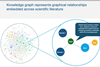
Future-proofing drug development with GenAI
Using GenAI and expert reasoning, drug developers can now explore an asset’s long-term potential as early as the preclinical stage. This shift is helping to reshape pipeline planning and refine therapeutic strategy.
-
 News
NewsHow one carbon atom is changing drug development
Researchers at the University of Oklahoma have found a way to improve drugs by adding just one carbon atom. This simple change could speed up drug discovery and lower costs.
-
 Article
Next-generation drug design: how generative AI can tackle undruggable targets
Generative AI is broadening the boundaries of what is possible in drug discovery. In this article, Murat Tunaboylu, CEO and Co-founder of Antiverse, reveals how the zeitgeist technology is enabling scientists to tackle previously undruggable targets like GPCRs and ion channels to deliver patient impact faster.
-
 News
NewsHigh-throughput NaV1.9 assay to advance pain therapies
Metrion Biosciences has introduced a breakthrough NaV1.9 screening assay, aimed at overcoming historical challenges in pain research and advancing the development of non-opioid treatments.
-
 Whitepaper
App Note: High-Throughput Single-Cell Genome Profiling
See how the new Shasta™ Single Cell System enabled high-throughput single-cell DNA-seq library preparation to detect tumor-driving mutations.
-
 Article
Using knowledge graphs in drug discovery (Part 1): how they link to large language models
In this first interview of a two-part series, Andreas Kolleger explores the convergence of knowledge graphs and large language models. As the head of GenAI innovation at Neo4j, Andreas brings a unique cross-industry perspective on how these technologies can enhance life sciences workflows.
-
 Webinar
AI-powered drug discovery: Accelerating the development of life-saving therapies
AI in drug discovery is no longer theoretical. It’s already speeding up target identification, improving predictions, and cutting waste. Learn how to apply it in your own discovery pipeline.