



All High-Throughput Screening (HTS) articles – Page 3
-
 Report
CRISPR & Genomics: Turning Data into Confident Drug Discovery Decisions
Early drug discovery has no shortage of genomic data, but confidence remains scarce. This report examines how CRISPR, functional genomics and human-relevant models are being applied to determine which signals matter, how they influence disease biology and which targets and strategies are worth pursuing.
-
 Webinar
What it takes to automate high-content imaging at scale
This webinar examines the design trade-offs and technical constraints involved in building a high-throughput robotic imaging pipeline for complex biological workflows.
-
 Article
Discovery is changing – and automation leads the way
Automation is helping drug discovery teams screen faster, cut costs and run complex assays at scale – but its real value lies in what happens next.
-
 Interview
How self-driving labs are changing drug development
Automation and artificial intelligence are changing how scientists design, test and refine new molecules. At the University of Toronto, Stuart R Green and the Acceleration Consortium are building a self-driving lab that could change the pace of early drug discovery.
-
 News
NewsNew AI foundation model aims to speed up drug discovery
Insilico Medicine and Liquid AI have partnered to develop a lightweight artificial intelligence foundation model designed to support multiple stages of drug discovery.
-
 News
NewsFlare Therapeutics streamlines drug discovery with Simplicis Ledger
Flare Therapeutics has selected Simplicis Ledger™ as its primary compound and inventory management platform, marking a strategic move toward a more resilient and automated approach to drug discovery.
-
 News
NewsCC023 mice reveal how ALS can develop after viral infections
Researchers have discovered a mouse strain that mirrors ALS in humans following a viral infection, offering new insights into how the disease develops, potentially opening new pathways for early diagnosis and drug development.
-
 News
NewsMini-stomach organoids grown to improve disease research
Scientists have grown the first multi-regional “mini-stomach” in the lab, creating a new way to study rare genetic stomach diseases and help to develop new treatments for digestive conditions.
-
 News
NewsTargeting cPLA2 enzyme may reduce brain inflammation in Alzheimer’s
Researchers have identified new drug candidates that selectively target the cPLA2 enzyme, a key driver of brain inflammation linked to Alzheimer’s disease, offering a potential new approach to reducing risk in people with the APOE4 gene.
-
 Article
Drug development in 2026: NAMs, safety and regulatory changes
2026 is set to be a pivotal year for drug discovery, with advances in NAMs and evolving regulatory approaches promising faster, safer early drug development and accelerated delivery of therapies for patients with rare or unmet medical needs.
-
 Article
Targeting inflammatory cell death to tackle relapse in AML
Relapse in acute myeloid leukaemia is driven by malignant cells that resist standard treatment. A synthetic cytokine approach in development targets inflammatory cell death pathways to suppress leukaemic cells while preserving healthy haematopoiesis.
-
 News
NewsHow ageing cells affect brain development and neurodegeneration
New research has revealed how cellular senescence – the process in which ageing cells change function – shapes human brain structure from development to old age, improving our understanding of brain ageing and neurodegenerative diseases.
-
 Article
Disrupting the biologics market through innovations in macrocycle R&D
New macrocycle technologies are turning a once difficult drug class into a scalable engine for developing potent oral therapies.
-
 News
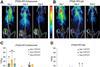
NewsClaudin 18.2-targeted therapy advances GI cancer treatment
A novel imaging-guided radiopharmaceutical targeting claudin 18.2 has shown that it can precisely detect and effectively treat gastric and pancreatic tumours, completely eradicating cancer in some preclinical models.
-
 Article
Rethinking drug discovery through transcription factor biology
Complex diseases rarely have single targets. By focusing on transcription factor activity and disease signatures, Scripta Therapeutics is taking a different approach to identifying the drivers of pathology.
-
 Article
2026: the year AI stops being optional in drug discovery
AI is moving from a supporting role into the core of drug discovery. By 2026, it is expected to shape how targets are chosen, how biology is analysed and how development decisions are made.
-
 News
NewsNew fluorescent technology tracks drug responses in cells
Researchers have developed new innovative fluorescent labels that allow scientists to observe cellular processes with unprecedented clarity – offering a powerful tool for medicine, drug research and cell biology.
-
 News
NewsFunctional retinal organoids improve drug testing for eye disease
Researchers have developed vascularised human retinal organoids featuring the first fully functional light-signal pathways in lab-grown human retina models, opening new possibilities for studying eye disease and testing therapies.
-
 News
NewsNew study revives long-doubted target for depression drugs
Researchers have shown that changing the molecular structure of NK1 receptor antagonists may restore antidepressant effects after decades of failed trials.
-
 Article
AI steps into drug safety: predicting liver injury earlier than ever before
Drug-induced liver injury remains one of drug development’s most costly pitfalls. Now, AI and transcriptomics may offer a way to spot risks long before they reach patients.