Researchers at NYU Abu Dhabi have developed a cheap, paper-based platform that allows tumour models to be grown, frozen and stored for future cancer drug testing – called Spheromatrix.
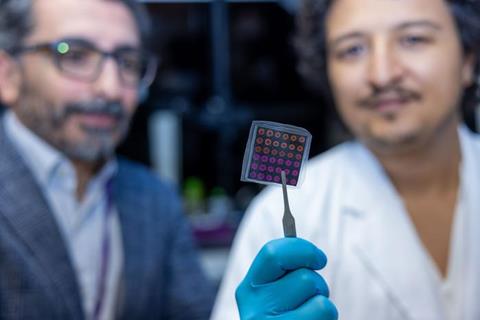
Researchers at New York University Abu Dhabi (NYUAD) have announced a new technology that could significantly accelerate cancer drug development. The platform, known as Spheromatrix, offers a low-cost, simple method for growing, freezing and storing tumour models – allowing scientists to create ‘off-the-shelf’ samples for new experiments.
A new approach to tumour model storage
Traditional methods for growing tumour spheroids are costly and difficult to replicate. More importantly, they cannot preserve these 3D models for long-term use. This has created a barrier in cancer research, where consistent, repeatable testing is key.
Spheromatrix addresses this challenge by using specially engineered filter paper patterned to support the growth of tumour spheroids.
Spheromatrix addresses this challenge by using specially engineered filter paper patterned to support the growth of tumour spheroids in a controlled and reproducible way. Its design allows researchers to freeze and store the models, creating biobanks that can be accessed whenever they’re needed.
“Spheromatrix represents an important step forward in cancer research,” said Mohammad A. Qasaimeh, associate professor of engineering at NYU Abu Dhabi. “Its fibre-based structure provides a biocompatible environment for cells, letting tumour models behave more like real cancers. Preserving these models for long-term use speeds up preclinical testing, reduces reliance on animal models, and opens new possibilities for patient-focused research.”
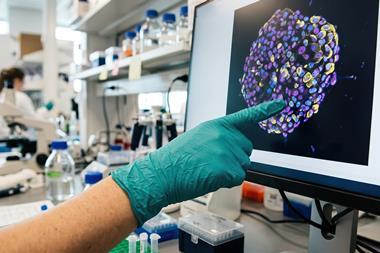
 NYU Abu Dhabi researchers develop 'Spheromatrix' a platform to grow, freeze and store living tumour models for faster, more reliable drug discovery. Courtesy NYU Abu Dhabi. Credit: Courtesy NYU Abu Dhabi.[/caption]
 Realistic responses to chemotherapy
To validate the platform, the researchers tested Spheromatrix using commercial chemotherapy treatments on brain tumour models. These preserved tumour spheroids responded in ways that closely reflected the reactions seen in real patient cancers.
The results demonstrated the potential of Spheromatrix to provide drug developers with improved realistic models for screening new therapies. By enabling long-term storage without compromising biological behaviour, the technology could help researchers conduct more consistent experiments and reduce variability in drug testing outcomes.
A simpler, more affordable tool for labs
“Our goal was to design a platform that is simple, reliable, and affordable, while addressing a major bottleneck in cancer drug development,” said Ayoub Glia, pastoral doctoral associate and the study’s first author. “By engineering paper to support tumour spheroids, we can grow, freeze and reuse models for multiple experiments. We are now exploring the use of patient-derived samples to enable more personalised cancer therapies.”
The straightforward design of Spheromatrix could make advanced tumour modelling accessible to laboratories with limited resources, potentially increasing the range of global cancer research.
Towards more ethical and efficient cancer research
Beyond its scientific advantages, the technology may also offer ethical and economic benefits. By providing reproducible models that behave similarly to human tumours, the platform could reduce dependence on animal testing – supporting more humane research practices. Its ability to store large numbers of tumour samples may also shorten preclinical testing timelines and reduce associated costs.
By providing reproducible models that behave similarly to human tumours, the platform could reduce dependence on animal testing.
Looking ahead, the NYUAD researchers believe the platform could play a role in personalised medicine by enabling studies using patient-derived cancer cells. This could eventually support the development of therapies tailored to individual tumour profiles.
With Spheromatrix, the researchers hope to set a new standard for accessible, scalable and realistic tumour modelling that may bring more effective cancer treatments closer to reality.



Topics
- 3D Cell Cultures
- Artificial Intelligence & Computational Tools
- Ayoub Glia (pastoral doctoral associate at NYU Abu Dhabi)
- Biotechnology & Bioengineering
- Cancer
- Cancer
- Cell-based Technologies
- Drug Development
- Drug Discovery
- Drug Discovery Processes
- High-Throughput Screening (HTS)
- In Vitro Testing
- Microfluidics
- Mohammad A. Qasaimeh (associate professor of engineering at NYU Abu Dhabi)
- Neurological disorders
- NYU Abu Dhabi
- Oncology
- Precision Medicine
- Technology
- Translational Science