



All High-Throughput Screening (HTS) articles – Page 2
-
 News
NewsNew molecular glue platform broadens E3 ligase targeting for cancer drug development
Researchers at Dana-Farber Cancer Institute have developed a scalable platform for discovering molecular glue degraders, reporting the first metabolically activated example and broadening the scope of targeted protein degradation in cancer.
-
 News
NewsResearchers develop AI system to accelerate tuberculosis drug discovery
Researchers at Texas A&M have developed AI-driven platforms to help scientists navigate the bottlenecks of tuberculosis drug discovery, from eliminating nuisance compounds to unlocking years of archived research data.
-
 News
NewsTumour organoids may expand access to targeted cancer drugs
Two studies from Weill Cornell Medicine demonstrate that patient-derived tumour organoids can accurately replicate cancers long-term and incorporate immune microenvironments, offering new potential for personalised treatment selection.
-
 News
NewsAI and lab techniques accelerate tuberculosis drug discovery
Researchers at UMass Amherst have combined high-throughput laboratory screening with an AI neural network to identify compounds capable of breaching the protective outer membrane of Mycobacterium tuberculosis, potentially accelerating the search for new TB therapeutics.
-
 News
NewsFish-inspired sensor detects heartbeat of lab-grown cardiac organoids
A biomechanical well plate inspired by the pressure-sensing lateral line of fish can wirelessly monitor the pulse of multiple lab-grown cardiac organoids simultaneously, offering a scalable new platform for cardiovascular drug testing.
-
 Article
Antibody recycling, FcRn and the next generation of biologics
One receptor can protect antibodies from degradation, extend their half-life and become a drug target itself. Explore the science behind FcRn and how researchers measure its function.
-
 News
NewsLabGenius and LG Chem partner on AI-driven cancer antibodies
LabGenius Therapeutics has partnered with LG Chem to develop next-generation multispecific antibodies targeting solid tumours. The collaboration combines AI-driven drug discovery with oncology development expertise to identify therapeutics with improved selectivity and reduced toxicity.
-
 News
NewsResearchers develop automated DESI-MS platform for faster cancer drug discovery
Scientists at Purdue University have created an automated ultrahigh-throughput platform that integrates chemical synthesis, biological testing and mass spectrometry into a single workflow, potentially reducing the time needed to identify promising cancer drug candidates from weeks to hours.
-
 News
NewsGinkgo Bioworks launches ADME-One platform for early-stage screening
Ginkgo Bioworks has launched ADME-One, an integrated platform combining high-throughput ADME testing with AI-powered human pharmacokinetic projections.
-
 Article
One sample. One shot. The pressure on sample preparation in drug discovery
In drug discovery, a failed sample run is not just a setback – it can mean months of lost work and significant cost. At Analytica 2026, three Eppendorf experts explain how the right tools, workflows and mindset are changing that.
-
 Article
Turning CRISPR hits into confident drug discovery decisions
Functional genomics is central to modern drug discovery, yet high attrition rates persist. In this article, Dr Salman Tamaddon-Jahromi, a postdoctoral research associate at the University of Cambridge, discusses how end-to-end CRISPR screening strategies, iPSC-derived neuronal models and layered quality control can convert functional genomics signals into actionable therapeutic hypotheses.
-
 News
NewsOpenBind launches AI model to accelerate drug discovery
Diamond Light Source has launched OpenBind v1, an open-access AI model and dataset designed to address critical data shortages in drug discovery by providing standardised protein-drug binding measurements at atomic resolution.
-
 Article
When scale meets insight: reinventing SPR for the future of drug discovery
Carterra’s new 48-channel SPR platform reimagines throughput, automation and data quality for modern discovery workflows.
-
 News
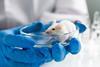
NewsAI system detects pain in laboratory mice through facial analysis
Researchers at ETH Zurich have developed an automated system that uses infrared imaging and artificial intelligence to assess pain in laboratory mice by analysing subtle facial expressions, offering a more consistent and humane alternative to traditional manual observation methods.
-
 Article
Why lower organisms matter for neurodegeneration drug discovery
In the wake of recent government policy aimed at actively replacing animal models in drug discovery, we consider a possible solution to the translational shortfalls of current cellular methodologies for neurodegenerative disease.
-
 News
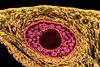
NewsOvarian follicles provide new platform for angiogenesis research
A novel microphysiological system using ovarian follicles enables physiologically relevant three-dimensional angiogenesis modelling within 24 hours, offering improved drug screening capabilities that distinguish therapeutic effects from general toxicity.
-
 Article
Beyond serendipity: rational design and AI’s expansion of the undruggable target landscape
For decades, drugging the ‘undruggable’ was thought to require luck rather than logic. Today, AI is transforming serendipity into strategy by enabling rational, data-driven approaches to previously inaccessible targets.
-
 News
NewsMassey Cancer Center funds drug discovery projects targeting Hsp27-CerS1 and ferroptosis pathways
The VCU Massey Comprehensive Cancer Center has awarded $50,000 each to two innovative drug discovery projects through its collaborative programme with Sanford Burnham Prebys Medical Discovery Institute.
-
 News
NewsZebrafish drug screening identifies precision therapies for autism
Yale University researchers have created a behavioural drug screening database using zebrafish models to identify FDA-approved compounds that reverse disrupted behaviours linked to autism risk genes.
-
 Webinar
From expert task to lab routine – Membrane protein purification and analysis simplified
A new way to tackle the most challenging drug targets: Discover a fully automated, detergent-free purification workflow that isolates membrane proteins in their native 3D structure in as little as three hours and with minimal hands-on time. Learn how to perform subsequent digital miniaturisation and qPCR-based stability analysis with compact solutions that integrate seamlessly into your lab, on demand!