



All Immuno-oncology articles – Page 2
-
 News
NewsHow aggressive breast cancer evades the immune system
Researchers in China have discovered a previously unknown mechanism that allows aggressive breast cancers to avoid immune attack, while simultaneously exposing a weakness that could make these tumours especially responsive to existing immunotherapy treatments.
-
 Article
Why patient-derived biology matters for ADC discovery
What can we learn from tumours after they stop responding to treatment? By studying patient tissue directly, researchers are finding new ADC targets that conventional screening often misses.
-
 Article
Logic-gated DARPins show targeted T-cell activation in tumours
What if a T-cell therapy could activate only inside a tumour? New preclinical data on Molecular Partners’ Switch-DARPin suggest it may do just that.
-
 News
NewsNew organ-on-a-chip captures ageing immune responses to cancer vaccines
Scientists have developed an organ-on-a-chip platform that replicates age-related immune decline, offering a long-missing tool for testing cancer vaccines in older adults.
-
 News
NewsEstrone hormone linked to deadly breast cancer in obese women
A new analysis has identified the hormone estrone as a major driver of aggressive breast cancer in post-menopausal women with obesity, meaning that weight-loss drugs could help improve treatment outcomes.
-
 News
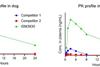
NewsAI powers discovery of new CBLB inhibitor ISM3830
Insilico Medicine has announced ISM3830, an AI-designed CBLB inhibitor that has demonstrated promising preclinical results.
-
 News
NewsWhy TIGIT cancer therapies work in monkeys but not humans
A new study reveals that TIGIT, a key immune checkpoint targeted by cancer drugs, behaves differently in rhesus macaques and humans, suggesting current animal tests may be misleading drug development.
-
 News
NewsTargeting p300 may boost immunotherapy in kidney cancer
Researchers have discovered how renal medullary carcinoma cells evade immunotherapy by mimicking immune cells, driving rapid tumour progression.
-
 News
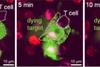
NewsNew CAR-T cell therapy capable of destroying glioblastoma cells
A new CAR-T treatment developed in Switzerland has shown striking early success against glioblastoma, one of the deadliest brain cancers, and is now moving towards human trials.
-
 News
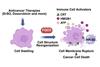
NewsFGD3 protein enhances breast cancer therapies
Scientists have identified a little-known protein, FGD3, that can boost the power of key breast cancer treatments by helping drugs rupture tumour cells and activate the immune system.
-
 News
NewsSugar-coated tumours: a new target for pancreatic cancer
Researchers have discovered that pancreatic tumours evade the immune system by disguising themselves with a sugar coating. To combat this, they have developed a new antibody therapy that blocks this ‘don’t-attack’ signal, which slows tumour growth.
-
 Article
CD24 emerges as the next macrophage checkpoint
With CD47 therapies constrained by safety, attention is turning to CD24 as a macrophage checkpoint target. Pheast’s PHST001 has now entered the clinic.
-
 Article
What’s changing in cancer drug discovery – and why it matters now
Take part in a live Q&A with oncology experts as they explore the scientific advances driving cancer drug discovery.
-
 News
NewsNew CAR T therapy targets solid tumours safely and effectively
USC researchers have engineered CAR T cells to deliver a dual protein therapy that targets solid tumours – offering hope for cancers previously resistant to treatment.
-
 News
NewsSenolytic drug combo boosts cancer immunotherapy and reduces side effects
Researchers have discovered that targeting immune cell ageing can overcome resistance to head and neck cancer treatment.
-
 News
NewsTiny models, powerful insights: how organoids are driving precision oncology
A new review has highlighted how three-dimensional organoid models are transforming cancer research by replicating the complexity of human tumours – bringing precision oncology closer to the clinic.
-
 Article
CAR T’s biggest hurdle: solving the toxicity problem
CAR T therapies are saving lives, but toxicities such as CRS and ICANS remain a major barrier. What will it take to overcome them?
-
 News
NewsBlocking GPNMB may halt triple-negative breast cancer progression
A new study has revealed that the protein GPNMB alters immune cells to aid cancer spread – pointing to the GPNMB-Siglec-9 pathway as a potential target for future treatments.
-
 Article
Lab of the future: four technologies to watch
From precision proteomics to AI-powered immune profiling, next-generation laboratory technologies are changing how new therapies are discovered and developed. Here are four innovations set to shape the lab of the future - and the future of drug discovery.
-
 News
NewsFeline cancer breakthrough could help treat human tumours
Researchers have tested a new cancer drug in pet cats with head and neck squamous cell carcinoma – a disease notoriously hard to treat. The trial showed the therapy controlled cancer in 35 percent of cats with minimal side effects – and it could help to treat humans too.