



All Machine Learning (ML) articles – Page 3
-
 Article
The map and compass: integrating BD&L early to de-risk drug discovery
In drug discovery, great science alone is not enough because commercial viability ultimately decides which programmes survive and attract partners. This Q&A explores how integrating Business Development and Licensing (BD&L) from the earliest stages can guide R&D strategy, sharpen decisions and de-risk the path to market.
-
 News
NewsInsilico and MSK partner on AI research for gastroesophageal cancer
A new research collaboration between Insilico Medicine and Memorial Sloan Kettering Cancer Center aims to harness generative AI technology to identify novel therapeutic targets for gastroesophageal cancers.
-
 News
NewsNew OC-PAM AI tool tracks cancer organoid drug response
Scientists have developed an AI-enhanced imaging platform that enables non-invasive, label-free and longitudinal monitoring of cancer organoids and spheroids.
-
 Opinion
AI in drug discovery: predictions for 2026
As AI drug discovery enters 2026, the industry faces a pivotal year of clinical tests, regulatory clarity, and market consolidation. Here, Dr Raminderpal Singh examines where AI is delivering measurable gains in early discovery, where hype outpaces reality and why Phase III results will determine whether the technology can truly ...
-
 Article
AI begins to enter Alzheimer’s drug discovery pipelines
Artificial intelligence is increasingly used to analyse large, multimodal Alzheimer’s datasets and inform target discovery and trial design. A new JPAD special issue highlights how these methods are moving from experimentation towards practical application in drug discovery.
-
 News
NewsNew paper warns against phasing out animal testing too quickly
A push by the US Food and Drug Administration to phase out animal testing in drug development could improve efficiency and reduce animal suffering, but experts warn that moving too quickly may pose risks to patient safety.
-
 Article
2026: the year AI stops being optional in drug discovery
AI is moving from a supporting role into the core of drug discovery. By 2026, it is expected to shape how targets are chosen, how biology is analysed and how development decisions are made.
-
 News
Newsinsitro expands AI drug discovery with CombinAbleAI acquisition
insitro has acquired Israeli AI therapeutics company CombinAbleAI and launched its TherML platform, creating an end-to-end, modality-agnostic system for designing small molecules, antibodies, oligonucleotides and other complex biologics.
-
 News
NewsNew study revives long-doubted target for depression drugs
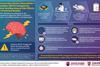
Researchers have shown that changing the molecular structure of NK1 receptor antagonists may restore antidepressant effects after decades of failed trials.
-
 Article
AI steps into drug safety: predicting liver injury earlier than ever before
Drug-induced liver injury remains one of drug development’s most costly pitfalls. Now, AI and transcriptomics may offer a way to spot risks long before they reach patients.
-
 News
NewsSchrödinger partners with Lilly TuneLab on AI drug discovery
Schrödinger has announced a collaboration with Eli Lilly’s TuneLab platform, integrating advanced AI-driven drug discovery workflows into its LiveDesign enterprise informatics system.
-
 Article
Quality over quantity: drug discovery automation in 2026
Automation in 2026 is no longer judged by the volume of experiments, but by the reliability of the evidence they produce. As complex biology and tighter budgets collide, industry leaders are pivoting toward automated workflows to secure the data integrity required for confident, early-stage decision-making.
-
 News
NewsNew Lumos AI platform targets precision in mental health drugs
Headlamp Health has launched Lumos AI®, a new decision-support platform designed to bring greater precision to neuroscience drug development.
-
 Article
Agentic AI: teaching machines to think like scientists
What happens when AI stops guessing and starts reasoning? Agentic AI is bringing scientific logic into the heart of drug discovery.
-
 News
NewsInsilico secures $888million Servier partnership for AI oncology
Insilico Medicine and Servier have announced a multi-year collaboration to accelerate the discovery of new cancer therapies, using artificial intelligence to tackle challenging oncology targets and shorten early-stage drug development timelines.
-
 Article
The data fragmentation problem holding drug discovery back
The DMTA cycle depends on clear data flow, yet most labs still work across disconnected systems. Sean McGee, Director of Product at Certara, explains how better infrastructure and AI can help teams work faster and make decisions with more confidence.
-
 News
NewsNew AI model links genetic mutations to specific diseases
Scientists have developed a new artificial intelligence tool that can identify harmful genetic mutations and predict the types of diseases they are likely to cause, offering faster diagnosis and new opportunities for drug discovery.
-
 Article
RNA that lasts longer and lands exactly where it should
RNA therapies are moving past burst-and-fade limits. New advances in circular RNA and targeted delivery could transform how we treat autoimmune disease, infections and beyond.
-
 Article
Protein folding interference: a new path to hard-to-drug targets
Protein folding interference offers access to targets long considered unreachable by traditional drug discovery. By acting on transient folding intermediates, this approach presents a new opportunity to eliminate disease-driving proteins.
-
 News
NewsLife sciences face ‘scientific content crisis’ in AI adoption
A new survey by the Pistoia Alliance reveals a growing ‘scientific content crisis’ in life sciences, showing that incomplete data and weak governance are limiting the accuracy and adoption of AI in research and development.