As AI drug discovery enters 2026, the industry faces a pivotal year of clinical tests, regulatory clarity, and market consolidation. Here, Dr Raminderpal Singh examines where AI is delivering measurable gains in early discovery, where hype outpaces reality and why Phase III results will determine whether the technology can truly transform drug development.
As we enter 2026, AI drug discovery stands at an inflection point between clinical validation and market volatility. The year ahead will either substantiate the industry’s decade-long investment thesis or force fundamental recalibration of expectations. Having observed the gap between AI’s promise and performance throughout 2025, I approach these predictions with disciplined scepticism – distinguishing between evidence-based forecasts and wishful thinking.
Prediction 1: Phase III data becomes the definitive test
The most consequential development of 2026 will be Phase III results that determine whether AI can deliver drugs that actually work at scale. The most advanced AI-designed drugs are entering pivotal trials, with multiple clinical readouts expected throughout the year. Several major merged entities anticipate numerous clinical readouts over the next 18 months.
These results will provide the first large-scale test of whether AI improves clinical success rates beyond the pharmaceutical industry’s persistent ~90 percent failure rate. Positive Phase III data could validate physics-enabled AI design for specific targets, potentially enabling regulatory submissions and approval timelines extending into 2027. However, additional clinical failures remain statistically likely given historical attrition rates.
Contrary view: Scientific commentators have questioned whether AI fundamentally improves clinical outcomes, noting that AI-discovered compounds show progression rates similar to traditionally discovered molecules. The Phase III data may demonstrate accelerated timelines without improved efficacy – a commercially valuable but scientifically underwhelming outcome.
Prediction 2: Regulatory guidance becomes operative
The US Food and Drug Administration (FDA)’s draft AI guidance will likely be finalised in 2026, requiring sponsors to develop credibility assessment plans for high-risk AI applications and submit detailed documentation on model architectures, training data and governance. The EU AI Act’s high-risk provisions take effect on 02 August, 2026, potentially classifying some drug development AI as high-risk.
The EU AI Act’s high-risk provisions take effect on 02 August, 2026, potentially classifying some drug development AI as high-risk.
This creates new compliance requirements for pharmaceutical companies using AI in regulatory-critical applications. However, specific requirements for validating AI models in regulatory contexts remain undefined. Pharmaceutical companies await clarity on classification criteria that distinguish ‘low-risk’ early discovery tools from ‘high-risk’ applications affecting regulatory submissions.
Uncertainty factor: The guidance focuses on AI affecting regulatory decisions, explicitly excluding early discovery. This means most current AI drug discovery applications fall outside regulatory scope – a reality that may surprise industry participants expecting comprehensive frameworks.
Prediction 3: Investment discipline replaces exuberance
Market forecasts project AI drug discovery growing from approximately $5-7 billion (2025) to $8-10 billion (2026), with some estimates suggesting generative AI could deliver $60-110 billion annually in value for pharma overall. However, the pattern from 2025 suggests smaller AI drug discovery companies face existential pressures.
Multiple companies shut down entirely despite substantial backing; others announced 20 percent+ workforce reductions and several pursued delisting. Venture investment remains concentrated in well-funded players while smaller companies struggle.
Realistic assessment: Valuations have collapsed since 2021-2022 IPOs and the 50:1 ratio between announced ‘biobucks’ and actual upfront payments reveals appropriate industry caution. Expect continued consolidation, with stronger players acquiring distressed assets and weaker companies exiting entirely.
Prediction 4: Early discovery compression without clinical acceleration
AI-enabled workflows will demonstrably compress early discovery timelines by 30-40 percent and reduce preclinical candidate development to 13-18 months (versus traditional three to four years). Advances in antibody design report 16-20 percent hit rates versus 0.1 percent computational benchmarks – genuine progress in target-to-candidate efficiency.
AI-enabled workflows will demonstrably compress early discovery timelines by 30-40 percent and reduce preclinical candidate development to 13-18 months (versus traditional three to four years).
However, clinical trial duration, regulatory review timelines and manufacturing scale-up remain unchanged. Biology, patient enrolment and regulatory requirements impose non-negotiable constraints that AI cannot bypass. Claims of ‘10x faster drug development’ conflate preclinical acceleration with total development timelines – a misleading representation that undermines credibility.
What this means: AI delivers measurable value in early discovery but does not fundamentally alter pharmaceutical development economics. The technology reduces one component of a multi-year process without changing the rate-limiting steps.
Prediction 5: Reinforcement learning agents transform scientific workflows
A significant emerging trend is the application of reinforcement learning with verifiable rewards (RLVR) to train scientific agents capable of autonomous multi-step research tasks. Unlike supervised learning, which relies on pre-existing datasets of expert demonstrations, RLVR uses computational checks – such as code execution or experimental validation – to provide objective reward signals that guide agent training.
Organisations are now deploying frameworks that combine large language models with reinforcement learning to automate literature review, hypothesis generation, experimental design, data analysis and result summarisation. These systems use multi-turn environments where agents take actions, observe feedback and continue until tasks complete. The training infrastructure separates model deployment from agent logic, enabling parallel execution and scalable deployments without dependency conflicts.
Key technical innovation: The architecture employs three server abstractions – models (wrapping inference endpoints), resources (providing tool implementations and verification logic) and agents (orchestrating interactions). This separation allows agents to asynchronously call models for inference and resources for tool execution, creating truly autonomous scientific assistants.
In bioinformatics specifically, researchers have built Jupyter-notebook data-analysis agents that view notebooks and edit cells at each step. Managing context growth remains challenging as notebook size can exceed model context windows, requiring techniques like dropping interaction history and operating on individual steps rather than full trajectories. New benchmarks of verifiable bioinformatics questions enable rigorous evaluation of these capabilities.
Practical applications: Scientific reinforcement learning (RL) environments now span mathematics, scientific literature research, molecular cloning problems and multi-step scientific problem solving. Agents trained with RLVR demonstrate the ability to compose skills learned during pre-training into novel workflows that achieve specific scientific goals – capabilities that supervised learning alone cannot provide.
Critical limitation: Current autonomous systems excel at executing predefined experimental protocols but lack the creative problem solving required when initial hypotheses fail. Human scientists remain essential for strategic decision making and handling unexpected results. Additionally, training with RLVR-based methods can show minimal learning in early stages, followed by steeper learning curves later – a pattern that requires patience and computational resources.
Prediction 6: Autonomous laboratories expand but remain experimental
Self-driving laboratories will proliferate as multiple organisations deploy robotic facilities and raise substantial funding for autonomous labs. These ‘closed-loop’ systems accelerate design–make–test–learn cycles by running experiments 24/7 without human intervention. Extensions of AI beyond discovery to clinical trial operations will also emerge.
Self-driving laboratories will proliferate as multiple organisations deploy robotic facilities and raise substantial funding for autonomous labs.
However, autonomous labs have not yet demonstrated ability to discover validated drug candidates independently. Integration of wet lab robotics with dry lab AI remains organisationally complex, requiring substantial capital investment that only well-funded companies can sustain.
Limitation: Despite advances in RL agents, the gap between executing protocols and genuine scientific discovery persists. The technology accelerates iteration but does not replace scientific insight.
Prediction 7: Chinese AI dominance amid geopolitical tension
Chinese AI drug discovery companies will maintain prominence, building on their increased share of global biotech licensing deals (up from 21 percent in 2023-2024 to 32 percent in Q1 2025). AI drug discovery is a formal priority in China’s Five-Year Plan, with major deals involving Western pharmaceutical giants demonstrating appetite for Chinese AI assets.
However, geopolitical tensions, data security concerns and regulatory scrutiny create significant uncertainty. Some major partnership announcements involved companies incorporated recently with minimal public track records. Western investments in China have faced scrutiny following detention of executives.
Risk assessment: Western pharmaceutical companies face difficult trade-offs between accessing Chinese AI capabilities and managing geopolitical and regulatory risks. Expect increased due diligence requirements and potential dealflow disruption if US–China tensions escalate.
Prediction 8: Protein structure prediction matures without solving drug discovery
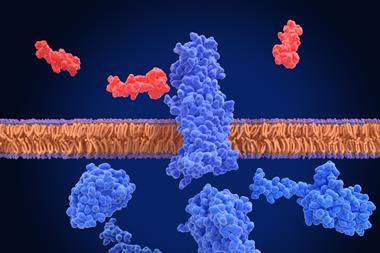
Advanced protein structure prediction models predict structures of proteins, DNA, RNA and ligand interactions with 50 percent-plus improvement over traditional methods. New models extend capabilities to binding affinity prediction, representing mature, production-ready technology.
Advanced protein structure prediction models predict structures of proteins, DNA, RNA and ligand interactions with 50 percent-plus improvement over traditional methods.
However, accurate structure prediction does not guarantee druggable targets or successful molecules. Current models struggle with conformational changes and show persistent biases. Competition results showed newer models did not significantly outperform older methods for protein–ligand interaction prediction.
Critical insight: Optimal use requires hybrid pipelines combining AI with physics-based refinement – not pure prediction. Structure prediction is necessary but insufficient for drug discovery success.
Prediction 9: Data quality remains the primary barrier
Surveys of tech executives found 68 percent identify poor data quality and governance as the main reason AI initiatives fail. High-quality, rigorously curated datasets with biological, pharmacological and clinical annotations remain scarce due to costs, privacy regulations and data-sharing restrictions.
Federated learning platforms will emerge to pool proprietary data through privacy-preserving architectures. However, technical challenges include data standardisation across organisations, intellectual property concerns and computational infrastructure requirements.
Honest limitation: The industry’s fundamental challenge is not algorithmic sophistication but data availability. This barrier is unlikely to be solved in 2026, though federated learning approaches may provide incremental progress.
Prediction 10: First AI-discovered drug approval possible but not certain
If regulatory submissions proceed in 2026 and receive FDA priority review, approval could occur in late 2026 or early 2027. A more realistic timeframe for first approval is 2027-2028. Many ‘AI-discovered’ drugs involved significant human intervention, making attribution complex. The approval – when it comes – will not transform drug development overnight but will validate AI as a legitimate discovery tool.
Reality check: Until that approval occurs, the entire field remains in a ‘proof-of-concept’ phase. No amount of partnerships, funding rounds or conference presentations substitute for regulatory approval and commercial success.
Prediction 11: The ‘prove it’ year delivers mixed results
The balanced forecast for 2026 is validation and disappointment in roughly equal measure. Positive Phase III data could demonstrate that physics-enabled AI design works for specific targets. Early discovery timelines will measurably compress and regulatory frameworks will clarify compliance requirements.
However, additional clinical failures are statistically inevitable given historical attrition rates. Failed AI programmes from 2025 included multiple deprioritised candidates, shelved drugs after Phase II and compounds showing no efficacy signal. One CEO’s assessment – “AI has really let us all down in the last decade when it comes to drug discovery – we’ve just seen failure after failure” – reflects industry frustration.
Historical context: Drug development is inherently high risk. Expecting AI to solve a problem that has challenged pharmaceutical science for decades represents unrealistic expectations. The technology accelerates certain processes without changing fundamental biology.
What laboratory scientists should watch
For researchers working in pharmaceutical R&D, several specific developments warrant close attention:
Clinical readouts: Phase III enrolment progress for leading AI-designed drugs, regulatory submission timelines and Phase I data across multiple programmes will provide concrete evidence of AI’s clinical value.
Regulatory clarity: FDA finalisation of AI guidance and EU AI Act implementation will define compliance requirements for high-risk applications. Organisations using AI in regulatory-critical activities should prepare documentation on model validation and governance.
Market consolidation: Smaller AI drug discovery companies face existential pressures. Expect acquisitions, shutdowns and pipeline deprioritisations as the market separates credible players from overfunded aspirants.
Data infrastructure: Organisations investing in federated learning platforms and data standardisation will gain competitive advantages as data quality remains the primary technical barrier.
Reinforcement learning platforms: The emergence of production-ready RL infrastructure for training scientific agents represents a genuine technical advance. Organisations that adopt these capabilities early may gain advantages in automating complex research workflows.
Conclusion: disciplined optimism
The year 2026 represents a critical test for AI drug discovery. The field has progressed from speculative technology to early clinical validation, but the gap between promise and performance remains substantial. Phase III results will determine whether AI can deliver drugs that work at scale, not just accelerate preclinical timelines.
For those of us developing AI applications for scientific workflows, the message is clear: focus on measurable improvements in specific processes rather than revolutionary claims.
For those of us developing AI applications for scientific workflows, the message is clear: focus on measurable improvements in specific processes rather than revolutionary claims. AI compresses early discovery timelines, improves hit rates in certain applications and enables analysis of complex biological data. The emergence of reinforcement learning agents capable of autonomous scientific reasoning represents genuine progress in automation capabilities. These are valuable contributions that justify continued investment.
However, AI has not solved – and likely cannot solve – the fundamental challenges of clinical validation, regulatory approval and commercial success. The technology is a powerful tool, not a panacea. Organisations that approach AI with disciplined expectations and rigorous validation will create genuine value. Those pursuing hype over evidence will face market correction.
The pharmaceutical industry’s cautious approach to AI investment appears entirely justified. We should celebrate genuine progress while maintaining honest assessment of limitations – exactly the approach that defines credible science.
Meet the author
 Dr Raminderpal Singh
Dr Raminderpal Singh is a recognised visionary in the implementation of AI across technology and science-focused industries. He has over 30 years of global experience leading and advising teams, helping early- to mid-stage companies achieve breakthroughs through the effective use of computational modelling. Raminderpal is currently the Global Head of AI and GenAI Practice at 20/15 Visioneers. He also founded and leads the HitchhikersAI.org open-source community and is Co-founder of the techbio, Incubate Bio.
Raminderpal has extensive experience building businesses in both Europe and the US. As a business executive at IBM Research in New York, Dr Singh led the go-to-market for IBM Watson Genomics Analytics. He was also Vice President and Head of the Microbiome Division at Eagle Genomics Ltd, in Cambridge. Raminderpal earned his PhD in semiconductor modelling in 1997 and has published several papers and two books and has twelve issued patents. In 2003, he was selected by EE Times as one of the top 13 most influential people in the semiconductor industry.