A push by the US Food and Drug Administration to phase out animal testing in drug development could improve efficiency and reduce animal suffering, but experts warn that moving too quickly may pose risks to patient safety.
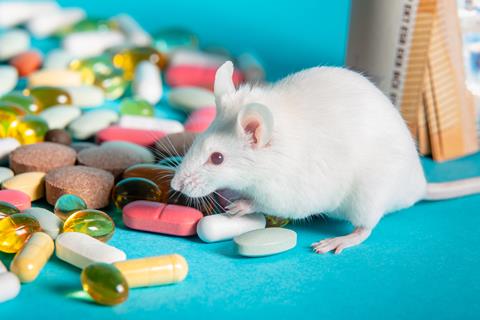
A new joint academic paper from experts at the University of Illinois Urbana-Champaign and Penn State University has warned that a rapid move away from animal testing in preclinical drug trials could jeopardise patient safety unless new alternatives are carefully validated.
The authors warn that while new technologies offer real opportunity for cheaper and safer drug development, replacing animal testing too quickly could backfire if the evidence base for new methods is not robust enough.
FDA signals major shift
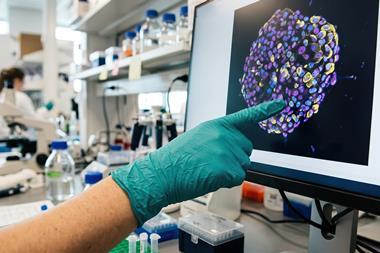
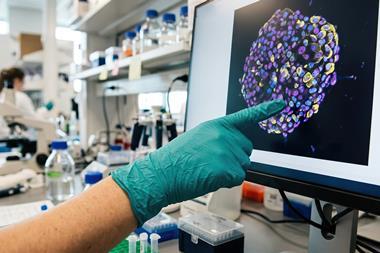
The warning follows a recent announcement by the US Food and Drug Administration (FDA) that it intends to replace animal testing in the development of monoclonal antibodies and other drugs with alternative approaches. These include artificial intelligence-based computational models, organ-on-a-chip systems and organoids designed to mimic human organs and predict drug safety.
The policy change reflects both new technological advances and a broader global movement to reduce, refine or outright replace the use of animals in research. In late 2022, the US Congress passed the FDA Modernization Act 2.0. Building on that legislation, the FDA announced in April 2025 that it would begin moving away from animal testing for certain drugs and encourage the use of what it calls New Approach Methodologies (NAMs).
Ambitious goals, unresolved risks
Sara Gerke from the University of Illinois College of Law and a professor at the European Union Center at Illinois, says the ambition of the FDA’s plans is commendable but potentially risky.
We really need to start thinking about how we ought to validate these new approach methodologies so that they’re at least as effective as animal testing.
“The primary goal of the FDA is to make animal testing the exception in 3-5 years, and a secondary goal is to get drugs to the market faster by reducing research and development costs,” said Gerke. “Those are all worthy and ambitious goals, but it’s hard not to worry about the attendant risks in doing so. We really need to start thinking about how we ought to validate these new approach methodologies so that they’re at least as effective as animal testing.”
The paper, co-written with Jacob Balamut and Jennifer K Wagner of Penn State University, will be published in the journal Trends in Biotechnology.
Validation remains a key hurdle
According to the researchers, the FDA has outlined a step-by-step strategy for reducing animal testing in preclinical safety studies using scientifically validated NAMs. However, Gerke cautions that most of these technologies are not yet mature enough.
“This goal of making animal studies the exception rather than the rule for pre-clinical safety and toxicity testing within the next few years is likely overly optimistic, given the current evidence as well as the absence of noninferiority or superiority studies with the new methodologies,” she said.
The paper also highlights particular concerns around artificial intelligence, which can be affected by hidden biases in data and design.
Possible paths forward
To reduce risk, the authors suggest several options, including stricter oversight of new methods. “Another reasonable approach could be implementing an FDA premarket review or an independent third-party certification process for NAMs,” Gerke said. “But at this point, there just needs to be more research that builds out the necessary evidence base for such an alternate approach.”
There just needs to be more research that builds out the necessary evidence base for such an alternate approach.
In the meantime, drug companies could continue animal testing alongside newer methods until sufficient data show that NAMs are at least as reliable at predicting safety. Ultimately, Gerke argues, animal testing should remain a requirement until specific alternatives are proven fit for purpose.
“There’s certainly potential for new methodologies to become an important tool for reducing animal testing. With that said, rigorous validation is essential for these new methods, and we’re just not there yet,” she said.
The research was funded by the National Institutes of Health Office of the Director and the National Institute of Biomedical Imaging and Bioengineering. The authors note that the views expressed do not necessarily reflect those of the NIH.