



All Medicinal Chemistry articles
-
 News
NewsInsilico launches specialist AI models for drug discovery chemistry
Insilico Medicine has unveiled a suite of compact, domain-trained AI models targeting ADMET prediction, retrosynthesis and target activity across GPCR and kinase panels, claiming state-of-the-art results on more than 70 benchmarks.
-
 Article
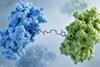
PROTACs vs molecular glues: which degrader fits your target?
PROTACs and molecular glues can both remove disease-associated proteins, but choosing between them is not simple. Our new Discovery Toolkit compares the options to help discovery teams choose the right strategy.
-
 News
NewsNew BET therapies could help beat resistance in solid cancers
A new review finds that next-generation BET-targeted therapies, including selective inhibitors and PROTACs, are addressing the clinical shortcomings of earlier compounds and reviving interest in this approach for solid tumour treatment.
-
 News
NewsAUTAC strategy targets MCL1 to overcome myeloma treatment resistance
Scientists at VCU Massey Comprehensive Cancer Center have developed an autophagy-targeting chimera that redirects cancer cells’ own recycling machinery to degrade the survival protein MCL1, offering a potential new strategy to overcome treatment resistance in multiple myeloma.
-
 News
NewsNew BET inhibitors could overcome barriers in solid tumour treatment
A new review examines how advances in drug design, PROTAC degraders and combination therapies are reviving the clinical prospects of BET inhibition in solid tumours, after early-generation compounds were hampered by toxicity, resistance and modest efficacy.
-
 News
NewsLargest chemical reactions database launched to boost AI drug discovery
Researchers at the University of Michigan have assembled a database of more than 50,000 chemical experiments, offering AI systems an unprecedented resource to accelerate drug discovery and reduce reliance on scarce precious metal catalysts.
-
 News
NewsPim1 kinase identified as therapeutic target for inflammatory arthritis
Researchers have identified Pim1 kinase as a critical driver of inflammatory arthritis through its regulation of Th17 cell differentiation via mitochondrial metabolism.
-
 Report
AI in Drug Discovery: Progress, Limits and What Comes Next
AI has attracted enormous investment across drug discovery, but major questions still remain around validation, reproducibility and real-world application. In our latest Beyond the Lab report, experts discuss where the technology is starting to influence discovery workflows – and where limitations continue to slow adoption.
-
 Article
From chemist to AI agent builder: inside the rise of agentic AI in drug discovery
Dr Raminderpal Singh speaks with Dr Srijit Seal about why specialised AI agents are outperforming general-purpose models in drug discovery and what a new consortium paper shows about their use in practice.
-
 News
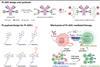
NewsPlatinum-antibody conjugates enhance immunotherapy while reducing chemotherapy toxicity
A novel platinum(IV)-antibody conjugate platform delivers low-dose chemotherapy directly to tumours, upregulating MHC-I expression and enhancing anti-PD-1 responses while minimising systemic exposure. The approach addresses immune evasion mechanisms that limit checkpoint inhibitor efficacy.
-
 News
NewsAI platform identifies novel gp130 inhibitor for colorectal cancer
An AI-assisted drug discovery platform using transfer learning has identified a promising gp130 inhibitor for colorectal cancer.
-
 Article
AACR 2026 part one: AI design, precision biology and the next wave of oncology innovation
At AACR 2026, industry leaders discussed how oncology R&D is moving beyond isolated technological advances towards integrated discovery systems.
-
 News
NewsNew malaria drug T111 targets all parasite stages in single treatment
A novel compound developed over 15 years of research has demonstrated unprecedented activity against liver, blood and sexual stages of Plasmodium parasites, possibly positioning it as a potential cure for malaria.
-
 News
NewsProtein modifications control drug binding and efficacy in new study
New research reveals that subtle chemical changes to proteins after synthesis play a critical role in determining drug-protein interactions.
-
 News
NewsNovel enzyme inhibitors exploits key weakness in malaria parasite
Researchers from the Universities of Bath and Leeds have engineered a novel class of aminopeptidase P inhibitors with enhanced binding affinity and antiparasitic activity against Plasmodium falciparum.
-
 News
NewsSafer diazo compound synthesis advances medicinal chemistry capabilities
Researchers at Tokyo University of Science have developed a safer synthetic route to β-heteroatom-substituted diazo esters, eliminating the need for toxic diazomethane. The azide-to-diazo conversion method uses mild conditions and readily available starting materials, potentially streamlining early-stage drug discovery and compound library synthesis.
-
 News
NewsNew SEE-CITE technology maps drug-protein interactions with targeted precision
A UCLA-led research team has developed SEE-CITE, an advanced photo-crosslinking technology that enables direct comparison of drug-protein binding interactions, potentially aiding the discovery of safer, more effective therapeutics across multiple disease areas.
-
 News
NewsHybrid molecule shows enhanced metabolic effects in obesity study
A novel hybrid molecule combining incretin therapy with targeted intracellular delivery of a PPAR agonist has demonstrated strong weight loss and glucose control compared to existing GLP-1/GIP therapies in preclinical studies.
-
 News
NewsNew approach targets ‘undruggable’ proteins in prostate cancer
A novel drug design strategy has achieved binding strengths up to a million times greater than previous approaches against intrinsically disordered proteins, potentially leading to new treatments for prostate cancer and other diseases involving these historically intractable targets.
-
 News
NewsNew method streamlines C–N bond formation for amine synthesis
Researchers at the University of Wisconsin–Madison have reported a new approach to forming carbon–nitrogen bonds, a critical step in the synthesis of amines widely used in pharmaceuticals, agrochemicals and polymers.