Scientists at the University of Cambridge have developed a light-powered method to modify complex drug molecules without toxic chemicals, enabling faster, cleaner and more efficient drug development.

Scientists at University of Cambridge have developed a new technique that uses light rather than toxic chemicals to alter complex drug molecules, which could make the design and manufacture of medicines faster and more efficient.
The research describes what the team calls an ‘anti-Friedel–Crafts’ reaction that allows chemists to modify medicines late in the development process with a simple LED light source and mild conditions, rather than the harsh chemicals traditionally required.
Researchers say the approach could save months of work in pharmaceutical laboratories while reducing chemical waste and energy use.
Rethinking a classic chemical reaction
In conventional chemistry, the Friedel–Crafts reaction uses strong reagents or metal catalysts under harsh conditions to form carbon–carbon bonds. Because of these demanding conditions, the reaction usually takes place early in drug manufacturing, followed by many additional chemical steps to reach the final compound.
The new Cambridge method reverses that process.
Instead of relying on heavy metal catalysts, the reaction is powered by an LED lamp at room temperature. Once activated, it triggers a self-sustaining chain process that creates new carbon–carbon bonds without toxic or expensive chemicals.
Instead of relying on heavy metal catalysts, the reaction is powered by an LED lamp at room temperature.
This means that practically, chemists can modify a nearly finished drug molecule rather than dismantling and rebuilding it from scratch.
David Vahey, first author of the study and a PhD researcher at St John’s College, Cambridge, said the discovery could significantly simplify how scientists test new versions of medicines.
“We’ve found a new way to make precise changes to complex drug molecules, particularly ones that have been exceptionally difficult to modify in the past,” he said.
“Scientists can spend months rebuilding large parts of a molecule just to test one small change. Now, instead of doing a multistep process for hundreds of molecules, scientists can start with their hit and make small modifications later on.”
He added: “This reaction lets scientists make precise adjustments much later in the process, under mild conditions and without relying on toxic or expensive reagents. That opens chemical space that has been hard to access before and gives medicinal chemists a cleaner, more efficient tool for exploring new versions of a drug.”
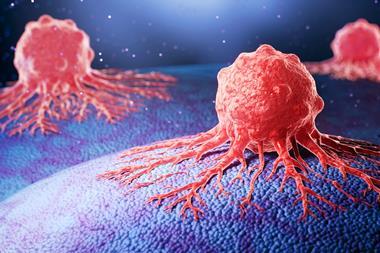
 The chemistry is powered by an LED lamp that triggers a self-sustaining chain reaction, forging new carbon–carbon bonds under mild conditions without toxic or expensive chemicals. Credit: Nordin Ćatić / St John’s College, Cambridge.[/caption]
 Cleaner and more efficient drug development
Forming carbon–carbon bonds is one of the most fundamental processes in chemistry, encapsulating everything from fuels to complex biomolecules.
The new method is highly selective, meaning it can alter a single part of a molecule without disturbing other sensitive regions, a property chemists describe as high functional-group tolerance.
That makes the technique especially useful for late-stage optimisation where scientists fine-tune molecules to improve how a drug behaves in the body or reduce side effects.
Forming carbon–carbon bonds is one of the most fundamental processes in chemistry, encapsulating everything from fuels to complex biomolecules.
Fewer synthetic steps also mean fewer chemicals and lower energy consumption which helps to reduce the environmental footprint of pharmaceutical development.
The research team demonstrated the reaction on a range of drug-like molecules and showed that it could be adapted to continuous-flow systems increasingly used in industry. Collaboration with AstraZeneca helped assess whether the method could meet the practical and environmental demands of large-scale drug development.
“This is a new way to make a fundamental carbon–carbon bond and that’s why the potential impact is so great. It also means chemists can avoid an undesirable and inefficient drug modification process,” said Professor Erwin Reisner, Professor of Energy and Sustainability in Cambridge’s Yusuf Hamied Department of Chemistry and leader of the research group. “Transitioning the chemical industry to a sustainable industry is arguably one of the most difficult parts of the whole energy transition.”
Discovery born from a failed experiment
The breakthrough came from an unexpected result in the laboratory.
Vahey had been testing a photocatalyst when he removed it as part of a control experiment and discovered the reaction worked as well, and sometimes better, without it.
“Failure after failure, then we found something we weren’t expecting in the mess, a real diamond in the rough and it is all thanks to a failed control experiment,” said Vahey.
At first the unusual product appeared to be a mistake but the researchers chose to investigate further rather than discard it.
Once the chemistry was understood, the team worked with researchers at Trinity College Dublin to apply machine-learning models that could predict how the reaction would behave on new molecules.
By simulating reactions before they are performed in the laboratory, the system could help scientists identify promising drug candidates faster and more efficiently.