



A team at Kobe University has developed a new approach to Alzheimer’s disease treatment by using applied chirality principles to design mirrored molecular structures capable of intercepting disordered amyloid-beta proteins.
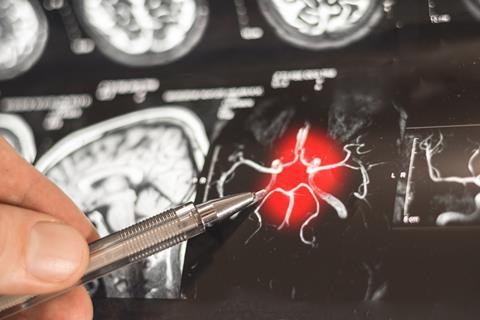
Scientists at Kobe University have announced a new approach to tackling Alzheimer’s disease by focusing on the unusual behaviour of proteins in the brain, which could change the way new treatments are designed.
Inspiration from materials science
Alzheimer’s is linked to proteins in brain cells that have lost their natural shape and become disordered. One of the main culprits is amyloid beta, a protein believed to trigger a chain reaction. Once disordered, it can cause other proteins to follow, forming plaques that disrupt normal brain cell function.
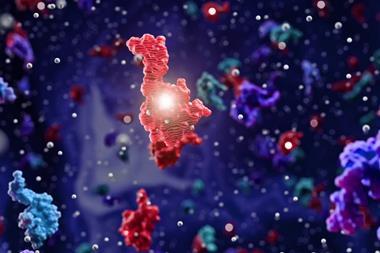
Alzheimer’s is linked to proteins in brain cells that have lost their natural shape and become disordered
“There is a gap in how we approach proteins without a fixed structure,” said Maruyama Tatsuo, Biochemical Engineer at Kobe University. “Many existing drug design strategies rely on well-defined structures and we were frustrated by how limited they are when facing more flexible, complex biological targets such as amyloid-beta.”
The researchers explored the idea of intercepting amyloid-beta proteins using mirrored molecular structures. Proteins are made up of amino acids, which can exist in two mirrored forms, like left and right hands. In nature, however, proteins are almost always composed of just one form. Scientists have long known that combining naturally occurring ‘left-handed’ amino acids with artificially created ‘right-handed’ ones can produce stable interactions but this principle had not previously been harnessed in a systematic way.
Designing a molecular ‘mirror’
The Kobe University team conducted a detailed study into how these mirrored molecules interact. Their goal was to identify the mechanisms that allow left and right handed protein fragments to bind effectively.
Using this knowledge, the researchers designed a short chain of ‘right-handed’ amino acids capable of binding tightly to amyloid-beta. Under laboratory conditions, this engineered molecule inhibited the harmful protein more effectively than another promising drug candidate.
To me, the most exciting aspect of this study is that the simple and intuitive principle of mirrored molecules
The interaction has been compared to a left and right hand fitting together, preventing the ‘left hand’ from interacting with anything else.
“To me, the most exciting aspect of this study is that the simple and intuitive principle of mirrored molecules – a phenomenon chemists call ‘chirality’ – can be used as a design tool for molecular recognition,” said Maruyama. “It connects a fundamental concept in chemistry with a very challenging problem in biology.”
Promising results in cell studies
To assess its biological impact, the team tested the molecule on mouse brain cell cultures. They first confirmed that the interceptor protein did not harm healthy cells. When exposed to amyloid-beta alone, cell viability dropped to around 50 percent. However, when the interceptor protein was introduced, cell viability remained stable, suggesting the treatment effectively neutralised the toxic effects.
Wider implications for disease treatment
The findings could extend beyond Alzheimer’s. Disordered proteins are also linked to conditions such as Parkinson’s disease and certain cancers, many of which have been difficult to treat.
This result feels like a starting point rather than an endpoint
The team hopes their method will move drug development away from trial and error towards a more rational and systematic design process for new therapies.
“This result feels like a starting point rather than an endpoint,” said Maruyama.
Topics
- Alzheimer's
- Alzheimer's disease
- amino acids
- amyloid-beta
- chirality
- disordered proteins
- Drug Development
- Drug Discovery
- Drug Discovery Processes
- Drug Discovery Processes
- Drug Targets
- Medicinal Chemistry
- Molecular Biology
- molecular recognition
- neurodegenerative disease
- Neurological disorders
- Neurosciences
- T Cells
- the brain







No comments yet