



All Toxicology articles
-
 Article
Six assay requirements every researcher using NAMs should know
As NAMs become more widely used in drug discovery, assays must meet the demands of more complex models. Discover six requirements for reliable, reproducible and biologically meaningful data.
-
 Article
Targeting childhood myopia progression with 7-methylxanthine
Childhood myopia researcher Dr Klaus Trier explores how 7-methylxanthine targets scleral remodelling and axial elongation, and its potential to slow disease progression and reduce the risk of high myopia.
-
 News
NewsTissue chips target immunotherapy toxicity prediction without animal models
Researchers at the University of Rochester have developed human cell-based tissue chips designed to predict serious immunotherapy toxicities, including cytokine release syndrome, and have secured entry into the FDA’s ISTAND pilot programme.
-
 News
NewsVY1706 Alzheimer’s gene therapy achieves 75 percent tau reduction in preclinical study
Voyager Therapeutics has presented six-month GLP toxicology data for VY1706, its investigational tau-targeting gene therapy, showing durable tau reductions of up to 75 percent and a clean safety profile in non-human primates, as the company prepares to begin first-in-human dosing in the second half of 2026.
-
 Article
Understanding the toxicology endpoints that matter in ADC development
Antibody-drug conjugates (ADCs) present unique toxicology challenges. Learn which endpoints matter most, how they inform development decisions and why they are essential for building a robust nonclinical safety strategy.
-
 Article
Inside one of the most comprehensive human proteome atlases to date
Understanding where proteins are expressed throughout the body is critical for selecting better drug targets. Here’s how a new human proteome atlas could improve target selection, predict toxicity and support drug repurposing.
-
 Webinar
Oligonucleotide therapeutics safety considerations across drug development
As oligonucleotide therapeutics continue to advance, their safety assessment presents challenges that differ from traditional drug modalities. Discover how nonclinical safety studies, evolving regulatory expectations and real-world case examples can help you navigate these challenges with greater confidence.
-
 Article
Making historical toxicology data work harder in safety assessment
Historical toxicology data is often underused. Find out how Virtual Control Groups and AI could help researchers strengthen safety assessment while making better use of existing data.
-
 Article
Organ chips move closer to drug discovery pipelines
From uncovering new drug targets to predicting human toxicity, organ chips are showing what they could bring to drug discovery. Professor Donald Ingber of Harvard University discusses where the technology is heading next.
-
 Interview
The global push to reduce animal testing in drug development
Non-animal methods are already used throughout early drug discovery, yet animal testing continues to dominate regulatory safety assessment. Recent initiatives suggest change is coming, but significant scientific and practical challenges remain.
-
 News
NewsCytokine-armoured CAR T cells target glioblastoma while reducing treatment toxicity
UCLA Health researchers have developed cytokine-armoured CAR T cells that directly attack glioblastoma tumours whilst recruiting the body’s wider immune system. The engineered cells showed improved tumour control in mouse models and could address antigen heterogeneity challenges that have limited CAR T therapy success in solid tumours.
-
 Article
Why targeted therapies are exposing the limits of animal models – and what comes next
Traditional preclinical models are struggling to keep pace with a new generation of targeted therapies. As regulators embrace new approach methodologies (NAMs), vascularised tissue platforms are offering a more human-relevant approach to predicting drug efficacy and safety.
-
 Article
From chemist to AI agent builder: inside the rise of agentic AI in drug discovery
Dr Raminderpal Singh speaks with Dr Srijit Seal about why specialised AI agents are outperforming general-purpose models in drug discovery and what a new consortium paper shows about their use in practice.
-
 News
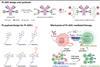
NewsPlatinum-antibody conjugates enhance immunotherapy while reducing chemotherapy toxicity
A novel platinum(IV)-antibody conjugate platform delivers low-dose chemotherapy directly to tumours, upregulating MHC-I expression and enhancing anti-PD-1 responses while minimising systemic exposure. The approach addresses immune evasion mechanisms that limit checkpoint inhibitor efficacy.
-
 News
NewsOrganoid study reveals valproate’s impact on developing brain
German researchers have used cerebral organoids to investigate how the epilepsy medication valproate interferes with early brain development, identifying significant disruption to the extracellular matrix and neuronal maturation that may explain increased neurodevelopmental risks in exposed foetuses.
-
 Webinar
From expert task to lab routine – Membrane protein purification and analysis simplified
A new way to tackle the most challenging drug targets: Discover a fully automated, detergent-free purification workflow that isolates membrane proteins in their native 3D structure in as little as three hours and with minimal hands-on time. Learn how to perform subsequent digital miniaturisation and qPCR-based stability analysis with compact solutions that integrate seamlessly into your lab, on demand!
-
 Article
Replacing animals in science: what the UK’s new strategy means
The UK has set out a strategy to replace animal testing, but delivering change will depend as much on regulation as on technology. Dr Emma Grange, Director of Science and Regulatory Affairs at Cruelty Free International, examines what the policy signals for research, drug discovery and safety assessment.
-
 News
NewsNew paper warns against phasing out animal testing too quickly
A push by the US Food and Drug Administration to phase out animal testing in drug development could improve efficiency and reduce animal suffering, but experts warn that moving too quickly may pose risks to patient safety.
-
 Article
Drug development in 2026: NAMs, safety and regulatory changes
2026 is set to be a pivotal year for drug discovery, with advances in NAMs and evolving regulatory approaches promising faster, safer early drug development and accelerated delivery of therapies for patients with rare or unmet medical needs.
-
 Article
AI steps into drug safety: predicting liver injury earlier than ever before
Drug-induced liver injury remains one of drug development’s most costly pitfalls. Now, AI and transcriptomics may offer a way to spot risks long before they reach patients.