



All Translational Science articles – Page 14
-
 Article
Inside ELRIG Drug Discovery 2025: automation, AI and human-relevant models
At ELRIG’s Drug Discovery 2025, Drug Target Review spoke with the teams turning big ideas into usable tools – automation, AI and biology – that help scientists work smarter.
-
 Article
IL-2 and GLP-1 receptor agonist combination tackles neuroinflammation
Can targeting both regulatory and inflammatory pathways change how we treat neurodegenerative disease? Coya Therapeutics is testing that idea with its IL-2 and GLP-1 receptor agonist combination.
-
 News
NewsBVRA enzyme may slow down Alzheimer’s progression
New research from Johns Hopkins Medicine reveals that the enzyme BVRA protects brain cells from oxidative stress, allowing for potential new methods for treating neurodegenerative diseases like Alzheimer’s.
-
 Article
Meet WRPRFa: the precision peptide changing how we study pain
A newly developed peptide, WRPRFa, is giving scientists a clearer view of how the acid-sensing ion channel (ASIC3) drives pain signalling.
-
 Report
Lab Automation: Where Discovery Scales
Automation now plays a central role in discovery. From self-driving laboratories to real-time bioprocessing, this report explores how data-driven systems improve reproducibility, speed decisions and make scale achievable across research and development.
-
 News
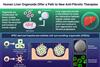
NewsLab-grown liver offers new platform to test fibrosis drugs
Japanese scientists have developed a lab-grown liver organoid that mimics human liver regeneration, offering a new platform to study fibrosis and test therapies.
-
 News
NewsNew blood test detects Alzheimer’s years before symptoms
Scientists have developed two rapid and affordable blood tests that can detect early markers of Alzheimer’s disease – potentially decades before symptoms appear.
-
 Article
CD24 emerges as the next macrophage checkpoint
With CD47 therapies constrained by safety, attention is turning to CD24 as a macrophage checkpoint target. Pheast’s PHST001 has now entered the clinic.
-
 Article
What’s changing in cancer drug discovery – and why it matters now
Take part in a live Q&A with oncology experts as they explore the scientific advances driving cancer drug discovery.
-
 News
NewsExisting nerve pain drugs may help stop bone cancer spread
Scientists have discovered that two existing pain medications – bupivacaine and rimegepant – may not only relieve the severe pain caused by osteosarcoma but also slow the disease’s growth.
-
 News
NewsCRISPR epigenetic ‘switch’ provides new way to control memory
For the first time, researchers have demonstrated that flipping an epigenetic ‘switch’ in memory cells can directly control whether a memory is expressed or silenced, offering new insights into how memories are stored and potentially altered.
-
 News
NewsTargeting fibroblasts could lead to new heart failure therapies
Long considered structural support cells, a new research study has discovered how fibroblasts actively worsen heart failure by disrupting heart muscle function, which could lead to new therapeutic strategies for heart failure.
-
 Article
When chemistry corrects biology: the deuterated return of a MET inhibitor
A promising MET inhibitor failed in the clinic due to human-specific metabolism. Now its deuterated analogue, DO-2, is showing that a simple isotope swap might overcome the problem.
-
 News
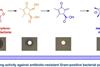
NewsNew antibiotic discovery could help tackle antimicrobial resistance
Scientists have discovered a powerful new antibiotic hidden within the compound pre-methylenomycin C lactone, which shows real effectiveness against drug-resistant infections such as MRSA and VRE.
-
 News
NewsOveractive neurons linked to schizophrenia-like behaviour
Scientists have identified an overactive brain cell type linked to schizophrenia-like symptoms in mice – a discovery that could lead to new, targeted treatments to prevent cognitive impairments.
-
 News
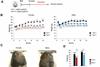
NewsTRF1 protein identified as potential obesity drug target
Researchers have discovered that removing a telomere-protecting protein, TRF1, makes mice leaner and metabolically healthier without shortening their telomeres, potentially leading to new methods for tackling obesity and age-related diseases.
-
 News
NewsSwallowable bioluminescent pill detects early signs of gut ischaemia
Scientists have developed an ingestible, light-emitting capsule that can detect life-threatening intestinal blood flow problems in their earliest stages. The device could offer doctors a faster and less invasive way to diagnose acute mesenteric ischaemia.
-
 News
NewsNew PET tracer could lead to better ALS and Alzheimer’s diagnosis
New preclinical data on ACI-19626, a first-in-class PET tracer for imaging TDP-43 pathology, shows potential to greatly improve early diagnosis and treatment of multiple neurodegenerative diseases.
-
 News
NewsHow AI and cell data combine to make drug discovery faster
Cellarity has published a new paper in detailing an AI-powered framework that integrates single-cell transcriptomics to make drug discovery faster and more successful.
-
 Article
From wild fungi to faster drug discovery
Nature’s pharmacy has yielded half of today’s medicines, yet most of its potential remains untapped. AI is now changing how quickly new therapies can be found.