



Researchers have identified 14 distinct structural states of nucleosomes using AI analysis, revealing that over 85 percent show some level of distortion, suggesting the genome operates as a finely tuned control system rather than a binary on-off switch.
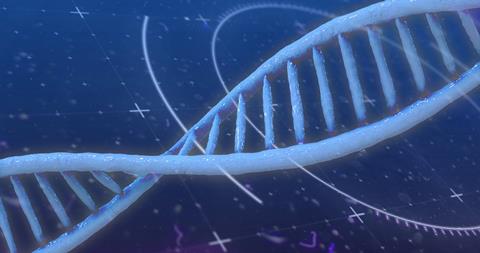
Scientists have discovered a new way that cells organise and access DNA, going against decades of assumptions about how genes are switched on and off.
Researchers from the Gladstone Institutes and the Arc Institute have found that DNA wrapped around protein structures, known as nucleosomes, is not simply locked away or accessible. Instead, much of it exists in a partially open state, allowing more nuanced control of gene activity.
The study suggests that the human genome operates less like a simple on-off switch and more like a finely tuned control system.
Rethinking DNA packaging
Every cell in the human body contains more than six feet of DNA, tightly packed into a microscopic space. To achieve this, DNA is wrapped around spool-like protein clusters called nucleosomes, forming a structure known as chromatin.
Every cell in the human body contains more than six feet of DNA, tightly packed into a microscopic space
For years, scientists believed DNA wrapped around nucleosomes was largely inaccessible, meaning genes in those regions were inactive. Only unwrapped DNA was thought to be available for use by the cell – these new findings challenge this view.
“The conception before was that when it came to nucleosomes, genes were either turned on or off, but we’re finding it’s more like a volume dial,” says Gladstone Investigator Dr Vijay Ramani, one of the scientists who led the study. “This is a completely new organisational code for the genome.”
AI reveals hidden structure
To explore DNA packaging in greater detail, the research team developed an artificial intelligence-powered tool called Iteratively Defined Lengths of Inaccessibility (IDLI).
The method builds on earlier work from the Ramani lab, which created a sequencing technique known as SAMOSA to map nucleosome positions along individual DNA strands.
Unlike approaches that came before it, IDLI examines not only where nucleosomes sit on DNA but also their internal structure. By analysing data in two dimensions, it can detect subtle variations in how tightly DNA is wrapped.
Each nucleosome is made up of eight building blocks. When some of these are missing or loosely connected, parts of the DNA become partially exposed.
A more dynamic genome
Using the new tool, scientists analysed chromatin from mouse embryonic stem cells and found that more than 85 percent of nucleosomes showed some level of distortion.
“Our findings suggest that the genome is far more dynamic and accessible that the scientific community realised,” Ramani says.
Importantly, these distortions were not random. The team identified 14 distinct structural states of nucleosomes, each linked to different levels of gene activity.
Our findings suggest that the genome is far more dynamic and accessible that the scientific community realised
The same patterns were observed in human stem cells developing into liver-like cells and in liver cells taken from mice. This indicated a consistent biological mechanism was at play.
“Before this, our understanding of chromatin was a bit like reading a text that only had sound and silence – just two states of being,” said Dr Hani Goodarzi, an investigator at the Arc Institute who co-led the study. “Now we can see that it’s much more nuanced. There are letters and words and we uncovered a new kind of grammar that controls them.”
Implications for disease and ageing
The researchers also found that transcription factors, proteins that regulate gene activity, play a direct role in shaping nucleosome structure. Removing two of these proteins altered DNA accessibility patterns in predictable ways.
“This adds to the many different ways in which a cell can tune things up and down, by making parts of the DNA more or less accessible,” says Ramani.
The findings could improve the understanding of complex diseases such as cancer and neurodegenerative conditions, where subtle changes in gene activity play are key.
“These are precisely the states that end up being quite important in terms of disease relevance,” says Ramani. “Most complex diseases revolve around gradation; maybe a gene is on but at half the level it would normally be, or maybe it’s on in the wrong cell type.”
The team also believes the research could advance studies of ageing, as chromatin structure changes over time and may be partly reversible.
“We’re reading the language, but ultimately, we want to learn how to speak it so that we can control and modify it,” Dr Goodarzi says. “We’re not here just to observe biology; at some point we want to intervene.”






No comments yet