



New research has revealed how Golgi secretory machinery proteins facilitate growth factor receptor trafficking to cell surfaces, driving tumour progression.
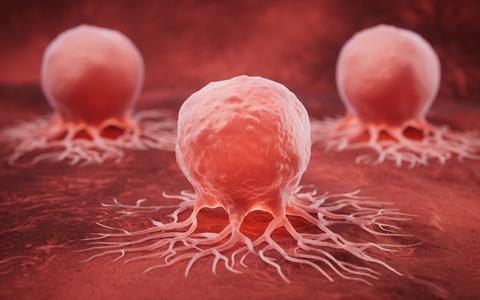
Scientists at the Harrington Discovery Institute at University Hospitals have identified key cellular mechanisms involved in cancer growth. The findings were identified using human cancer cell models and further supported by evidence from human cancers. Researchers say the work could help prevent tumours from developing resistance to therapies that initially prove effective.
Understanding the role of the Golgi apparatus
The research focused on components of the Golgi apparatus, a structure within cells responsible for processing and transporting proteins and other molecules.
“This work builds on our previous studies identifying components of the cellular machinery, specifically involving the Golgi apparatus, that enable cells to transport material to their surface where it can remain or be released,” said Dr Seth Field, Director of Physician-Scientist Programs and Chief Scientific Officer at the Harrington Discovery Institute.
Previous analyses of human cancers had already linked elements of this Golgi secretory machinery to several common tumour types, including lung, breast and colorectal cancers. However, researchers had not fully understood how these components contributed to cancer progression.
Previous analyses of human cancers had already linked elements of this Golgi secretory machinery to several common tumour types
The new study found that these proteins play a critical role in moving growth factor receptors to the cell surface. Once situated there, the receptors can be activated by growth factors in the surrounding environment, triggering signals that promote uncontrolled tumour growth.
“We found that, in their normal function, these proteins assist the movement of growth factor receptors to the cell surface,” Dr Field said. “Once there, these receptors are activated by growth factors in the cellular environment, signalling cells to grow uncontrollably and form tumours.”
Potential to improve targeted cancer therapies
Growth factor receptors are already known to be major drivers of many cancers and are the focus of numerous targeted therapies currently used in clinical practice.
The epidermal growth factor receptor (EGF receptor), is heavily involved in lung cancer, while HER2 is associated with several forms of breast cancer. Modern treatments often work by blocking these receptors or interrupting their signalling pathways.
Although these therapies can initially produce strong responses, many patients eventually develop resistance, allowing tumours to continue growing despite treatment.
Researchers believe the newly identified cellular components could represent an additional class of therapeutic targets capable of complementing existing drugs and potentially delaying or overcoming resistance mechanisms.
By targeting the machinery responsible for transporting growth factor receptors to the cell surface, future treatments may interfere with cancer signalling in a different and potentially more durable way.
Moving discoveries towards clinical development
“Discoveries in fundamental biology are the fuel that enables advances in medicine,” Dr Field added. “The next step in our research involves working to develop potential therapeutics that build on this discovery.”
Development of future therapies will be supported by the Harrington Discovery Institute, which focuses on accelerating promising biomedical discoveries into medicines addressing unmet medical needs.
Discoveries in fundamental biology are the fuel that enables advances in medicine
Now in its 13th year, the institute’s portfolio includes 227 medicines in development, support for 75 institutions, 46 launched companies, 24 medicines in clinical trials and 15 licensing agreements with pharmaceutical partners.






No comments yet