



A novel lipid nanoparticle delivery system has demonstrated 2.5-fold greater tumour reduction compared to conventional formulations whilst addressing cancer cachexia, offering a dual-action therapeutic approach that uses vitronectin-mediated targeting to integrin receptors overexpressed on lung cancer cells.
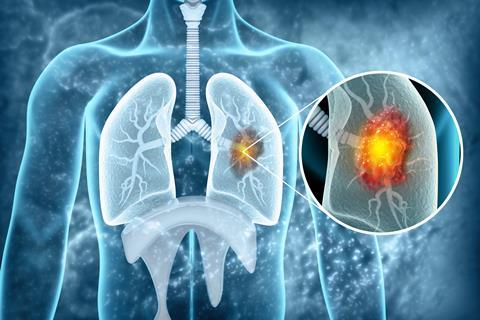
Researchers at Oregon State University have developed a new technique that could change the way lung cancer is treated while simultaneously addressing a severe muscle-wasting condition often associated with the disease.
The findings describe how specially engineered lipid nanoparticles can deliver therapeutic genetic material directly to lung tumours for a dual-action approach to treatment.
Breakthrough in targeted delivery
The study focused on the use of lipid nanoparticles (LNPs) to transport messenger RNA into cancerous tissue. In mouse models, the researchers demonstrated that these nanocarriers, loaded with follistatin messenger RNA, successfully accumulated in tumours.
Once inside, the mRNA instructs cells to produce follistatin, a protein known for its dual role in suppressing tumour growth and promoting muscle development.
The nanoparticles are administered intravenously and travel to the lungs with the help of vitronectin, a protein found in blood serum. Lipids are fatty acids and similar organic compounds, while nanoparticles are extremely small particles measuring between one and 100 billionths of a metre.
The nanoparticles are administered intravenously and travel to the lungs with the help of vitronectin, a protein found in blood serum.
“We found that these LNPs bind vitronectin in the bloodstream, which then directs them to lung cancer tumours by interacting with integrin receptors that are overexpressed on the tumour surface,” said Oleh Taratula, one of the lead researchers of the study at Oregan State University’s College of Pharmacy.
Integrin receptors act as bridges, regulating how cells respond to their environment and play a crucial role in enabling the nanoparticles to reach their target.
Promising results in early testing
Delivering mRNA therapies to lung tumours has historically been challenging for researchers. However, this new approach appears to overcome that barrier.
“Systemic delivery of mRNA therapeutics to lung cancer tumours has been a significant challenge in our field and this work offers a promising solution,” Taratula said. “Compared to conventional LNPs, which tend to accumulate in the liver upon systemic administration, our approach achieved an approximately 2.5-fold greater reduction in tumour burden.”
Systemic delivery of mRNA therapeutics to lung cancer tumours has been a significant challenge in our field and this work offers a promising solution
Lung cancer remains a leading cause of cancer-related deaths. In the United States, it is the third most common cancer and the deadliest, with tens of thousands of new cases diagnosed each year. Smoking significantly increases the risk, although non-smokers can also develop the disease.
Addressing cancer cachexia
A key aspect of the research is its potential to treat cachexia, a debilitating muscle-wasting condition that frequently accompanies lung cancer. The syndrome causes patients to lose weight and muscle mass even when maintaining a normal diet and it is responsible for up to 30 percent of cancer-related deaths.
“By loading our LNPs with follistatin mRNA we developed a therapy that simultaneously targets lung cancer and cancer cachexia, all without adverse effects,” Taratula said. “More preclinical work is necessary but we’re very encouraged by what we’ve seen so far and hope that testing in humans is down the road.”
Next steps
While further preclinical studies are needed, the researchers believe their findings will help towards the development of more effective and comprehensive treatments for lung cancer and its associated complications.










No comments yet